What to Do After Repotting: Aftercare Checklist
The first two weeks after repotting determine whether your plant thrives or struggles. Skip the fertilizer, adjust your watering and give it time to recover.
Potting Corner Team · Jan 18, 2026 · 8 min read
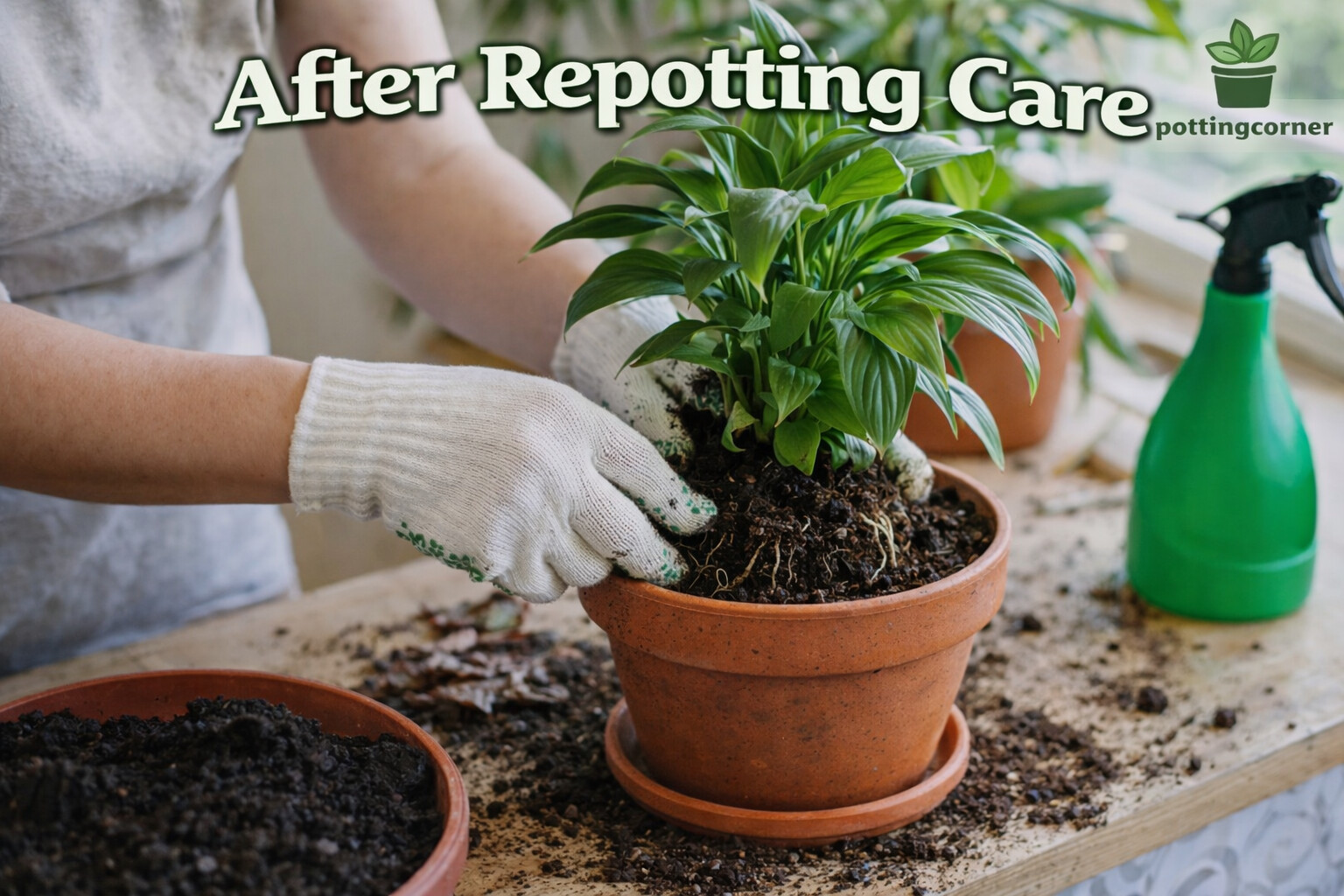
After repotting, your plant needs recovery time, not extra attention. The most common mistake is doing too much: moving the plant around, fertilizing immediately, or overwatering out of concern. Roots are disrupted and need stable conditions to re-establish.
Follow this checklist to give your plant the best chance at a smooth transition. For the repotting process itself, see How to Repot a Houseplant.
The Direct Answer: The First Two Weeks
Immediately after repotting:
- Water thoroughly until it drains from holes
- Place in same light conditions as before (or slightly less)
- Empty the saucer after 30 minutes
Days 1-7:
- Keep soil consistently moist (not soggy)
- Avoid direct sunlight
- Don't fertilize
- Don't move the plant around
- Expect some wilting or leaf drop
Days 7-14:
- Begin normal watering routine
- Gradually return to original light conditions
- Still no fertilizer
- Watch for signs of problems
After week 4-6:
- Resume fertilizing if it's growing season
- Plant should show new growth
- Normal care resumes
Aftercare Checklist
Print this or save it for reference:
Watering
- Watered thoroughly immediately after repotting
- Emptied saucer (plant not sitting in water)
- Checking soil moisture before each watering
- Using finger test 2 inches deep
- Adjusting for new soil's retention (may differ from old soil)
Light and Location
- Same location as before OR slightly shadier
- No direct sunlight for first week
- No drafty spots (vents, doors, windows)
- Stable temperature (65-75°F ideal)
- Not moving plant unnecessarily
What to Avoid
- NO fertilizer for 4-6 weeks
- NO pesticide treatments unless emergency
- NO repotting again (even if you made mistakes)
- NO misting directly on leaves recovering from stress
- NO dramatic location changes
Why Aftercare Matters
Roots Are Disrupted
During repotting, fine root hairs that absorb water are damaged or lost. The plant temporarily loses efficiency in water uptake, which is why:
- Leaves may wilt even with moist soil
- The plant looks worse before it looks better
- Overwatering is tempting but dangerous
New root growth begins within days but full recovery takes 2-4 weeks.
Fresh Soil Has Nutrients
Quality potting mix contains starter fertilizer. Adding more creates a concentration of salts that can burn already-stressed roots. Wait until the plant shows active growth before feeding.
Stress Compounds Stress
Moving a freshly repotted plant to a new location, changing light exposure, or treating for pests adds stress on top of transplant stress. Keep everything else stable while roots recover.
Watering After Repotting
This is where most people make mistakes.
First Watering
Immediately after potting, water thoroughly:
- Water slowly until it runs from drainage holes
- This settles soil and removes air pockets
- Let excess drain completely
- Empty the saucer
Ongoing Watering
Fresh potting mix behaves differently than degraded old soil:
It may retain more moisture:
- Peat and coir hold water well when fresh
- You may need to water less frequently
- Check before watering on your old schedule
Or it may drain faster:
- Fresh mix has more air pockets
- Water may run through quickly at first
- Multiple light waterings can help soil absorb evenly
Always check before watering:
- Insert finger 2 inches into soil
- If dry at that depth, water
- If still moist, wait another day
Signs of Watering Problems
Overwatering after repotting:
- Yellowing leaves (especially lower ones)
- Mushy stems near soil line
- Soil stays wet for over a week
- Fungus gnats appear
Underwatering after repotting:
- Wilting that doesn't recover overnight
- Crispy leaf edges
- Soil pulls away from pot edges
- Dramatic drooping within hours of checking
What to Expect: Normal vs. Concerning
Normal Recovery Signs
These are expected and not cause for alarm:
- Mild wilting for 1-3 days: Roots are re-establishing
- 1-2 lower leaves yellowing: Plant redirects energy to recovery
- Growth pause for 2-4 weeks: Energy goes to roots, not foliage
- Slight drooping in afternoons: Reduced water uptake temporarily
Warning Signs (Take Action)
These indicate problems:
- Severe wilting that doesn't recover: Check for overwatering or root damage
- Multiple leaves yellowing rapidly: May be overwatering or root rot
- Mushy stems: Root rot, may need to re-repot
- Foul smell from soil: Anaerobic conditions, likely overwatering
- Pests appearing: Stress weakens defenses, treat carefully
If you see warning signs, check the soil moisture. Overwatering is the most common cause. Let soil dry more between waterings. For serious issues, see Houseplant Troubleshooting.
Light and Location
Keep It Stable
Place the repotted plant in its usual spot or somewhere with slightly less light. Avoid:
- Moving to a brighter location (adds stress)
- Direct sunlight (can scorch stressed leaves)
- Dark corners (plant needs energy for recovery)
Avoid Environmental Stressors
For the first two weeks, protect from:
- Cold or hot drafts from HVAC vents
- Temperature fluctuations near windows
- Dry air from heaters
- Foot traffic that might bump the pot
When to Return to Normal
After 1-2 weeks, once the plant looks stable:
- Gradually return to original light conditions
- Resume any rotation schedule
- Normal placement is fine
Fertilizing After Repotting
Wait 4-6 Weeks
Fresh potting mix contains nutrients. The plant also isn't actively growing roots for the first few weeks, so it can't use additional fertilizer anyway.
Risks of early fertilizing:
- Salt buildup in soil
- Root burn on damaged tissue
- Nutrient toxicity symptoms (brown leaf tips, margins)
When to Resume
Start fertilizing again when:
- It's the active growing season (spring/summer)
- At least 4-6 weeks have passed
- The plant shows new growth
- It appears fully recovered
When you do fertilize, use half-strength for the first application.
Common Aftercare Mistakes
Panic-Watering
Seeing droopy leaves, many people water more. But if soil is already moist, this causes root rot. Always check soil before adding water.
Fertilizing "To Help Recovery"
Fertilizer isn't medicine. It's food for actively growing plants. Stressed plants with damaged roots can't use it and may be harmed by it.
Giving Up Too Soon
A plant that looks terrible at day 3 may look great at day 14. Transplant shock is temporary. Unless you see signs of rot, give it time.
Repotting Again
If you made mistakes, wrong soil, pot too big, planted too deep, resist the urge to repot again immediately. Wait at least a month. Double transplant stress is worse than most potting errors.
Treating for Pests
Stress can make existing pest problems more visible but pesticide treatment adds chemical stress. Unless the infestation is severe, wait until the plant recovers.
Week-by-Week Timeline
Week 1: Stabilization
- Plant may look worse
- Some wilting and leaf drop normal
- Keep soil moist not wet
- Don't move or disturb
- Monitor but don't intervene unless warning signs appear
Week 2: Early Recovery
- Wilting should improve
- No new yellowing should occur
- Water when soil dries at 2-inch depth
- Can return to normal light conditions
- Still no fertilizer
Weeks 3-4: Root Establishment
- Plant should look normal
- May see first new growth
- Resume normal watering schedule
- Normal location and care
- Still no fertilizer
Weeks 5-6: Full Recovery
- Active growth visible
- Can resume fertilizing (half-strength)
- Normal care fully resumed
- Plant has successfully transitioned
Frequently Asked Questions
My plant looks worse after repotting. Is it dying?
Probably not. Transplant shock causes temporary decline. Give it 1-2 weeks before worrying. Only intervene if you see rot signs (mushy stems, foul smell).
How long until my plant grows new leaves?
Typically 2-4 weeks. The plant prioritizes root growth first. Once roots establish, new foliage follows.
Can I put my repotted plant outside?
Not immediately. If moving outdoors is the goal, wait until the plant recovers (2+ weeks), then acclimate gradually over 7-10 days.
My plant was already struggling before repotting. Will it survive?
Repotting a stressed plant is risky but sometimes necessary. Follow aftercare closely, err on the side of less water and give extra time for recovery.