Best Soil for Indoor Plants: A Simple Guide
Not all potting mixes are equal and garden soil will kill your houseplants. Here's how to choose the right mix and what ingredients actually matter for indoor plants.
Potting Corner Team · Feb 3, 2026 · 9 min read
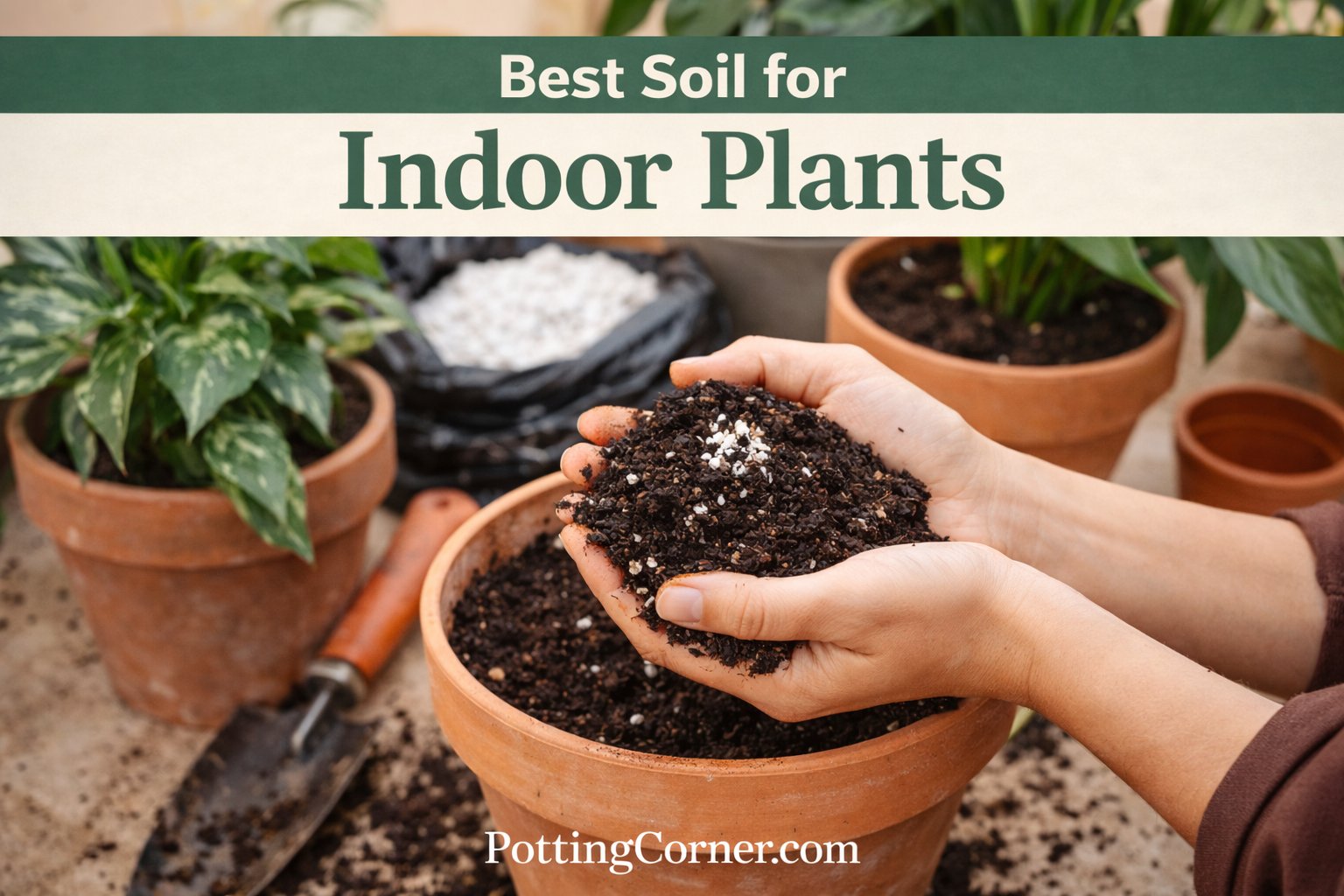
Most houseplants thrive in a well-draining potting mix—not garden soil, not topsoil, and not pure compost. A quality indoor potting mix provides the right balance of moisture retention, drainage, and air circulation that roots need. For specific plant types like succulents or orchids, you'll need specialty mixes or amendments.
This guide focuses on soil selection: what makes a good potting mix, which plants need special soil, and how to improve drainage when standard mixes hold too much water. Our complete guide How to Repot a Houseplant covers the full repotting process.
The Direct Answer: What Most Houseplants Need
For typical tropical houseplants (pothos, philodendron, monstera, peace lily, dracaena):
Use a quality indoor potting mix. Look for bags labeled "indoor," "houseplant," or "container" mix—these are formulated differently than outdoor garden soil.
A good potting mix contains:
- Peat moss or coco coir (moisture retention)
- Perlite or pumice (drainage and aeration)
- Composted bark (structure and drainage)
- Sometimes fertilizer (starter nutrients)
You can use these mixes straight from the bag for most houseplants. If your home tends to stay humid or you're prone to overwatering add extra perlite (about 20% by volume) to improve drainage.
Why You Can't Use Garden Soil Indoors
Garden soil seems like it should work—plants grow in it outside. But in containers, it fails:
It Compacts
Garden soil contains fine particles that pack together in pots. Without earthworms, freezing/thawing cycles, and natural aeration, it becomes dense. Compacted soil:
- Suffocates roots (no air pockets)
- Drains poorly
- Stays waterlogged after watering
- Forms a hard surface crust
It Retains Too Much Water
Outdoor soil dries through evaporation across its entire surface and wicks moisture into surrounding earth. In a pot:
- Only the top surface and drainage hole release moisture
- Bottom layers stay wet indefinitely
- Root rot becomes inevitable
It May Contain Pests and Pathogens
Outdoor soil harbors:
- Weed seeds
- Fungal spores
- Insect eggs and larvae
- Bacteria that cause plant diseases
These are manageable outdoors but can devastate container plants.
Understanding Potting Mix Ingredients
Knowing what's in your mix helps you choose wisely and troubleshoot problems.
Peat Moss
What it does: Retains moisture and provides acidic pH
Pros: Excellent water retention, lightweight, widely available
Cons: Can become hydrophobic when completely dry (repels water), not renewable, acidifies soil
Best for: Moisture-loving tropicals, plants that prefer acidic soil
Coco Coir
What it does: Retains moisture similarly to peat but neutral pH
Pros: Sustainable, rewets easily, holds moisture without compacting as much
Cons: May contain salts (rinse before use if low-quality), less acidic
Best for: General-purpose mixes, environmentally conscious gardeners
Perlite
What it does: Creates air pockets and improves drainage
Pros: Lightweight, sterile, doesn't decompose, prevents compaction
Cons: Floats to surface when watering, dusty when dry
Best for: Any mix needing better drainage; essential for succulents
Vermiculite
What it does: Retains moisture AND creates air pockets
Pros: Holds nutrients and water, lightweight, helps with aeration
Cons: Can compress over time, retains more water than perlite
Best for: Seed starting, moisture-loving plants, mixes that dry too fast
Bark (Orchid Bark, Pine Bark)
What it does: Creates large air pockets, drains quickly, decomposes slowly
Pros: Excellent aeration, mimics natural epiphytic conditions
Cons: Low water retention, decomposes over 1-2 years
Best for: Orchids, aroids like monstera and philodendron, epiphytes
Coarse Sand
What it does: Increases drainage and adds weight
Pros: Doesn't decompose, improves stability for tall plants
Cons: Heavy, doesn't improve aeration much
Best for: Succulents, cacti, plants needing extremely fast drainage
Charcoal (Horticultural Charcoal)
What it does: Absorbs impurities and improves drainage
Pros: Filters toxins, prevents odors, lasts indefinitely
Cons: Doesn't provide nutrients, unnecessary for most applications
Best for: Terrariums, enclosed containers, orchids
Soil Recommendations by Plant Type
Standard Tropical Houseplants
Plants: Pothos, philodendron, monstera, dracaena, schefflera, peace lily, Chinese evergreen
Soil: Quality indoor potting mix, straight from bag or with 10-20% added perlite
Key qualities: Moisture retention with good drainage, slightly acidic to neutral pH
Succulents and Cacti
Plants: All succulents, all cacti, jade plants, aloe, haworthia
Soil: Cactus/succulent mix OR standard potting mix amended with 50% perlite/coarse sand
Key qualities: Fast drainage is critical. Soil should dry completely within 1-3 days.
DIY mix: 1 part potting soil + 1 part perlite + 1 part coarse sand
Orchids
Plants: Phalaenopsis, dendrobium, cattleya, oncidium
Soil: Orchid bark mix (NOT regular potting soil)
Key qualities: Large bark pieces allow air to roots. Orchid roots rot in dense mixes.
Note: Many orchids are epiphytes—they grow on trees in nature, not in soil.
African Violets
Plants: Saintpaulia species and hybrids
Soil: African violet mix OR 1 part potting soil + 1 part perlite + 1 part peat moss
Key qualities: Light and fluffy, excellent drainage, slightly acidic
Ferns
Plants: Boston fern, maidenhair, bird's nest, staghorn
Soil: Standard potting mix with extra peat moss or coco coir
Key qualities: Moisture retention without sogginess; ferns like consistently moist (not wet) soil
Aroids (Monstera, Philodendron, Pothos)
Plants: Monstera deliciosa, philodendron varieties, pothos, anthurium
Soil: Chunky aroid mix OR potting soil + 20% perlite + 20% orchid bark
Key qualities: Excellent drainage and aeration; these plants have thick roots that rot in dense soil
Premium DIY mix: 40% potting soil + 30% orchid bark + 20% perlite + 10% charcoal
Calathea and Prayer Plants
Plants: Calathea, maranta, stromanthe, ctenanthe
Soil: Standard potting mix with added coco coir for moisture retention
Key qualities: Consistent moisture without waterlogging; these plants are sensitive to drying out
Snake Plants and ZZ Plants
Plants: Sansevieria, Zamioculcas zamiifolia
Soil: Cactus/succulent mix OR potting soil + 50% perlite
Key qualities: Fast drainage; these plants store water and rot easily if soil stays wet
How to Tell If Your Soil Is Wrong
Too Dense (Holds Too Much Water)
Signs:
- Soil stays wet for more than a week
- Water pools on surface before absorbing
- Plant shows overwatering symptoms despite careful watering
- Fungus gnats appear (they love wet soil)
- Soil develops musty smell
Fix: Repot with a lighter mix or add 20-50% perlite to current mix
Too Fast-Draining
Signs:
- Soil dries within 1-2 days
- Water runs through immediately without absorbing
- Plant wilts frequently between waterings
- Roots aren't growing well
Fix: Add coco coir or peat moss to retain more moisture; water more frequently
Compacted and Crusty
Signs:
- Hard surface crust forms
- Water runs down pot sides instead of absorbing
- Soil has shrunk away from pot edges
- Plant growth has stalled
Fix: The soil has degraded—it's time to repot with fresh mix
Amending Store-Bought Mixes
Most commercial potting mixes work fine but can be improved for specific needs.
To Increase Drainage
Add perlite, pumice, or coarse sand. Start with 20% by volume.
When to do this:
- For succulents using standard potting mix
- For any plant in a humid environment
- If you tend to overwater
- For plants in plastic pots (which retain more moisture)
To Increase Moisture Retention
Add peat moss, coco coir, or vermiculite.
When to do this:
- For ferns and calatheas
- If your home is very dry
- For plants in terracotta pots (which dry faster)
- If you forget to water frequently
To Improve Aeration for Aroids
Add orchid bark or chunky perlite.
When to do this:
- For monstera, philodendron, and pothos
- When you want to prevent root rot in humidity-loving plants
- To create a more natural growing medium
Common Mistakes When Choosing Soil
Using Outdoor or Garden Soil
This compacts, drains poorly and may introduce pests. Always use mixes formulated for containers.
Skipping Drainage Holes
Even the perfect soil can't compensate for a pot with no drainage. Excess water must escape.
Using Old, Decomposed Soil
Potting mix breaks down over 2-3 years. If your soil is compacted, smelly, or not draining well, it's time for fresh mix.
Assuming All Plants Want the Same Soil
A mix perfect for pothos will rot a succulent. Know your plant's needs before potting.
Over-Amending
Adding too many ingredients can throw off the balance. If using a quality commercial mix, you typically only need one amendment.
Frequently Asked Questions
How long does potting soil last in the bag?
Unopened, 1-2 years. Once opened, use within 6-12 months for best results. Old soil may become compacted or develop mold.
Should I sterilize potting soil before use?
Quality commercial mixes are sterile. You may want to sterilize if using homemade mixes or if pests have been an issue. Bake in oven at 180°F (82°C) for 30 minutes.
Can I reuse old potting soil?
Not for containers. Old soil is nutrient-depleted and may harbor pests or pathogens. Add it to outdoor compost piles or garden beds instead.
What's the difference between potting mix and potting soil?
"Potting mix" typically refers to soilless blends (peat, perlite, bark). "Potting soil" may contain actual soil. For indoor plants, soilless potting mix is usually better.
Is expensive potting mix worth it?
Quality matters more than price. Look for mixes with visible perlite and bark, light texture, and no foul odor. Premium mixes often include better drainage components.