Bottom Watering: When It Works Best
Setting your pot in a dish of water lets soil absorb moisture from below but it's not always better than top watering. Here's when bottom watering helps and when it doesn't.
Potting Corner Team · Jan 8, 2026 · 7 min read
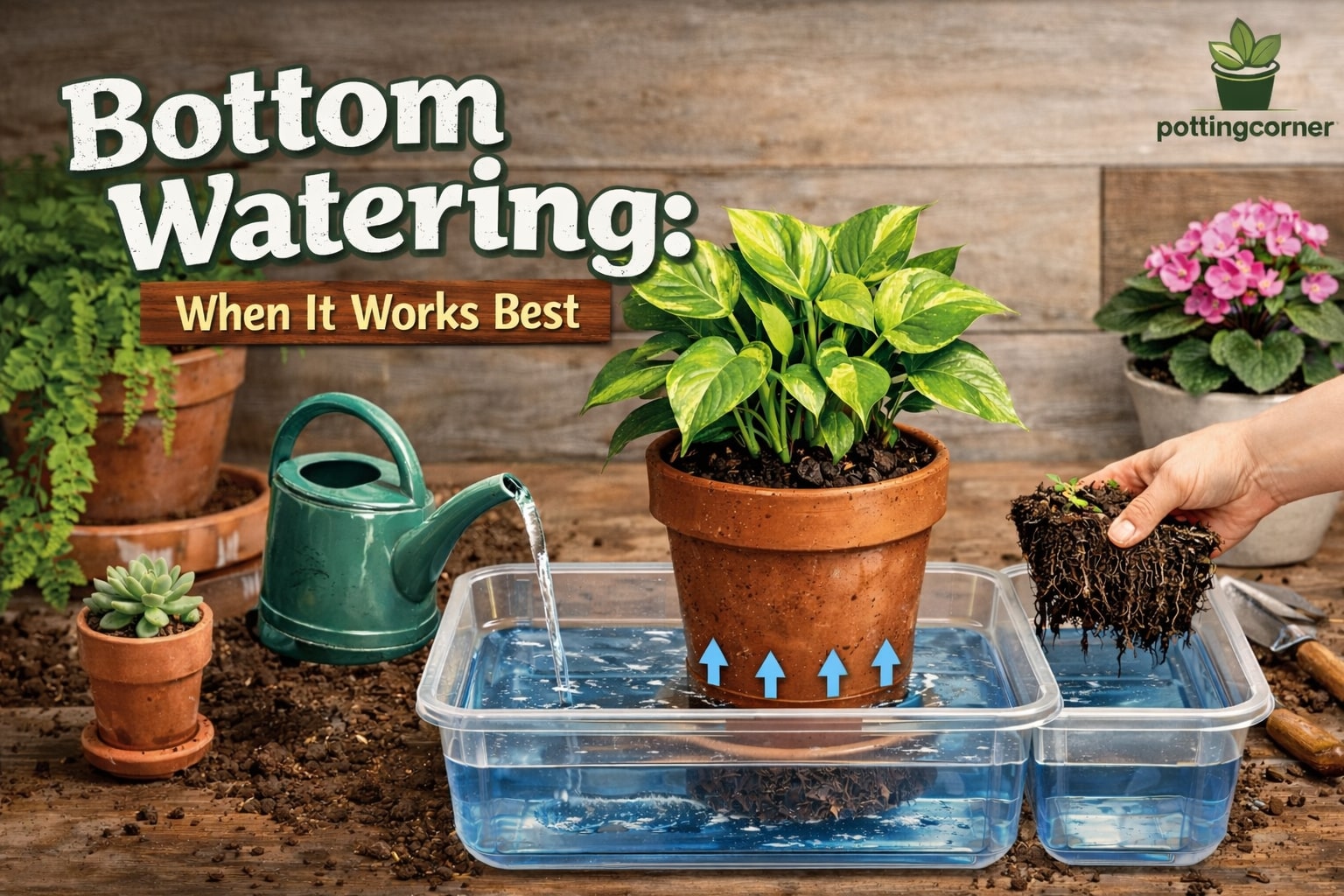
Bottom watering means setting your pot in a container of water and letting soil absorb moisture from below through capillary action. It's thorough, keeps foliage dry and can encourage roots to grow downward but it's not the right choice for every situation. It's slower than top watering, doesn't flush salt buildup and won't work with hydrophobic soil.
This guide explains when bottom watering is worth the extra time and when you should stick to top watering. For general watering guidance, see How to Water Houseplants.
The Direct Answer: Best Uses for Bottom Watering
| Situation | Bottom Watering? |
|---|---|
| Plants that hate wet leaves (African violets) | Yes |
| Very dry, pulling-away-from-pot soil | Yes |
| Dense foliage covering soil surface | Yes |
| Routine watering of healthy plants | Either works |
| Plants needing salt flushing | No (use top watering) |
| Plants in hydrophobic soil | No (won't absorb) |
| Large, heavy pots | Impractical |
The rule: Bottom water when you need thorough saturation or dry foliage. Top water periodically to flush salts regardless of your primary method.
How Bottom Watering Works
Soil absorbs water through capillary action the same force that draws water up a paper towel. When you set a pot in water:
- Water enters through drainage holes
- Capillary action pulls moisture upward through soil particles
- Water spreads horizontally and vertically through the root zone
- Eventually the entire pot is saturated
The process takes 15-30 minutes depending on pot size and soil type.
How to Bottom Water
Step-by-Step Method
- Fill a container with room-temperature water (tray, basin, sink, or bathtub)
- Water depth: About 1-2 inches, or 1/3 up the pot's height
- Place the pot in the water
- Wait 15-30 minutes until the soil surface feels moist
- Remove the pot and let excess drain
- Empty any saucers that collected water
How to Know It's Done
Touch the soil surface. When moisture has wicked all the way up and the surface feels damp (not just the bottom) the pot is saturated. Some gardeners wait until they see a slight darkening of the soil surface.
Pot Requirements
Bottom watering only works with:
- Pots that have drainage holes
- Pots small enough to set in a container
- Pots with soil that can absorb water (not hydrophobic)
When to Use Bottom Watering
Plants That Hate Wet Foliage
Some plants are prone to leaf problems when water sits on them:
- African violets: Water on leaves causes spots
- Begonias: Leaf rot from moisture
- Cyclamen: Crown rot from water in center
- Succulents: Rot from water trapped between leaves
For these plants, bottom watering keeps foliage completely dry.
Very Dry Soil That's Pulling Away
When soil dries severely it shrinks and pulls away from the pot edges. If you top water in this state, water runs down the gap without absorbing into the root ball. The soil stays dry despite your watering.
Bottom watering solves this: the soil slowly rehydrates from below, swelling back to contact the pot walls.
Dense Foliage Covering Soil
Plants like dense pothos, bushy ferns, or full coleus may cover their soil surface completely. Getting a watering can past the foliage without soaking leaves is difficult. Bottom watering bypasses this problem entirely.
When You Want Extra Thorough Saturation
Bottom watering ensures complete saturation of the entire root zone. There's no chance of dry pockets or uneven distribution, capillary action spreads water everywhere.
When NOT to Bottom Water
Salt Buildup Needs Flushing
Fertilizer leaves mineral salts in soil. Over time, these accumulate and can damage roots. Top watering flushes these salts out through drainage holes. Bottom watering doesn't, salts stay put and may even concentrate at the surface as water evaporates.
Solution: Even if you primarily bottom water, top water every 3-4 waterings to flush salts.
Hydrophobic Soil
Soil that repels water (common in very dry peat-based mixes) won't absorb moisture from below efficiently. You might wait an hour and find the water level unchanged because the soil simply isn't wicking.
Solution: For severely hydrophobic soil, soak the entire pot submerged for 30+ minutes, or use a soil surfactant. Alternatively, water slowly from the top in stages.
Large, Heavy Pots
A 14-inch pot full of wet soil is extremely heavy. Finding a container to hold it, lifting it in and out, these become impractical. Top watering is simply more manageable for large plants.
Plants That Shouldn't Stay Wet
Some plants, especially succulents and cacti, do better with quick-draining soil that doesn't stay saturated. Bottom watering encourages complete saturation, which might be too much for drought-adapted plants.
For these, a quick top watering that drains fast may be preferable.
Tips for Successful Bottom Watering
Use Room-Temperature Water
Cold water shocks roots. Fill your container in advance and let it reach room temperature, or use water you've set out overnight.
Don't Leave Pots Sitting Indefinitely
Once soil is saturated (surface feels moist), remove the pot. Leaving it in water for hours doesn't help and can encourage root problems.
Size the Container Appropriately
The water container should be:
- Slightly larger than the pot diameter
- Able to hold 1-2 inches of water
- Easy to empty afterward
Shallow trays work for small pots. A sink or bathtub works for multiple pots at once.
Check That Soil Is Actually Absorbing
After 10 minutes the water level should have dropped as soil absorbed it. If it hasn't, your soil may be hydrophobic or drainage holes may be blocked.
Don't Forget Salt Flushing
Mark your calendar or note every 3-4 waterings to top water instead. This prevents salt buildup that bottom watering can't address.
Common Mistakes
Leaving Pots in Water Too Long
Extended soaking (hours) isn't necessary and can waterlog soil. Once the surface is moist, remove the pot.
Never Top Watering
Exclusive bottom watering leads to salt accumulation at the soil surface. Those white crusty deposits are mineral salts that can harm leaves and roots.
Expecting It to Work with Bone-Dry Soil
Very dry, hydrophobic soil may not absorb water from below. You might need to soak the pot fully submerged or address the hydrophobia first.
Using Cold Water
Cold water shocks tropical plants. Always use room-temperature water.
Forgetting Drainage
Bottom watering requires drainage holes. Pots without holes can't absorb water from below they'll just sit there.
Frequently Asked Questions
How long should I bottom water?
Usually 15-30 minutes. Check the soil surface, when it feels damp the pot is saturated. Smaller pots absorb faster.
Can I bottom water all my plants?
Most plants tolerate bottom watering fine. It's especially good for those that dislike wet foliage. Just remember to top water periodically to flush salts.
Why isn't my plant absorbing water?
The soil may be hydrophobic (repelling water). Try fully submerging the pot for 30 minutes, or use a soil surfactant. Check that drainage holes aren't blocked.
Does bottom watering prevent overwatering?
Not inherently. You can still overwater by watering too frequently. Bottom watering affects how you water not when. Check soil before watering regardless of method.
Should I bottom water succulents?
Succulents prefer fast-draining soil that doesn't stay wet long. Top watering with thorough drainage often works better. If you bottom water succulents don't leave them soaking too long.