Brown Leaf Tips: Causes and Fixes
Those crispy brown tips on your houseplant leaves look bad and spread if the cause isn't addressed. Low humidity, inconsistent watering, salt buildup and other factors create this common problem.
Potting Corner Team · Feb 22, 2026 · 8 min read
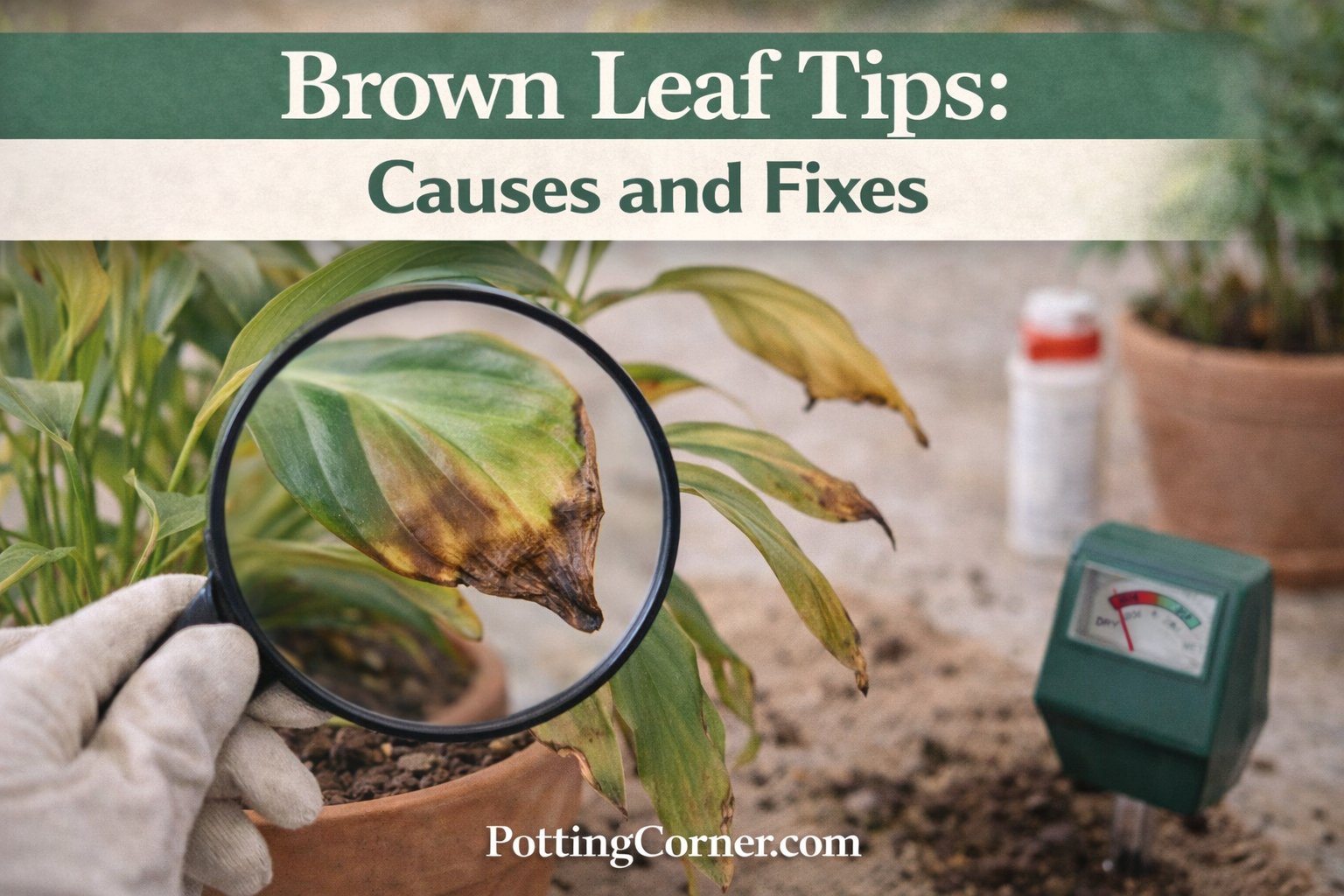
Brown tips are frustrating they're unsightly and the affected portion won't recover. But they're also diagnostic: the pattern of browning tells you what's wrong. Is it just the very tips? The whole edge? Progressing from edge inward? Each pattern points to different causes, from humidity and watering issues to chemical buildup and root problems.
For a complete troubleshooting overview, see Houseplant Troubleshooting: Common Problems and Fixes.
The Direct Answer: Brown Tip Patterns
| Pattern | Most Likely Cause | Solution |
|---|---|---|
| Just the very tips | Low humidity | Increase humidity |
| Tips + edges | Inconsistent watering | More consistent watering |
| Progressive browning from edge | Salt/mineral buildup | Flush soil, use filtered water |
| Brown tips + yellow leaves | Overwatering | Let soil dry, check roots |
| Brown patches (not edges) | Sunburn | Reduce light exposure |
The rule: Brown tips rarely mean just one thing. Consider your care routine, water quality and environment together.
Low Humidity: The Classic Cause
Why It Happens
Most houseplants are tropical:
- Evolved in 60-80% humidity environments
- Indoor air typically runs 30-50%
- Winter heating drops humidity further
- Dry air pulls moisture from leaf margins
- Tips and edges lose moisture first
Which Plants Suffer Most
Some are more sensitive:
- Calatheas and marantas
- Spider plants
- Peace lilies
- Ferns
- Dracaenas
- Palms
How to Confirm
Signs point to humidity:
- Tips brown first, then edges
- Multiple leaves affected similarly
- Your home feels dry
- Happens more in winter
- Misting provides temporary relief
The Fix
Increase ambient moisture:
- Pebble tray: Place pot on pebbles in water-filled tray
- Humidifier: Most effective for consistent humidity
- Group plants: They create a humid microclimate
- Choose location: Bathrooms and kitchens are more humid
- Misting: Temporary help, needs repeating
See .
Inconsistent Watering
Why It Happens
Stress from extremes:
- Swinging between bone dry and soaked
- Roots can't maintain consistent hydration
- Leaf tips suffer from repeated stress
- Each wet-dry cycle causes more damage
How to Identify
Look for patterns:
- Browning with dry, crispy texture
- Soil history of very wet then very dry
- Irregular watering schedule
- Forgetting to water for extended periods
The Fix
Develop consistency:
- Check soil moisture regularly (same day each week)
- Water when top inch or two is dry (varies by plant)
- Water thoroughly when you do water
- Don't let soil go completely bone dry
- Use a moisture meter if helpful
See When to Water Houseplants: What to Check.
Salt and Mineral Buildup
Why It Happens
Accumulation over time:
- Tap water contains dissolved minerals
- Fertilizer salts accumulate in soil
- Water evaporates; minerals stay behind
- Buildup reaches toxic levels for roots
- Root damage shows as brown tips
How to Identify
Signs of buildup:
- White crust on soil surface
- White residue on terra cotta pots
- Browning progresses slowly over time
- Happens despite good watering habits
- Gets worse after months of tap water use
The Fix
Flush and prevent:
- Flush soil: Run water through pot for several minutes
- Repeat flushing: Monthly or every few months
- Use filtered water: Removes most minerals
- Rainwater or distilled: Best for sensitive plants
- Don't over-fertilize: Less salt accumulation
See and .
Fluoride and Chemical Sensitivity
Sensitive Species
Some plants react to tap water chemicals:
- Spider plants
- Dracaenas
- Ti plants
- Palms
- Peace lilies
These are notably sensitive to fluoride in tap water.
How It Looks
Similar to other brown tips:
- Tips turn brown, progressing down
- Happens gradually
- More pronounced with fluoridated water
- May affect all leaves over time
The Fix
Better water sources:
- Use filtered water (removes most fluoride)
- Rainwater (no additives)
- Distilled water (pure but expensive)
- Let tap water sit overnight (doesn't remove fluoride but helps with chlorine)
Underwatering
Why It Happens
Chronic dehydration:
- Not enough water reaching leaf tips
- Extremities suffer first
- Repeated drought stress causes damage
- Brown tips are just the beginning
How to Identify
Check the soil:
- Soil often very dry when checked
- Plant may be wilted when you water
- Tips brown AND leaves may curl
- Plant perks up dramatically after watering
The Fix
Water more thoroughly:
- Water until it flows from drainage holes
- For severely dry soil, water twice or soak pot
- Water before soil goes completely dry
- Check more frequently in summer
- Consider if pot is too small
Root Problems
Why Tips Brown from Root Issues
Damaged roots can't deliver water:
- Root rot prevents water uptake
- Rootbound plants can't absorb enough
- Root damage causes same symptoms as underwatering
- Tips brown even when soil is moist
How to Identify
Look deeper:
- Soil is wet but tips still browning
- Plant seems chronically stressed
- May have yellow leaves too
- Hasn't been repotted in years
- Poor drainage situation
The Fix
Address root health:
- Check roots by gently removing plant from pot
- Trim any mushy, dead roots
- Repot if rootbound
- Use well-draining soil
- Ensure drainage holes are clear
See Root Rot: Causes and Treatment.
Sunburn and Heat Damage
How It Differs
Brown patches not tips:
- Irregular brown spots on leaves
- Where direct sun hits
- May have yellowing around brown
- Happens on sun-facing sides
When It's Tips and Edges
Heat from sun can dry tips too:
- Plants near hot windows
- Afternoon sun through glass
- Combination of heat and light
- Tips crisp from dehydration
The Fix
Adjust light exposure:
- Move back from intense sun
- Use sheer curtains to filter
- Monitor afternoon sun especially
- Acclimate gradually if increasing light
See How to Tell If Your Plant Is Getting Too Much Sun.
Can I Cut Off Brown Tips?
Yes, But Do It Right
Trimming brown tips is fine:
- Won't hurt the plant
- Improves appearance
- But doesn't fix the underlying cause
- Tips may brown again if problem persists
How to Trim
Technique matters:
- Use sharp, clean scissors
- Cut just inside the brown (don't cut into green)
- Follow the natural leaf shape if trimming edge
- Accept a slight brown line where you cut
- Sterilize scissors between plants
Better Approach
Fix, then trim:
- Address the cause first
- Let new growth show improvement
- Then trim old damage for appearance
- Otherwise you're constantly trimming
Prevention Strategies
For Humidity Issues
Proactive measures:
- Know your plant's humidity needs
- Add a humidifier in dry seasons
- Group humidity-loving plants together
- Keep away from heating vents
- Monitor indoor humidity levels
For Watering Issues
Develop good habits:
- Consistent checking schedule
- Water thoroughly when you water
- Don't let soil go extremely dry
- Use well-draining soil and pots
- Know each plant's water needs
For Water Quality
Simple changes help:
- Filter tap water
- Flush soil occasionally
- Don't over-fertilize
- Consider sensitive plants' needs
Frequently Asked Questions
Will the brown tips grow back green?
No. Once leaf tissue is dead (brown) it won't recover. New leaves will come in healthy if you fix the underlying problem but damaged leaves remain damaged.
How do I know if it's humidity or watering?
Check your watering consistency first it's most often the culprit. If watering is truly consistent and thorough, humidity is likely, especially in winter or with humidity-sensitive plants.
Should I be worried about a few brown tips?
A few minor brown tips happen to almost everyone and aren't emergencies. If browning spreads or affects most leaves, investigate more urgently.
My spider plant always gets brown tips no matter what I do. Why?
Spider plants are notoriously sensitive to fluoride and minerals in tap water. Try filtered or distilled water, this often solves persistent spider plant tip browning.
Can over-fertilizing cause brown tips?
Yes. Excess fertilizer creates salt buildup that damages roots and causes tip browning. Reduce fertilizer frequency and flush soil to remove accumulated salts.