Do You Need a Cachepot? How to Use One Safely
Cachepots, decorative outer containers, let you use any beautiful pot without worrying about drainage. Keep plants in their functional nursery pots and slip them inside for display.
Potting Corner Team · Apr 6, 2026 · 7 min read
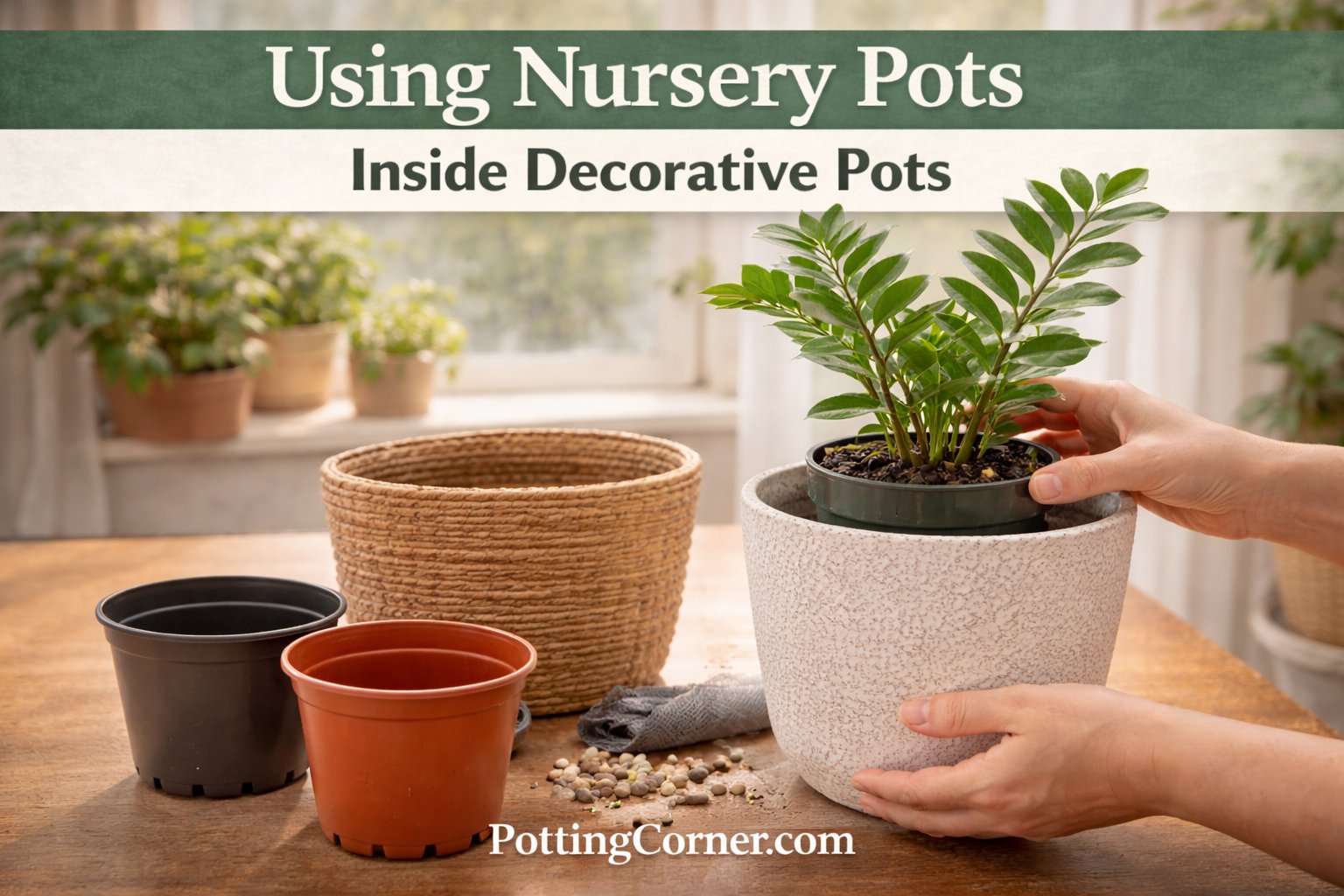
A cachepot is simply a decorative container that holds your plant's functional pot. This elegant solution lets you use any beautiful container, even one without drainage holes, while keeping your plant healthy. It's the best of both worlds: form and function.
For essential supplies overview, see Essential Houseplant Tools and Supplies.
The Direct Answer: Cachepot Basics
| Element | What to Use |
|---|---|
| Inner pot | Nursery pot with drainage holes |
| Outer pot | Decorative cachepot (any material) |
| Hiding gap | Moss, stones, or decorative mulch |
| Water catch | Pebbles or small dish inside cachepot |
The rule: Never plant directly into pots without drainage. Use the decorative pot as a holder for the functional pot.
How the System Works
The Setup
Simple arrangement:
- Plant stays in nursery pot with drainage
- Nursery pot slips into decorative cachepot
- Cachepot holds everything together
- Plant gets good drainage; you get good looks
For Watering
Maintain proper drainage:
- Remove nursery pot from cachepot
- Water thoroughly in sink or over saucer
- Let drain completely (15-30 minutes)
- Return to cachepot
Alternatively
If removal is difficult:
- Water carefully in place
- Check for pooled water in cachepot after watering
- Remove any collected water
- Never let the nursery pot sit in water
See How to Water Houseplants: The Beginner's Guide.
Benefits of Cachepots
Any Pot Becomes Usable
Opens your options:
- That gorgeous ceramic with no holes? Now usable
- Vintage containers? Perfect
- Baskets, boxes, buckets? All work
- Creativity without compromise
Easy Plant Swaps
Flexibility:
- Change out plants easily
- Rotate seasonal displays
- Move plants between rooms
- Swap a struggling plant without disturbing display
Simpler Repotting
When plants need larger pots:
- Only need to size up the inner pot
- May keep same cachepot if it still fits
- Less investment in matching containers
- More practical long-term
See How to Repot Houseplants: Step-by-Step.
Better Drainage Practice
Encourages good habits:
- Removing for watering is intentional
- You see how much water drains
- Harder to forget about drainage
- Built-in reminder to check for pooling
Choosing the Right Cachepot
Size Matching
Getting proportions right:
- Cachepot should be 1-2 inches larger than nursery pot
- Nursery pot rim can be visible or hidden
- Some gap allows airflow
- Too tight is hard to remove
Depth Considerations
Height matters:
- Nursery pot shouldn't stick up too high
- Or sink too deep
- Match depths approximately
- Can elevate with pebbles if needed
Style Options
Endless variety:
- Ceramic, glazed or unglazed
- Baskets (line if not waterproof)
- Metal containers
- Woven or fabric
- Wood (line with plastic)
- Anything decorative
See Terracotta vs Plastic Pots: Which Is Better?.
See Drainage Holes: Why They Matter.
Hiding the Nursery Pot
When the Rim Shows
Making it look intentional:
- Add decorative moss on top
- Use small stones or pebbles
- Bark or decorative mulch
- Cover the nursery pot edge
Elevating the Plant
If too deep in cachepot:
- Place small stones in bottom
- Use an inverted pot or dish
- Cork or cardboard spacer
- Raises nursery pot to right height
Concealing Plastic
Aesthetic touches:
- Decorative sheet moss around edges
- Colored stones or glass beads
- Small plants tucked in gaps
- Makes the arrangement look finished
Managing Water in Cachepots
Prevention
Keep water from accumulating:
- Remove nursery pot for watering when possible
- Add pebbles in cachepot bottom to elevate
- Creates space for any small drips
- Water can evaporate
Checking for Pooling
After watering:
- Lift nursery pot and look
- Feel the bottom for water
- Pour out any collected water
- Don't skip this step
If Water Collects
What to do:
- Lift out nursery pot
- Pour out cachepot water
- Add more pebbles if needed
- Water more carefully next time
Special Cachepot Situations
Baskets
Popular and tricky:
- Not waterproof
- Line with plastic (garbage bag, sheet plastic)
- Or remove for watering every time
- Protect from any drips
Metal Containers
Stylish but watch for:
- May rust with exposure to moisture
- Line if possible
- Keep dry inside
- Remove for watering
Vintage and Antique Containers
Protect your investment:
- Use with extra care
- Always line if valuable
- May prefer to keep truly antique items dry
- Balance aesthetics with preservation
Large Floor Plant Cachepots
Practical considerations:
- Heavy, hard to remove for watering
- Use wheeled plant caddy beneath
- May need to water in place carefully
- Be vigilant about pooled water
Common Cachepot Mistakes
Leaving Water Sitting
Defeats the purpose:
- Pooled water reaches roots
- Same as no drainage
- Check and empty after watering
- Don't assume it evaporates
See Overwatered Plant: How to Save It.
Pot Too Tight
Difficult to manage:
- Hard to remove for watering
- No airflow
- Size up the cachepot
- Should lift out easily
Forgetting to Water Properly
Visible pot hides problems:
- Can't see soil condition easily
- May forget to check moisture
- Lift and check or use moisture meter
- Decorative doesn't mean neglected
Planting Directly in Cachepot
Misunderstanding the system:
- Cachepots typically lack drainage
- Planting directly causes root rot
- Always use an inner pot with holes
- The beauty of the system is separation
Making It Look Intentional
Cohesive Style
Coordinated displays:
- Match cachepot to room decor
- Consistent materials or colors
- Group similar styles
- Curated appearance
Hiding Mechanics
Polished presentation:
- Top dressings cover soil and pot rim
- Looks like a single planted container
- No visible plastic nursery pot
- Professional finish
Quality Cachepots
Worth the investment:
- Better materials last longer
- Nicer appearance elevates plants
- One good cachepot beats several cheap ones
- Reusable for years
Frequently Asked Questions
Can I leave the plant in the cachepot all the time?
Yes but manage water carefully. Either remove for watering or check for pooled water after and pour it out. Never let the inner pot sit in collected water.
How do I know what size cachepot to buy?
Measure your nursery pot's outer diameter. The cachepot should be at least 1 inch larger in diameter. Check depth too, you want the nursery pot to sit at the right height.
Do I need to put rocks in the bottom of the cachepot?
Not required but helpful. A layer of pebbles elevates the nursery pot slightly and provides space for any small drips to collect without the pot sitting in water.
What if my cachepot is much larger than the nursery pot?
Elevate the nursery pot with something (inverted pot, stones, spacer). Top-dress generously to hide the gap. It can still look good even with size mismatch.
Should I drill drainage holes in decorative pots instead?
You can but cachepot method is often easier. Drilling risks cracking and still requires a saucer. Cachepots give you flexibility without modification.