Drooping Houseplant: Why and What to Do
A drooping plant is begging for help but the cause could be thirst, overwatering, temperature shock, or transplant stress. The solution depends entirely on the diagnosis here's how to tell.
Potting Corner Team · Feb 16, 2026 · 8 min read
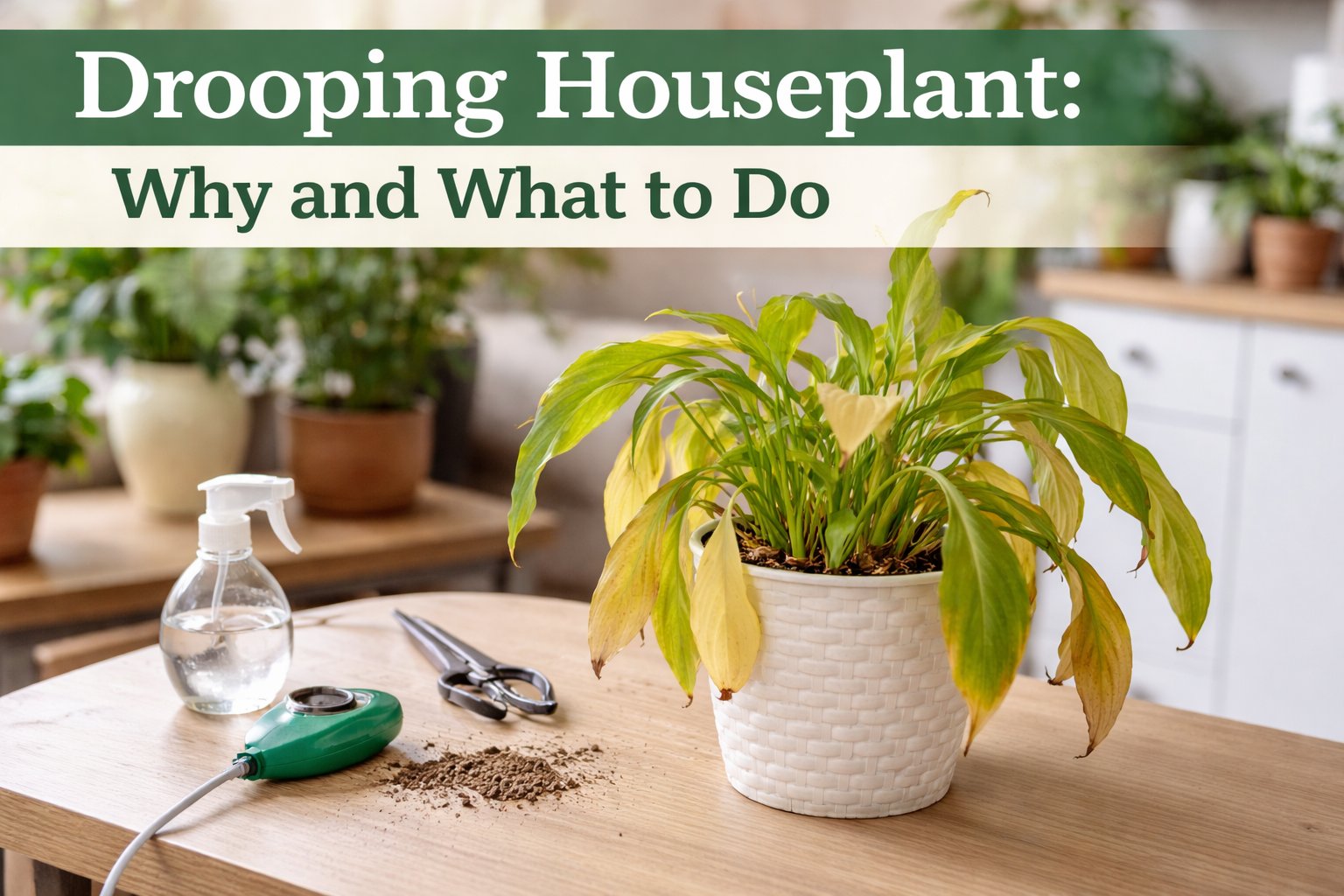
When your plant droops it's sending a clear distress signal but the message could mean several things. Underwatering and overwatering both cause drooping. So do temperature shock, transplant stress and root problems. Adding water to an already-overwatered plant accelerates its death. The first step is always diagnosis.
For a complete troubleshooting overview, see Houseplant Troubleshooting: Common Problems and Fixes.
The Direct Answer: Drooping Causes
| Soil Condition | Other Clues | Likely Cause | Action |
|---|---|---|---|
| Dry | Light pot, crispy edges | Underwatering | Water thoroughly |
| Wet | Yellow leaves, soft | Overwatering/rot | Stop watering, check roots |
| Normal | Just moved or repotted | Transplant shock | Wait and support |
| Normal | Near vent or window | Temperature stress | Move away from stress |
| Normal | No obvious cause | Root damage | Investigate roots |
The rule: Check soil moisture BEFORE doing anything. This single step tells you which direction to go.
Why Plants Droop
The Science of Wilting
Plants depend on water pressure:
- Water fills cells, keeping them firm (turgor pressure)
- When water is insufficient, cells lose pressure
- Leaves and stems go limp
- This is wilting or drooping
What Interrupts Turgor
Several things cause loss of water pressure:
- Not enough water coming in (underwatering)
- Roots can't absorb water (overwatering damage, root rot)
- Plant is stressed (temperature, transplant)
- Excessive water loss (heat, wind, low humidity)
Underwatering: The Common Cause
How to Identify
Quick checks:
- Soil is dry (finger test or moisture meter)
- Pot feels light when lifted
- Soil may be pulling away from pot edges
- Leaves may be crispy not soft
The Fix
Simple and fast:
- Water thoroughly until it drains from the bottom
- For very dry soil, water twice or bottom-water
- Plant should recover within hours
- Establish more consistent watering routine
See Underwatered Plant: Signs and Recovery.
Recovery Timeline
Usually fast:
- Visible improvement within 1-6 hours
- Full recovery within 24 hours
- Some crispy damage may remain
Overwatering: The Dangerous Cause
How to Identify
Different pattern:
- Soil is wet or soggy
- Pot feels heavy
- Leaves may be yellowing or soft
- May have been wet for days
Why It Causes Drooping
Seems counterintuitive:
- Waterlogged soil suffocates roots
- Damaged roots can't absorb water
- Plant wilts despite available water
- It's essentially dehydrated despite wet soil
The Danger
Adding more water makes it worse:
- Person sees wilting, adds water
- Roots continue drowning
- More damage, more wilting
- Death spiral accelerates
The Fix
Stop and assess:
- Stop watering immediately
- Check roots for rot (brown, mushy = bad)
- If rot present, remove dead roots and repot
- If just overwatered, let soil dry completely
See Overwatered Plant: How to Save It.
Recovery Timeline
Longer than underwatering:
- Days to weeks depending on damage
- May not fully recover if severe
- Watch for continued decline
Temperature Shock
Common Scenarios
When temperature stress occurs:
- Near cold window in winter
- Near heating or AC vents
- After moving outdoors or indoors
- Sudden temperature drop
- Left outside during cold snap
How to Identify
Context clues:
- Plant was fine until temperature event
- Soil moisture is normal
- Location involves temperature extremes
- May have blackened or damaged leaves
The Fix
Remove the stressor:
- Move away from cold windows, vents, drafts
- Stabilize temperature
- Don't add stress (no repotting, heavy watering)
- Wait for recovery
See and .
Recovery Timeline
Varies by damage:
- Mild shock: Days
- Moderate: 1-2 weeks
- Severe (frost): May not recover
Transplant Shock
Why It Happens
Repotting is stressful:
- Roots are disturbed
- Environment changed
- Plant needs to adjust
- May temporarily droop
How to Identify
Timeline is key:
- Drooping started after repotting
- Occurred within days of the move
- No other obvious cause
- Soil moisture is appropriate
The Fix
Patience and support:
- Don't overwater in response
- Don't fertilize stressed plants
- Provide good light (not intense sun)
- Maintain stable conditions
- Wait
Recovery Timeline
Usually resolves:
- 1-2 weeks for minor shock
- 3-4 weeks for more stressed plants
- Should stabilize eventually
Root Damage
Causes of Root Problems
Beyond overwatering:
- Physical damage during repotting
- Root bound and circling (girdling)
- Pest damage underground
- Disease affecting roots
How to Identify
When nothing else explains it:
- Watering is appropriate
- No temperature stress
- Chronic drooping that doesn't resolve
- May need to inspect roots
The Fix
Address root issues:
- Gently remove from pot
- Examine root system
- Trim dead or damaged roots
- Repot with fresh soil if needed
- Treat underlying cause
See Root Rot: Causes and Treatment.
Heat and Dehydration
When Heat Causes Drooping
Rapid water loss:
- Hot sunny day
- Plant in direct sun
- Near heat source
- Low humidity
- Small pot that dries quickly
How to Identify
Environmental cause:
- Happens during heat/sun exposure
- Recovers when conditions moderate
- Soil may be normal or dry
- No other symptoms
The Fix
Manage the environment:
- Move to cooler location
- Provide shade from intense sun
- Increase watering frequency if needed
- Consider pot size and moisture retention
Diagnosing Your Drooping Plant
Step 1: Check Soil Moisture
The critical first step:
- Dry = likely underwatering
- Wet = likely overwatering
- Normal = something else
Step 2: Consider Recent Events
What changed:
- Did you just repot?
- Did you move the plant?
- Any temperature events?
- Change in care routine?
Step 3: Examine the Plant
Look for other clues:
- Yellow leaves suggest overwatering
- Crispy edges suggest underwatering
- Damaged leaves suggest temperature
- Check stems for mushiness
Step 4: Act Accordingly
Match solution to cause:
- Underwatering: Water
- Overwatering: Stop watering, possibly repot
- Temperature: Move location
- Transplant: Wait and support
Common Drooping Mistakes
Watering Without Checking Soil
The biggest error:
- See drooping add water
- But soil was already wet
- Made the problem worse
- Always check first
Overreacting
Too much intervention:
- Plant droops
- You repot, move and fertilize
- Multiple stresses compound
- Let plant recover before making more changes
Ignoring Early Signs
Waiting too long:
- Slight droop is easier to fix
- Severe droop may indicate damage
- Catch problems early
- Regular observation helps
Wrong Diagnosis
Easy to confuse:
- Overwatering and underwatering look similar initially
- Only soil check distinguishes them
- Wrong action accelerates decline
Plants That Droop Dramatically
Drama Queens
Some plants are expressive:
- Peace lilies (droop dramatically when thirsty)
- Fittonias (wilt at first sign of dryness)
- Calatheas (sensitive to conditions)
- Polka dot plants
- Impatiens
These recover quickly when conditions improve.
Stoic Plants
Less obvious signals:
- Snake plants (rarely droop)
- ZZ plants (very resilient)
- Succulents (different stress signs)
- Cacti
By the time these droop, damage may be severe.
Frequently Asked Questions
My plant drooped, I watered it and it recovered. But it keeps happening. Why?
You're probably letting it get too dry between waterings. Try watering more frequently, before it reaches the drooping point. Or check if the pot is too small and drying out too quickly.
My plant has been droopy for weeks despite regular watering. What's wrong?
Chronic drooping suggests root problems, likely damage or rot from overwatering. Check the roots. If they're brown and mushy, you have rot that needs treatment.
Can a severely drooped plant recover?
Often yes, if treated correctly. Plants are resilient. Even dramatically wilted plants from underwatering often recover fully. Overwatering damage is harder but possible with quick action.
Should I mist a drooping plant?
Misting doesn't address the cause of drooping. If it's thirsty, water the soil. If it's overwatered, misting adds to the problem. Address the root cause not surface symptoms.
My plant droops every afternoon but perks up overnight. Is that normal?
Some drooping during heat/peak light is normal, especially for thin-leaved plants. If it recovers overnight the plant is likely fine. Ensure adequate watering if it happens frequently.