Grow Lights for Beginners: Simple Setup
Not enough natural light? Grow lights can fill the gap, without complicated setups or expensive equipment. Here's a beginner-friendly guide to supplementing light for houseplants.
Potting Corner Team · Mar 2, 2026 · Updated Mar 2, 2026 · 7 min read
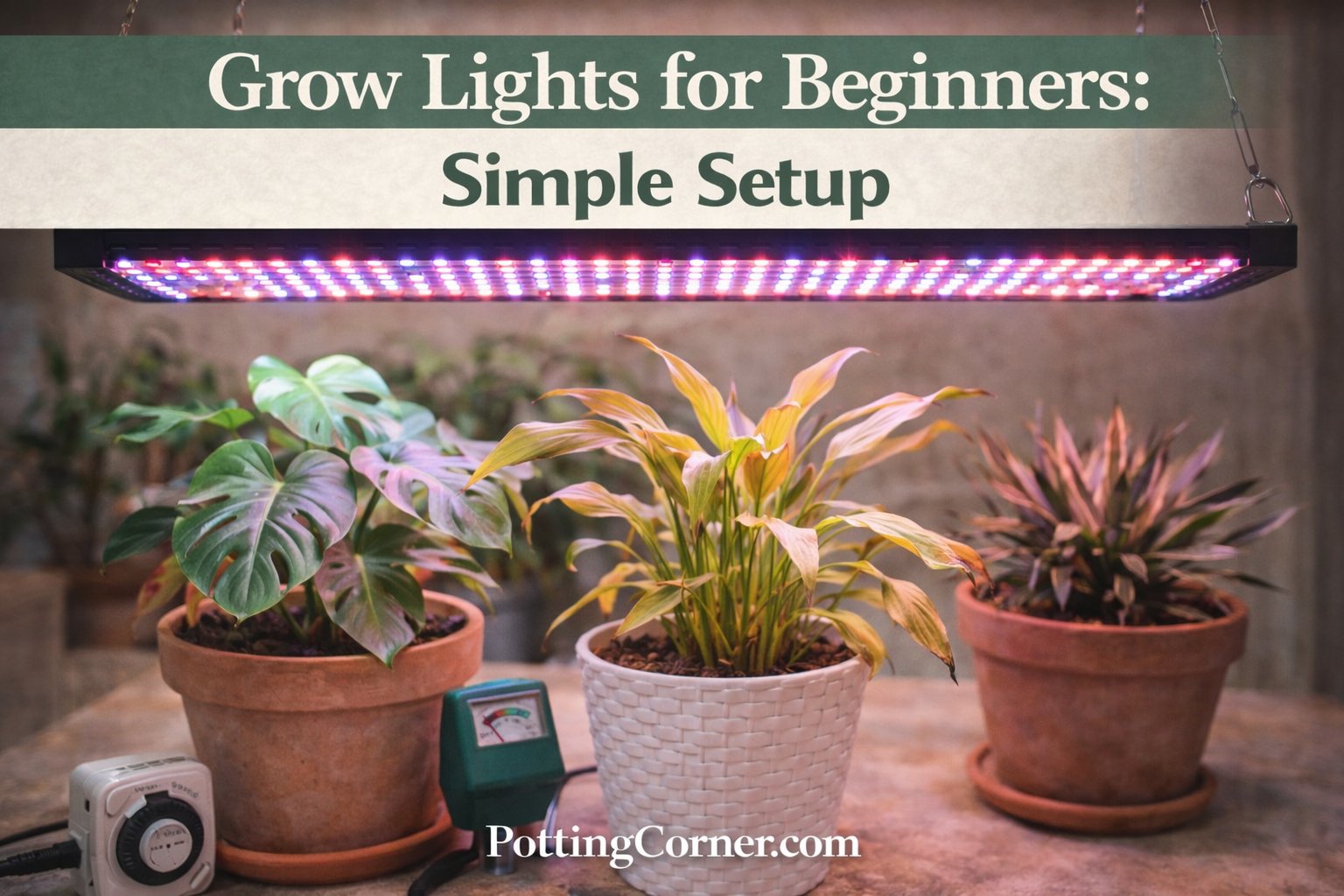
Not every home has bright, sunny windows and that's okay. Grow lights provide the light plants need when natural sources fall short. The good news: you don't need expensive or complex systems. A simple LED grow light bulb in a standard lamp can make the difference between a struggling plant and a thriving one.
For natural light guidance, see Indoor Plant Light Guide.
The Direct Answer: Basic Setup Options
| Setup Type | Best For | Cost | Complexity |
|---|---|---|---|
| LED bulb in desk lamp | 1-3 plants | Low | Very easy |
| Clip-on grow light | Small area | Low | Easy |
| LED strip/panel | Shelf of plants | Moderate | Easy |
| Shop light with grow tubes | Multiple shelves | Moderate | Easy |
The rule: Start simple. A $15-25 LED grow bulb helps most low-light situations.
When You Need Grow Lights
Insufficient Natural Light
Signs your plants need more light:
- Leggy, stretched growth reaching toward windows
- Slow or no growth during growing season
- Leaves getting smaller over time
- Loss of variegation
- North-facing only or small windows
Windowless or Interior Spaces
Areas without natural light:
- Interior offices
- Bathrooms without windows
- Basements or rooms with minimal windows
- Far corners of large rooms
Winter Supplementation
Seasonal light drop:
- Shorter days reduce light hours
- Lower sun angle reduces intensity
- Plants that thrived in summer may struggle
- Supplemental light maintains growth
Types of Grow Lights
LED Grow Lights (Recommended for Beginners)
Modern and efficient:
- Low energy consumption
- Minimal heat output
- Long lifespan (often 25,000+ hours)
- Available as bulbs, panels and strips
- Range from pink/purple to full-spectrum white
Best choice for most beginners.
Full-Spectrum LED
White light that looks natural:
- Contains all colors plants need
- Pleasant for living spaces (not pink/purple)
- Works well for all growth stages
- Higher quality versions are excellent
Pink/Purple (Blurple) LED
Targeted spectrum lights:
- Focus on red and blue wavelengths
- Plants use these most efficiently
- But appearance can be annoying in living spaces
- Effective but not always aesthetically preferred
Fluorescent
Older but still effective:
- T5 or T8 tubes
- Cool running
- Good for shelves and seed starting
- Being replaced by LED in most applications
Incandescent Grow Bulbs
Old technology:
- Inefficient (lots of heat less light)
- Short lifespan
- Generally not recommended anymore
- LEDs are better in every way
Simple Setups for Beginners
Option 1: LED Bulb in a Desk Lamp
The easiest approach:
- Buy an LED grow light bulb (screw-in, standard socket)
- Put it in a desk lamp or clamp lamp
- Position 6-12 inches above plant
- Run 8-12 hours daily (timer helps)
- Done
Cost: $15-25 for bulb, use existing lamp
Option 2: Clip-On Gooseneck Grow Light
Flexible and affordable:
- Buy a clip-on grow light with gooseneck arm
- Clip to a shelf, desk, or pot edge
- Aim at plants
- Timer or manual on/off
Cost: $15-35
Option 3: LED Light Strip
For plant shelves:
- Buy an LED grow light strip
- Stick or mount under shelf above plants
- Plug in and set timer
- Covers multiple plants evenly
Cost: $20-50 depending on length
Option 4: Full Panel Light
For larger areas:
- Buy an LED grow panel
- Hang or mount above plant area
- Connect to timer
- Covers a wide area
Cost: $40-100+
Positioning and Distance
Height Above Plants
Distance affects light intensity:
- 6-12 inches: Seedlings, high-light plants
- 12-18 inches: Most houseplants
- 18-24+ inches: Low-light tolerant plants, ambient supplementation
Too close can cause leaf burn; too far reduces effectiveness.
Signs of Incorrect Distance
Too close:
- Bleached or burned leaves
- Leaves curling away from light
- Excessive heat
Too far:
- Little improvement in plant health
- Still stretching toward light
- Slow or no growth
Adjusting Over Time
As plants grow:
- Raise lights to maintain distance
- Or lower if plants aren't responding
- Monitor and adjust as needed
Light Duration
How Long to Run Grow Lights
General guidelines:
- 10-12 hours: Optimal for most houseplants
- 8-10 hours: Supplementing some natural light
- 12-16 hours: Seedlings and high-light plants
Using Timers
Consistency matters:
- Plants respond to predictable light cycles
- Manual on/off leads to inconsistency
- Simple outlet timers cost $5-10
- Smart plugs offer app control and scheduling
Dark Period Matters
Plants need darkness too:
- Respiration and certain growth processes happen at night
- Don't run 24/7
- 8-12 hours of darkness is healthy
Choosing the Right Light
Wattage
Higher wattage = more light output:
- 10-20W: Small desk setups, 1-3 plants
- 20-40W: Shelves, multiple plants
- 40W+: Larger areas, high-light needs
Wattage ratings can be misleading, check actual light output (lumens or PPFD).
Spectrum
Full-spectrum is versatile:
- Contains light across visible spectrum
- Supports both vegetative growth and flowering
- Most houseplants do well with full-spectrum
Quality Brands
Invest in reasonable quality:
- Very cheap lights may have inconsistent output
- Mid-range options ($20-50) usually work well
- Brand names in grow light space are reliable
Measuring Effectiveness
Watch Your Plants
The best indicator:
- New growth should be compact not leggy
- Leaves should maintain or improve color
- Variegation shouldn't fade
- Overall plant health improves
Light Meter Apps
Rough measurement tools:
- Smartphone apps measure foot-candles/lux
- Compare levels with and without grow light
- Not precise but helpful for comparison
PPFD Ratings
Technical measurement:
- PPFD = Photosynthetic Photon Flux Density
- Measures light plants can actually use
- Higher-end lights include PPFD data
- Optional for casual use
Common Mistakes
Setting and Forgetting Without Checking
Plants change over time:
- Growth may require adjusting light height
- Bulbs dim over years (replace eventually)
- Seasonal needs change
Positioning Too Far Away
Light intensity drops quickly with distance. If your light is 3 feet above plants it's doing almost nothing.
Not Using a Timer
Manual on/off leads to inconsistency. Plants prefer predictable schedules.
Expecting Too Much From Weak Lights
A 5W LED bulb from the dollar store won't save plants in a dark room. Match light power to actual needs.
Ignoring Heat
Most LEDs run cool but some can generate heat:
- Check that leaves closest to light aren't burning
- Allow some airflow
- Quality LEDs minimize heat issues
Combining Natural and Artificial Light
Supplementing Windows
Even weak natural light helps:
- Place plants near windows during the day
- Add grow lights to extend hours or intensity
- Combines best of both
When Natural Light Is Adequate
You might not need grow lights if:
- Plants are near bright windows
- Growth is healthy and compact
- Only winter causes slight slowdown
Don't add complexity if plants are already thriving.
Frequently Asked Questions
Can I use regular LED bulbs instead of grow lights?
Regular LEDs provide some usable light but lack the spectrum optimization of grow lights. For survival, regular LEDs might help. For thriving, use actual grow lights.
Will grow lights increase my electric bill significantly?
LED grow lights are very efficient. Running a 20W light for 12 hours daily costs about $1-2/month depending on electricity rates.
Do grow lights work for all plants?
Yes, light is light. All plants photosynthesize. Match intensity to plant needs (succulents want more; low-light plants need less).
How long do LED grow lights last?
Quality LEDs last 25,000-50,000 hours. Running 12 hours daily that's 6-10+ years before replacement.
Do I still need to water and care for plants differently under grow lights?
Plants under grow lights may use more water (more photosynthesis = more water uptake). Monitor soil moisture and adjust watering accordingly.