How Long Should Soil Stay Wet?
Soil that never dries invites root rot. Soil that dries in a day stresses your plant. Here's how long different plants should take to dry and what to do if your timing is off.
Potting Corner Team · Feb 4, 2026 · 9 min read
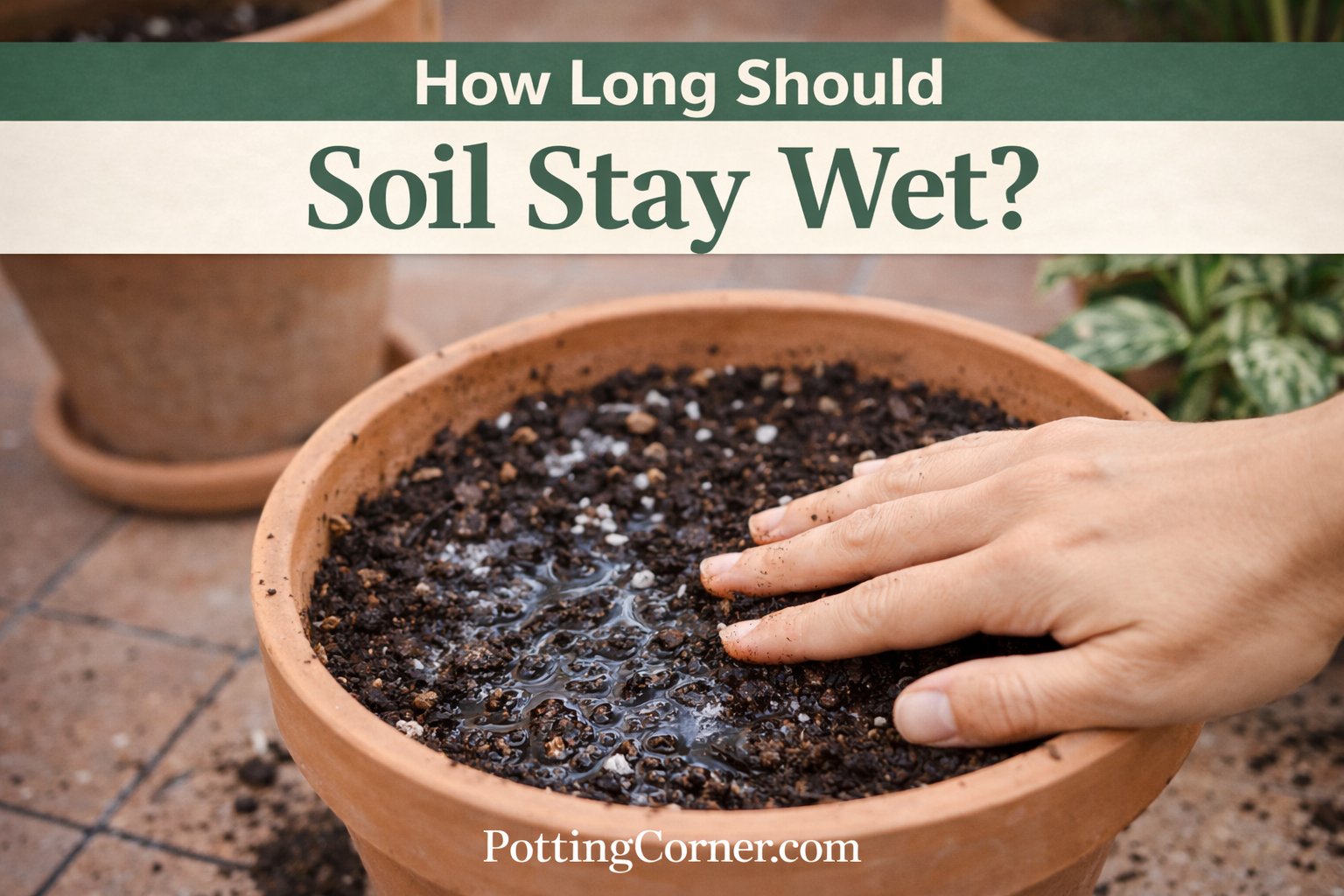
After watering soil should gradually dry over 4-7 days for most houseplants. If it stays soggy for more than 7-10 days roots suffocate and rot. If it dries completely in 1-2 days the plant is stressed and may not absorb enough water. The sweet spot varies by plant, pot and conditions but the general principle holds: moist to dry should take about a week.
This guide helps you evaluate whether your soil drying time is healthy and what to adjust if it's not. For watering techniques, see How to Water Houseplants.
The Direct Answer: Typical Drying Times
| Plant Type | Healthy Drying Time |
|---|---|
| Most tropical houseplants | 4-7 days |
| Moisture-loving plants (ferns, calatheas) | 3-5 days (don't let dry completely) |
| Drought-tolerant plants (succulents, ZZ, snake plants) | 7-14 days |
| Seedlings and cuttings | 2-4 days (kept consistently moist) |
Warning signs:
- Stays wet more than 10 days → too wet
- Dries in 1-2 days → too fast
Why Drying Time Matters
Roots Need Both Water and Air
Roots aren't underwater plants. They need oxygen to function. After watering:
- Water fills air spaces in soil
- Roots absorb water
- Water drains and evaporates
- Air returns to soil pores
- Roots can breathe again
If soil never dries, step 4 never happens. Roots suffocate and die.
Root Rot Begins in Wet Conditions
Root rot fungi thrive in waterlogged soil. When roots sit in constantly wet conditions:
- Oxygen-deprived tissue weakens
- Fungi attack the vulnerable roots
- Rot spreads through the root system
- The plant can't absorb water despite wet soil
- Above-ground symptoms appear (wilting, yellowing)
By the time you see symptoms, root damage is significant. See How to Tell If You're Overwatering for early warning signs.
Too-Fast Drying Stresses Plants
On the other extreme soil that dries in a day or two means:
- Roots spend most of their time without water
- The plant is constantly on the edge of drought stress
- Fine root hairs die and regrow repeatedly
- The plant can't grow optimally
Some plants tolerate this (succulents). Most houseplants don't.
Factors That Affect Drying Time
Pot Size
Large pots hold more soil and more water. They dry slower than small pots. A 12-inch pot might stay moist for 10+ days while a 4-inch pot dries in 3-4 days.
Problem scenario: A small plant in a large pot. The roots can't use all the water and excess sits in unused soil, staying wet far too long.
Solution: Match pot size to plant size. When repotting, go up only 1-2 inches. See What Pot Size Should You Choose When Repotting?.
Pot Material
Pot material dramatically affects drying time:
- Terracotta: Porous, breathes, dries faster
- Plastic: Non-porous, retains moisture longer
- Ceramic (glazed): Retains moisture like plastic
- Concrete: Somewhat porous, moderate drying
For plants prone to overwatering, terracotta helps by speeding evaporation.
Soil Type
Dense, peat-heavy soil holds moisture longer. Chunky, bark-based soil drains faster and dries quicker.
- Compacted old soil: Slow drying, poor drainage
- Fresh peat-based mix: Moderate drying
- Chunky aroid mix: Fast drying
- Succulent/cactus mix: Very fast drying
If soil stays wet too long, adding perlite or bark can improve drainage and speed drying.
Light Level
More light = more photosynthesis = more water uptake = faster drying
Plants in bright light dry significantly faster than the same plant in a dim corner. If you move a plant to lower light, expect soil to stay wet longer, adjust watering accordingly.
Temperature
Warmer temperatures increase evaporation. Cooler temperatures slow it.
Winter drying times are often 1.5-2x longer than summer, especially if heating isn't running constantly.
Humidity
Low humidity pulls moisture from soil faster. High humidity slows evaporation.
In a humid bathroom soil dries slower. Near a dry heating vent it dries faster.
Root Health
Healthy roots actively absorb water. Damaged roots don't.
If soil suddenly starts staying wet much longer than usual without any other change, check the roots. Poor water uptake often indicates root problems.
When Soil Stays Wet Too Long
If your soil takes more than 7-10 days to dry, something needs to change.
Check for Root Problems
Remove the plant and inspect roots:
- Healthy roots: White or tan, firm, earthy smell
- Rotting roots: Brown or black, mushy, foul smell
If roots are rotting, address that immediately. See Root Rot: How to Identify and Save Your Plant.
Evaluate the Pot Size
Is the pot too large for the plant? There should be 1-2 inches between the root ball and pot edges not 4-5 inches. Downsizing the pot may be necessary.
Check Drainage
Are drainage holes clear? Is the soil compacted around holes? Is the pot sitting in collected water?
Consider the Light Level
A plant in low light uses very little water. Either move to brighter light or accept much less frequent watering.
Improve Soil Drainage
Adding perlite (20-30% by volume) to the existing soil mix improves drainage. Or repot entirely into a chunkier mix. See How to Improve Drainage in Pots.
Reduce Watering Frequency
Sometimes the solution is simply waiting longer between waterings. If soil stays wet 10 days don't water every 7 days, wait until it actually dries.
When Soil Dries Too Fast
If soil dries completely in 1-2 days, you're either watering too little or conditions are demanding too much.
The Plant May Be Root-Bound
A pot packed with roots has little soil to hold water. The plant drinks fast and needs watering constantly.
Solution: Repot into a slightly larger container. See How to Repot a Root-Bound Plant.
The Pot May Be Too Small
Even without being root-bound, a tiny pot simply can't hold much water. A small pot in bright light might genuinely need daily watering.
Solution: Move to a larger pot.
The Location May Be Too Demanding
Bright, hot windows with dry air from heating vents create extreme evaporation conditions.
Solution: Move the plant or accept more frequent watering. Adding humidity can help slow evaporation.
Consider Terracotta vs Plastic
If drying is too fast, switching from terracotta (porous) to plastic or glazed ceramic (non-porous) can help.
Improve Water Retention
For plants that like more moisture, you can:
- Add more peat or coir to the soil mix
- Use a self-watering pot
- Group plants together (creates humidity microclimate)
Monitoring Drying Time
Track Your Watering
Keep a simple log:
- Date watered
- Days until next watering
- Conditions (season, heat on/off, etc.)
This reveals patterns. You'll see how drying time shifts with seasons and conditions.
Use Consistent Checking Methods
The finger test or lift test (see How to Know When a Plant Needs Water) helps you consistently assess moisture levels.
Learn Each Plant's Pattern
Every plant-pot-location combination has its own rhythm. Some plants need water every 4 days, others every 10. Learn what's normal for each plant and you'll quickly notice when something changes.
Seasonal Expectations
Summer (Growing Season)
- Longer days = more light = faster drying
- Higher temperatures = more evaporation
- Active growth = more water uptake
- Typical drying: 4-7 days for most plants
Winter (Dormant Season)
- Shorter days = less light = slower drying
- Lower temperatures (sometimes offset by heating)
- Dormant growth = less water uptake
- Typical drying: 7-14 days for many plants
If you don't adjust watering in winter, you'll almost certainly overwater. Expect soil to take nearly twice as long to dry.
Common Mistakes
Expecting a Fixed Schedule
"Water every week" ignores drying time variations. Some weeks soil dries in 5 days; other weeks it takes 10. Check soil don't follow a calendar.
Ignoring Pot Size When Repotting
Jumping to a pot 4 inches larger creates soil that stays wet for weeks. Go up 1-2 inches only.
Not Adjusting for Seasons
Winter plants need much less water. The #1 cause of winter plant death is maintaining summer watering frequency.
Assuming Wilting Means Dry Soil
If soil is wet and the plant is wilting roots are probably rotting. Adding more water makes it worse.
Ignoring Soil Texture Changes
Old, compacted soil dries differently than fresh mix. If watering patterns change suddenly soil condition may have shifted.
Frequently Asked Questions
My soil stays wet for 2+ weeks. Is that okay for any plant?
Few houseplants tolerate constantly wet soil for that long. Even moisture-lovers like ferns prefer soil that dries somewhat between waterings. Two weeks of wet soil risks root rot for nearly all houseplants.
My soil dries in one day. Do I really need to water daily?
First, check if the plant is root-bound or the pot is too small. If neither and the plant needs water that often, consider a larger pot or more moisture-retentive soil. Daily watering is exhausting and usually indicates a setup problem.
Does adding drainage material to the bottom help soil dry faster?
No it actually creates a perched water table that keeps the soil above it wetter. Improve drainage by amending the entire soil mix not by adding rocks to the bottom.
Should I water if the top is dry but the bottom is still wet?
For most plants, wait until the soil is dry at the appropriate depth (1-2 inches for tropicals, deeper for succulents). Surface drying alone doesn't mean the root zone needs water.