How to Water Succulents Indoors
Succulents store water in their leaves that's their whole strategy. Water them like regular houseplants and they'll rot. Here's the right approach for indoor succulent watering.
Potting Corner Team · Jan 7, 2026 · 7 min read
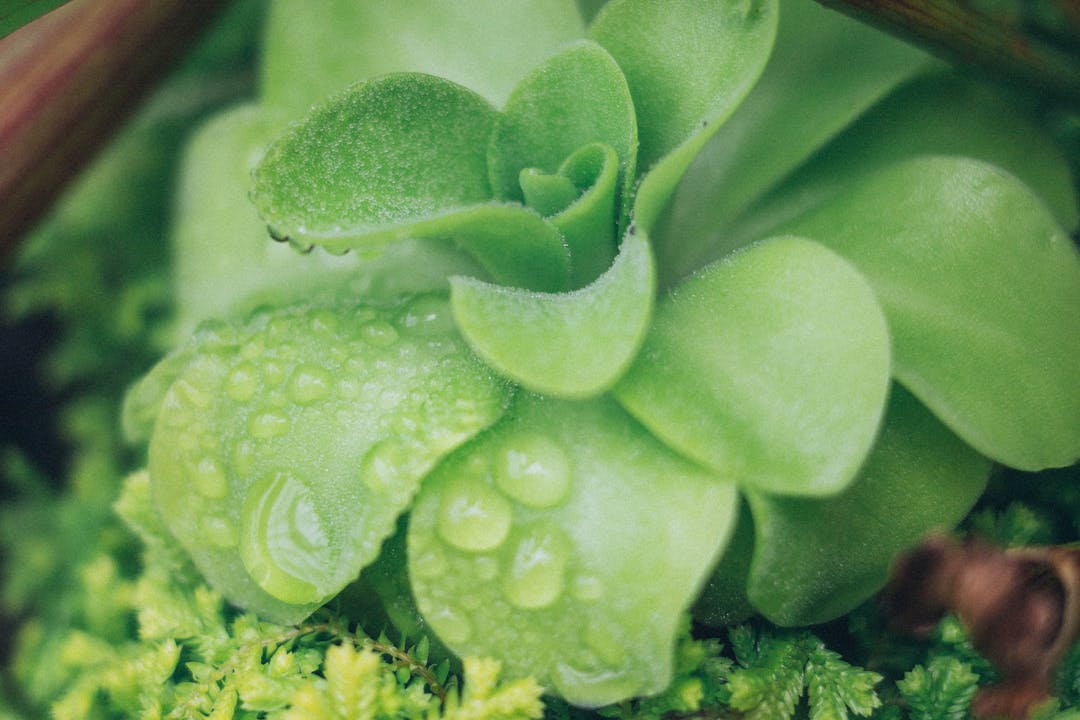
Succulents evolved in dry environments where rain comes infrequently but heavily. They store water in their thick leaves and stems, allowing them to survive long dry periods. Indoors, this means they need the opposite of what most houseplants want: infrequent but thorough watering with complete drying between drinks. Water too often and those water-storing tissues can become rot-producing liabilities.
If you're familiar with our guide to watering houseplants, forget most of it — succulents break those rules.
The Direct Answer: Soak and Dry Completely
| Watering Element | Succulent Rule |
|---|---|
| Frequency | Every 1-3 weeks (less in winter) |
| Amount | Thorough until water drains |
| Soil before watering | Completely dry through the pot |
| Soil after watering | Wet, then drying to bone dry |
The rule: Wait until soil is fully dry, then drench. Never water if soil is still moist anywhere.
Why Succulents Are Different
Succulents store water in their leaves, stems, or roots — which lets them survive drought but makes them rot-prone when overwatered. Indoors, lower light and less airflow mean soil dries slower, increasing rot risk. That's why the "soak and dry" method matters.
The Soak and Dry Method
This is the standard watering technique for succulents:
How to Do It
-
Wait for completely dry soil
- Check 2-3 inches deep not just the surface
- Soil should feel bone dry throughout
- When in doubt, wait another few days
-
Water thoroughly
- Pour water slowly over the entire soil surface
- Continue until water runs from drainage holes
- Ensure the whole root zone is soaked
-
Let drain completely
- Never let pot sit in water
- Empty saucer after watering
- Some people water in the sink and return pot after draining
-
Wait for complete drying before next watering
- This might be 1 week in summer, bright light
- Or 3-4 weeks in winter, low light
- Check before watering, never on a schedule
Why This Works
This mimics natural conditions:
- Desert rainstorms drench briefly
- Then complete drought until the next storm
- Roots absorb water quickly, then rest
- No constant moisture means no rot opportunity
How Often Should You Water?
General Guidelines
| Season | Light Level | Approximate Frequency |
|---|---|---|
| Summer | Bright | Every 7-10 days |
| Summer | Medium | Every 10-14 days |
| Spring/Fall | Bright | Every 10-14 days |
| Spring/Fall | Medium | Every 2-3 weeks |
| Winter | Any | Every 3-4 weeks or less |
These are starting points — always check soil before watering. Bright light, small pots, terracotta, and summer heat mean faster drying. Low light, large pots, plastic containers, and winter mean slower drying.
Signs Your Succulent Needs Water
Healthy Thirst Signals
Look for these before watering:
- Slightly wrinkled leaves: The stored water is depleting
- Leaves feel less firm: Gentle squeeze reveals less plumpness
- Colors slightly muted: Well-hydrated succulents are often more vibrant
- Soil dry throughout: The physical check confirms it's time
Don't Wait for Extreme Symptoms
Severe wrinkling, leaves falling off from dryness and dramatic shriveling mean you've waited too long. Aim to catch plants at "slightly thirsty" rather than "desperate."
Signs of Overwatering
Overwatering is the #1 killer of indoor succulents. Watch for:
Early Warning Signs
- Leaves feel mushy: Lost that firm snap
- Translucent or pale leaves: Water-saturated tissue
- Leaves falling off easily: A slight touch detaches them
- Soil stays moist for more than a week: Conditions too wet
Advanced Problems
- Black or brown mushy spots: Rot beginning
- Stem soft at soil line: Root rot spreading up
- Foul smell from soil: Decomposing tissue
- Leaves turn to mush: Severe rot, may be too late
If you catch overwatering early, stop watering and let soil dry completely. For severe cases, see How to Tell If You're Overwatering.
Succulent-Specific Tips
Use Fast-Draining Soil
Standard potting mix holds too much moisture. Use:
- Commercial succulent/cactus mix
- Or amend regular mix with 50% perlite or pumice
- Or create your own: 1 part potting soil, 1 part perlite, 1 part coarse sand
Soil should feel gritty and drain immediately when watered.
Use Pots with Drainage
Drainage holes are non-negotiable for succulents:
- No rocks at the bottom (myth, doesn't help)
- No closed containers or terrariums
- Terracotta is ideal, breathes and dries faster
Our guide to drainage holes explains why they're essential.
Let New Succulents Settle
After repotting or receiving a new succulent:
- Wait 3-7 days before first watering
- Roots need time to heal from any damage
- Then resume normal soak-and-dry cycle
Water in the Morning
Morning watering gives:
- Daylight hours for some evaporation
- Warmth to help soil begin drying
- Reduced fungal risk compared to evening watering
Avoid Wetting Leaves
Water the soil not the plant:
- Water trapped between leaves causes rot
- Especially problematic for rosette-type succulents
- If leaves get wet, shake off excess or let dry quickly
Consider Your Climate
- Humid climate: Water even less frequently, improve air circulation
- Dry climate: May need slightly more frequent watering
- Air conditioning/heating: Dries air, may need to adjust
Winter Watering
Succulents go dormant or semi-dormant in winter. Less light means less water use — some may go 4-6 weeks between waterings. Don't force growth with extra water; it just causes rot. Water only when you see significant wrinkling or very soft leaves.
Special Cases
Not all succulents follow the same rules. Lithops may only need water 3-4 times per year — and must stay completely dry during splitting, or they'll rot. String succulents (String of Pearls) dry faster and may need water every 1-2 weeks. Haworthias tolerate lower light and slightly more moisture. When in doubt, underwater.
Common Mistakes
- Misting: Succulents don't absorb water through leaves. Misting just invites rot.
- Spray bottle watering: Wets the surface but doesn't soak roots. Use real watering.
- Watering on a schedule: "Every Sunday" ignores actual soil conditions. Always check first.
- Keeping soil constantly moist: Guarantees root rot. Succulents need complete drying.
- No drainage holes: Rot is inevitable without drainage. Rocks at the bottom don't help.
Frequently Asked Questions
How do I know if my succulent is underwatered or overwatered?
Underwatered: wrinkled leaves, bone-dry soil, curling. Overwatered: mushy or translucent leaves, easy leaf drop, soil still moist.
My succulent's lower leaves are drying up. Is this underwatering?
Often normal — succulents naturally reabsorb lower leaves as they grow. Only worry if the whole plant looks thirsty.
Can I save an overwatered succulent?
If caught early: remove from soil, let roots dry 24-48 hours, trim any mushy parts, replant in fresh dry soil, wait a week before watering.
Should I water more in summer?
Usually yes, but still check soil first. Brighter light and heat increase water use, but don't water on autopilot.
Can succulents survive in offices with only artificial light?
Some can — snake plants and haworthias handle low light. Growth slows and they'll need even less water.