How to Improve Drainage in Pots
Soggy soil that never dries? The fix isn't less water it's better drainage. Amend your soil, choose the right pot and stop fighting physics.
Potting Corner Team · Feb 8, 2026 · 9 min read
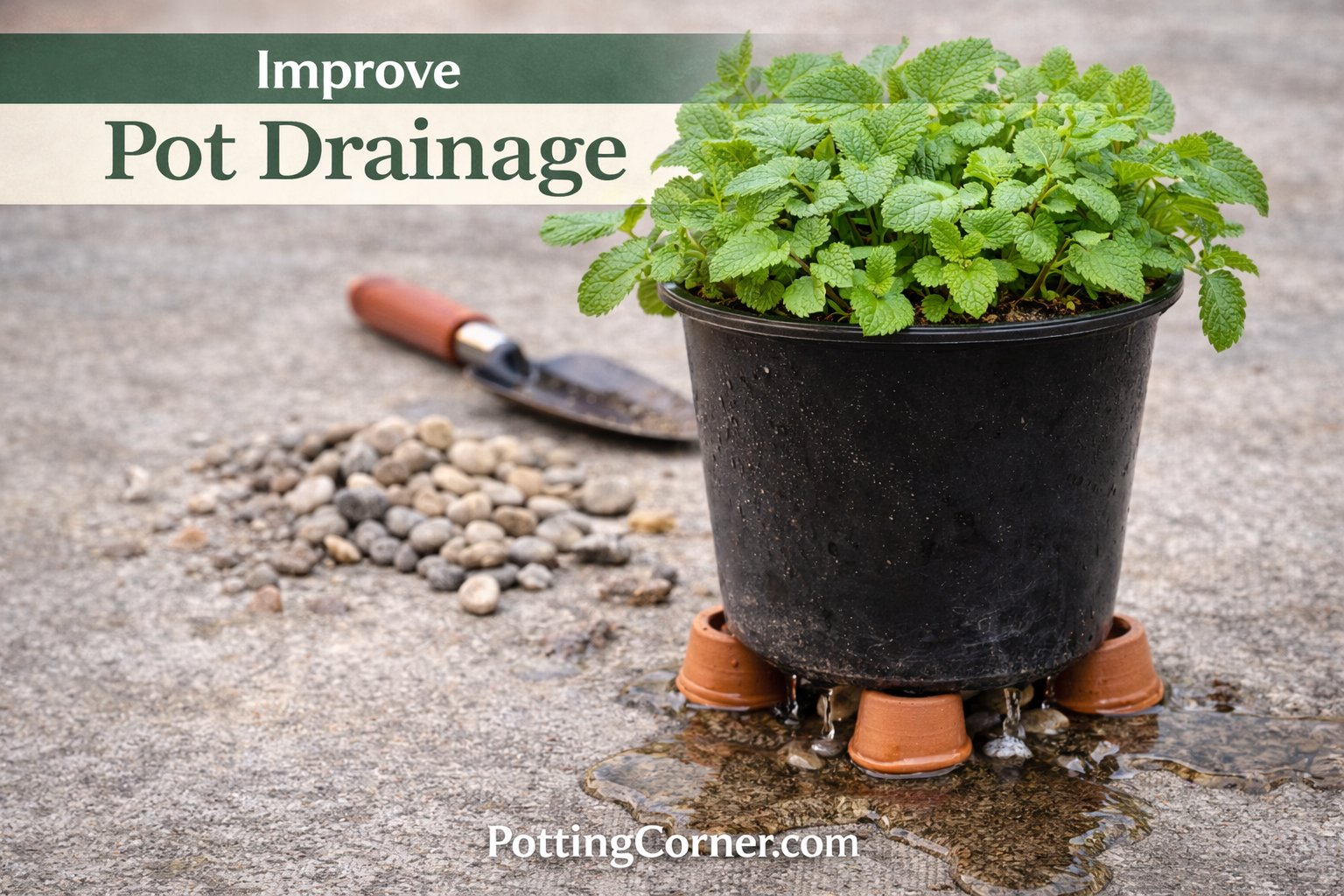
Poor drainage keeps soil wet too long, suffocates roots and invites rot. If your soil stays soggy for more than a week after watering, or if your plants show signs of overwatering despite careful watering, drainage is the problem. The solution involves fixing the soil not just watering less, because soil that can't drain will stay wet no matter how cautiously you water.
This guide covers practical ways to improve drainage in any potted plant. For watering fundamentals, see How to Water Houseplants.
The Direct Answer: Three Drainage Fixes
| Problem | Solution |
|---|---|
| Dense, compacted soil | Amend with perlite or bark |
| Pot lacking drainage holes | Add holes or use a cachepot |
| Pot too large for plant | Downsize to appropriate pot |
The rule: Good drainage requires porous soil in a well-sized pot with functioning drainage holes. All three matter.
Why Drainage Problems Occur
Soil Compaction Over Time
Fresh potting mix has air pockets. Over months and years:
- Organic particles break down
- Repeated watering compacts soil
- Air spaces disappear
- Drainage slows
Old soil drains poorly even if it drained well when fresh.
Wrong Soil for the Plant
Using dense, moisture-retentive soil for plants that need fast drainage creates ongoing problems. A succulent in peat-heavy soil will struggle regardless of how carefully you water.
Oversized Pots
A plant in too-large a pot can't use all the soil's moisture. The unused soil stays wet, often for weeks. See What Pot Size Should You Choose When Repotting?.
Blocked or Missing Drainage Holes
Holes clogged with soil, roots, or debris can't drain. Pots without holes trap water with no escape. See Drainage Holes: Why They Matter.
Method 1: Amend the Soil
The most effective drainage improvement comes from changing the soil composition.
Add Perlite
Perlite is expanded volcanic glass, lightweight, doesn't absorb water and creates permanent drainage channels.
How much to add:
- Standard houseplants: 20-30% perlite by volume
- Succulents and cacti: 40-50%
- Already-chunky mixes: 10-20%
How to add it:
- Remove plant from pot
- Shake off loose soil
- Mix perlite into remaining soil
- Add fresh perlite-amended mix around the root ball
- Repot and water
See for comparison of amendments.
Add Bark or Orchid Mix
Bark chips create chunky structure and air pockets:
- Small bark pieces (1/4-1/2 inch) work best
- Mix 20-30% into standard potting mix
- Especially good for aroids (monstera, philodendron, pothos)
Orchid bark is widely available and works for many plants not just orchids.
Add Pumice
Pumice is volcanic rock that:
- Creates drainage channels
- Holds some moisture (unlike perlite)
- Doesn't float to the surface
- Is heavier, stabilizing tall plants
Use similarly to perlite 20-40% by volume depending on needs.
Add Coarse Sand
Horticultural sand (not fine beach sand) improves drainage:
- Use sharp sand or coarse builder's sand
- Mix 10-20% for most plants
- Good for succulents and cacti
- Adds weight, which stabilizes pots
Avoid fine sand, which can actually compact soil further.
Replace the Soil Entirely
If soil is severely compacted or degraded:
- Remove plant and shake off all old soil
- Mix fresh potting soil with drainage amendments
- Repot with the new mix
- Water thoroughly
This is more disruptive but sometimes necessary for badly degraded soil.
Method 2: Fix the Pot
Even well-amended soil can't drain if the pot won't let water escape.
Check Existing Drainage Holes
Ensure holes are open and functional:
- Look for roots blocking holes
- Clear any soil or debris
- Check that saucers aren't holding water against the pot bottom
Add More Holes
If your pot has one small hole, adding more improves flow:
- Terracotta/ceramic: Drill with masonry bit (slowly, with water)
- Plastic: Drill or cut with a knife/heated tool
- Aim for multiple 1/4-inch holes
Switch to a Different Pot
Some situations warrant a new pot:
- Glazed ceramic with no holes → terracotta with holes
- Solid decorative pot → use as cachepot with a draining inner pot
- Very dense material → switch to breathable material
Use Pot Feet or Risers
Elevating the pot off its saucer:
- Allows air circulation under the pot
- Prevents the pot from sitting in water
- Speeds drying through the drainage holes
Pot feet are inexpensive and make a noticeable difference.
Method 3: Right-Size the Pot
An oversized pot is a drainage problem in disguise.
The Problem
When a plant's root ball is much smaller than the pot:
- Unused soil holds water the plant doesn't need
- Roots can't absorb excess moisture
- Soil stays wet for weeks
- Root rot risk increases dramatically
The Solution
Repot into an appropriately sized container:
- Aim for 1-2 inches larger than the root ball
- If currently oversized, you can downsize
- Remove excess soil and use a smaller pot
See How to Repot a Houseplant for repotting instructions.
Quick Fixes for Immediate Problems
Temporary Moisture Reduction
If you can't repot immediately but soil is staying too wet:
- Move plant to brighter light (increases evaporation and water uptake)
- Increase air circulation (fan, open window)
- Water less frequently (but address the real problem soon)
These don't fix drainage but they buy time.
Dealing with Waterlogged Soil
If soil is saturated and won't dry:
- Remove plant from pot
- Wrap root ball in paper towels to absorb excess
- Let sit out of pot for a few hours (don't let roots dry completely)
- Repot in fresh, well-draining mix
Check roots for rot during this process. See Root Rot: How to Identify and Save Your Plant.
What NOT to Do
Don't Add Rocks to the Bottom
The "drainage layer" of gravel at the bottom of a pot is a myth. It creates a perched water table that keeps soil above it wetter not drier. Water won't move from fine soil to coarse gravel until the soil is completely saturated.
Don't Just Water Less
Watering less frequently doesn't fix drainage it just means your plant alternates between dry and soggy instead of staying consistently appropriate. The soil still can't drain; it just takes longer to get saturated.
Don't Add More Soil on Top
Adding dry soil on top of wet soil doesn't help. The water is trapped below and now you have more mass sitting on struggling roots.
Don't Ignore the Problem
Drainage issues don't resolve themselves. Left unaddressed they lead to root rot and plant death. Fix it now rather than hoping it improves.
Soil Mixes for Good Drainage
Standard Well-Draining Mix
For most tropical houseplants:
- 2 parts potting soil
- 1 part perlite
- 1 part bark
Fast-Draining Succulent Mix
For cacti and succulents:
- 1 part potting soil
- 1 part perlite
- 1 part coarse sand
Chunky Aroid Mix
For monsteras, philodendrons, pothos:
- 1 part potting soil
- 1 part bark
- 1 part perlite
- Optional: some charcoal or pumice
Orchid Mix (Extreme Drainage)
For orchids and very rot-prone plants:
- Bark only, or
- Bark with sphagnum moss
- Little to no soil
Signs Your Drainage Has Improved
After fixing drainage:
- Soil dries in 4-7 days instead of 10+
- No water pools on the surface after watering
- Water flows freely from drainage holes
- Plants stop showing overwatering symptoms
- Fungus gnats decrease (they love wet soil)
Common Mistakes
Fixing Only One Factor
Improving soil but leaving a pot without holes still causes problems. Address all three: soil composition, pot drainage and pot size.
Using Too Much Amendment
More than 50% perlite or bark can make soil drain too fast, especially in small pots. Balance drainage with some moisture retention.
Choosing Style Over Function
That beautiful pot without drainage holes will kill your plant eventually. Either drill holes or use it as a cachepot only.
Ignoring Old Soil
Soil more than 2-3 years old often needs replacement not just amendment. Old organic matter breaks down and compacts regardless of what you add.
Frequently Asked Questions
Can I use gravel as a drainage amendment in the soil mix?
Small gravel or pea gravel can work when mixed throughout soil (not layered at the bottom). It's less effective than perlite or bark but adds some drainage. It also adds significant weight.
My pot has good drainage, so why is soil still wet?
Check light levels, pot size and root health. Good drainage helps but if the plant isn't using water (low light, dormant, root damage) or the pot is too large soil will stay wet regardless.
Will adding drainage amendments hurt my plant?
When done during repotting, no. The short-term stress of repotting is offset by the long-term benefit of healthy roots. Choose a good time (growing season) and follow aftercare guidelines.
How do I know if I've added enough perlite?
The mix should feel noticeably lighter and chunkier than straight potting soil. When you water, you should see water flow freely from drainage holes without pooling on the surface.