Monstera Care Guide for Beginners
Monstera deliciosa the iconic split-leaf plant, is easier than its tropical looks suggest. Give it bright indirect light, water when dry and watch those fenestrated leaves grow larger and more dramatic.
Potting Corner Team · Apr 4, 2026 · 7 min read
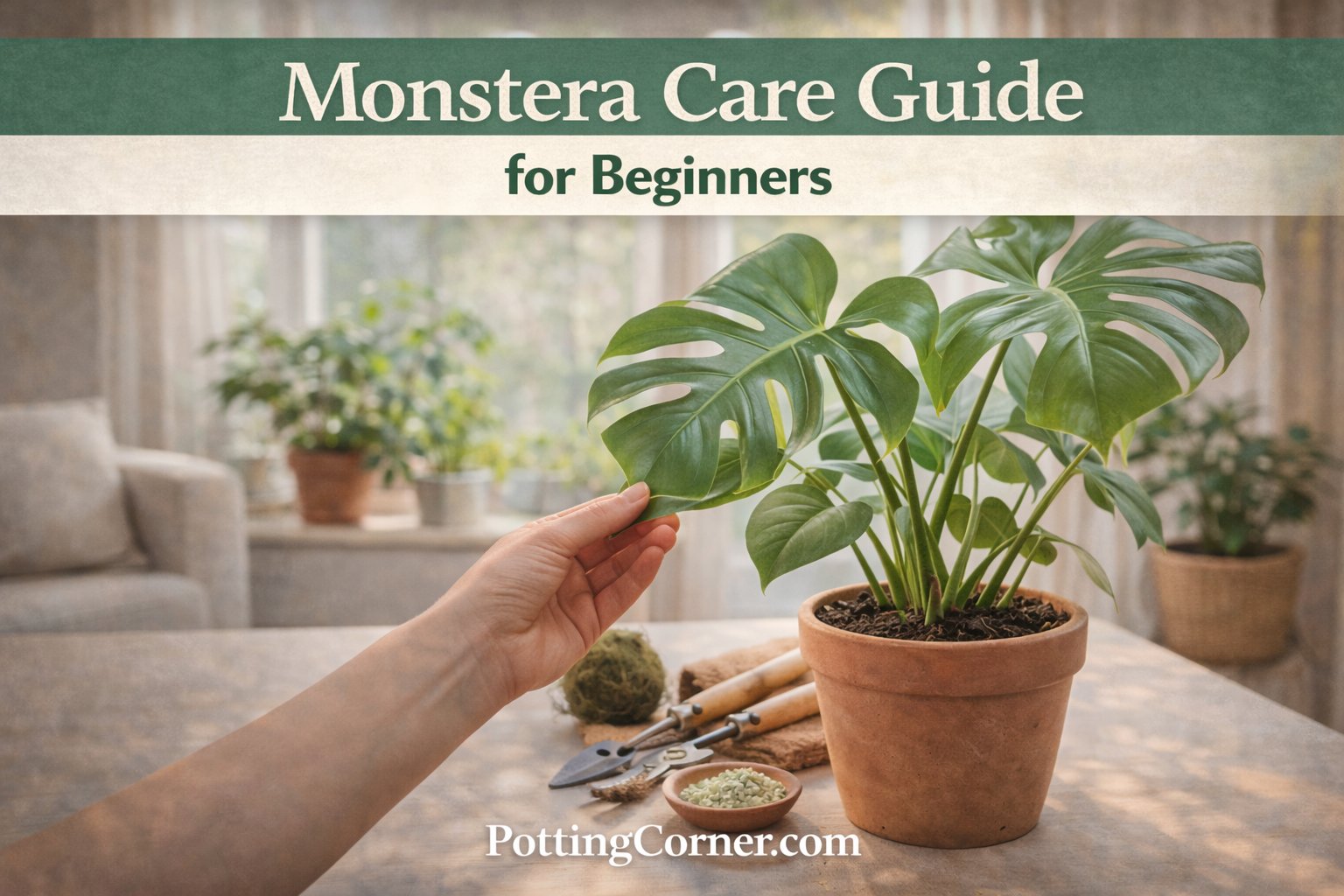
Monstera deliciosa also called the Swiss cheese plant, has become the icon of modern plant parenthood. Those dramatic split leaves look tropical and exotic but monstera is surprisingly forgiving. It adapts to various light conditions, tells you when it needs water and rewards good care with increasingly impressive leaves.
For a complete beginner overview, see Indoor Plants for Beginners: Easy Plants and Care Basics.
The Direct Answer: Quick Care
| Factor | Requirement |
|---|---|
| Light | Bright indirect (tolerates medium) |
| Water | When top 2 inches of soil are dry |
| Humidity | Average (appreciates higher) |
| Temperature | 65-85°F (18-29°C) |
| Soil | Well-draining potting mix |
| Support | Moss pole for larger leaves |
The rule: Bright indirect light and proper watering produce the best leaves. More light = larger leaves with more fenestrations (holes).
Understanding Fenestrations
Why the Holes?
The iconic feature:
- Fenestrations (holes) let light through to lower leaves
- Developed as jungle floor adaptation
- More mature plants have more holes
- Light intensity affects fenestration development
Getting More Holes
What encourages them:
- More light = more fenestrations
- Larger, older leaves have more
- Plants need to mature (first leaves are whole)
- Climbing encourages larger, more dramatic leaves
Young vs. Mature Leaves
What to expect:
- Baby monsteras have heart-shaped leaves without holes
- Fenestrations develop as plant matures
- First splits, then holes appear
- Patience is required
Light Requirements
What Monstera Prefers
Bright indirect light:
- Within 3-5 feet of bright window
- East-facing windows are ideal
- Filtered south/west light works
- Several hours of bright light daily
What It Tolerates
Adaptable plant:
- Medium light (slower growth, smaller leaves)
- North-facing windows (okay not ideal)
- Lower light than many think
- Won't thrive in very dark corners
Light and Leaf Development
Direct connection:
- More light = larger leaves
- More light = more fenestrations
- Low light = smaller, simpler leaves
- Find the brightest indirect spot you have
See Indoor Plant Light Guide: Where to Place Houseplants.
Watering
When to Water
Check the soil:
- Water when top 2 inches are dry
- Every 1-2 weeks typically
- Let dry slightly between waterings
- Drooping indicates thirst
How to Water
Thorough approach:
- Water until it drains from bottom
- Allow to drain completely
- Empty saucer after 30 minutes
- Never leave sitting in water
Seasonal Adjustments
Water needs change:
- More in spring/summer (active growth)
- Less in fall/winter (slower growth)
- Adjust to your conditions
- Always check soil first
See How to Water Houseplants: The Beginner's Guide.
Support and Climbing
Why Monstera Needs Support
Natural climbing habit:
- In nature, climbs trees with aerial roots
- Climbing triggers larger leaf production
- Without support, sprawls and topples
- Moss poles mimic natural substrate
Using a Moss Pole
Best support option:
- Insert pole when repotting
- Gently tie stems to pole
- Keep moss moist to encourage attachment
- Aerial roots will grow into moss
- Extend pole as plant grows
Alternatives
Other support options:
- Coir poles (less maintenance)
- Wooden stakes (no root attachment)
- Trellis systems
- Wall mounting with hooks
Pruning and Propagation
Why Prune
Manage growth:
- Control size and shape
- Encourage bushier growth
- Remove damaged leaves
- Get cuttings for propagation
How to Prune
Simple technique:
- Cut below a node (where leaf meets stem)
- Use clean, sharp scissors
- Any time of year (spring/summer best)
- Plant adjusts quickly
Propagation
Share the plant love:
- Cut a section with at least one node and aerial root
- Place in water or moist soil
- Keep warm and bright
- Roots develop in 2-4 weeks
- Pot up when roots are established
Common Problems
Yellow Leaves
Usually watering issues:
- Lower leaves yellowing = often overwatering
- Check soil moisture
- Ensure good drainage
- Occasional lower leaf loss is normal aging
See Yellow Leaves on Houseplants: What's Wrong.
Brown Leaf Tips
Environmental stress:
- Low humidity
- Inconsistent watering
- Water quality issues
- Trim brown tips for appearance
Small Leaves
Light or maturity issue:
- Insufficient light
- Plant not mature enough
- Needs climbing support
- Move to brighter spot
Brown or Black Spots
Several possible causes:
- Overwatering/root rot (soft spots)
- Sunburn (dry, crispy spots)
- Cold damage (mushy spots)
- Identify cause for treatment
Leggy Growth
Not enough light:
- Long stems between leaves
- Leaning toward light
- Move to brighter location
- Prune leggy sections
Monstera Varieties
Monstera deliciosa
The classic:
- Large, fenestrated leaves
- Most common variety
- Can grow very large
- Relatively easy care
Monstera adansonii
Swiss cheese vine:
- Smaller leaves, more holes
- Vining growth habit
- Good for hanging baskets
- Similar care needs
Variegated Monstera
Expensive specialty:
- White or yellow variegation
- Much more expensive
- Needs more light
- Slower growing
- Challenging for beginners
Growing Tips
For Bigger Leaves
What helps:
- Bright indirect light
- Moss pole for climbing
- Consistent watering
- Regular fertilizing in growing season
- Patience
Indoor vs. Outdoor
Can go outside:
- Outdoors in summer is beneficial
- Shade to filtered light outdoors
- Bring in before cold (below 55°F)
- Acclimate gradually
Cleaning Leaves
Maintenance task:
- Dust reduces photosynthesis
- Wipe with damp cloth monthly
- Inspect for pests while cleaning
- Keeps plant looking its best
See .
Common Mistakes
Overwatering
The top killer:
- Most monstera deaths are from soggy soil
- Roots rot quickly in standing water
- Always check soil before watering
- Drainage holes are non-negotiable
Too Little Light
Limits the plant's potential:
- Low light means small, hole-free leaves
- Growth slows dramatically in dim corners
- Move closer to a window for better results
- East or filtered south-facing is ideal
No Support
Missing out on growth:
- Unsupported monstera sprawls sideways
- Climbing triggers larger leaf production
- A moss pole makes a dramatic difference
- Add support before the plant gets unwieldy
Ignoring Aerial Roots
They serve a purpose:
- Don't cut aerial roots off
- Direct them into the moss pole or soil
- They help the plant absorb moisture
- Tucking them into the pot is fine
Frequently Asked Questions
Why doesn't my monstera have holes?
Either the plant is too young (needs to mature), leaves are too small (needs more light), or it's not climbing (try a moss pole). All of these factors affect fenestration development.
How fast does monstera grow?
With good conditions, 1-2 new leaves per month during growing season. Larger leaves take longer to develop than smaller ones.
Is monstera toxic to pets?
Yes, contains calcium oxalates that cause irritation if chewed. Keep away from cats and dogs that eat plants.
How big will my monstera get?
Indoors, commonly 6-10 feet tall over several years. Can be kept smaller with regular pruning. Leaves can reach 18+ inches with excellent care.
Why is my monstera leaning?
It's reaching for light. Rotate regularly for even growth, or move closer to light source. A moss pole also helps support upright growth.