Overwatered Plant: How to Save It
Your plant is sitting in soggy soil with yellowing leaves, classic overwatering. The damage has started but recovery is possible if you act quickly. Stop watering, assess the roots and follow these steps.
Potting Corner Team · Jan 9, 2026 · 6 min read
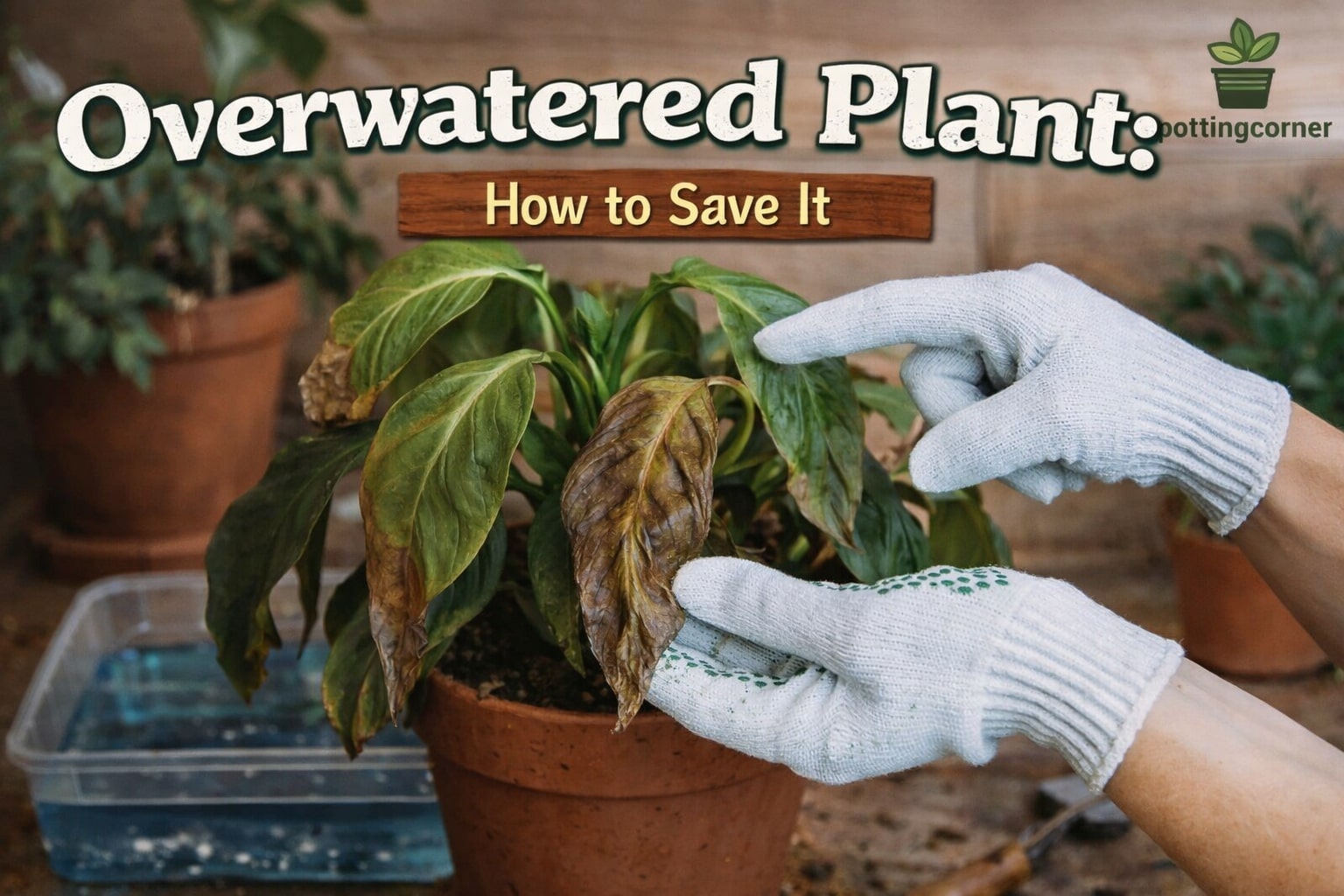
Overwatering kills more houseplants than underwatering. The irony is that overwatering often comes from good intentions. The good news: if you catch it early, most plants recover. The key is stopping the water, assessing root damage and adjusting your care going forward.
The Direct Answer: Immediate Steps
| Severity | Symptoms | Action |
|---|---|---|
| Mild | Yellowing leaves, wet soil | Stop watering, let dry completely |
| Moderate | Multiple yellow leaves, drooping | Remove from pot, check roots |
| Severe | Mushy stems, foul smell | Emergency repot, trim dead roots |
The rule: The sooner you act the better the outcome. Root rot progresses quickly once it starts.
Recognizing Overwatering
Early Warning Signs
Catch it early if you can:
- Soil stays wet for more than a week
- Yellowing of lower leaves
- Leaves feel soft not crispy
- Plant seems off but you can't pinpoint why
- Fungus gnats appearing (they love wet soil)
Advanced Symptoms
Damage is progressing:
- Multiple leaves yellowing and dropping
- Wilting despite wet soil (roots can't absorb water)
- Brown, mushy spots on stems
- Foul smell from the soil
- Mold on soil surface
Severe Overwatering
Root rot has set in:
- Mushy, collapsing stems
- Most leaves yellowed or dropped
- Roots are brown and slimy when checked
- Strong rotten smell
- Plant may be beyond saving
Why Overwatering Damages Plants
Roots need air pockets in soil to function. Waterlogged soil suffocates roots, and once weakened, fungi attack and rot spreads. Damaged roots can't uptake water, so leaves wilt — then you add more water, accelerating the damage.
Step-by-Step Recovery
For Mild Cases
If you caught it early:
- Stop watering immediately. No water until soil dries.
- Move to bright, indirect light. Helps evaporation.
- Improve air circulation. Open windows if possible.
- Remove any water from saucer. Don't let pot sit in water.
- Wait. Let soil dry out completely before watering again.
Recovery time: 1-2 weeks with good conditions.
For Moderate Cases
When you need to check roots:
- Remove plant from pot carefully.
- Shake off excess soil. Inspect roots.
- Identify healthy vs. damaged roots:
- Healthy: White or tan, firm
- Damaged: Brown, black, mushy, or slimy
- If roots look mostly healthy: Let them air dry for a few hours, repot in dry soil.
- If some roots are damaged: See severe case instructions.
For Severe Cases
Root rot has set in:
- Remove plant from pot.
- Wash away all old soil. Use room-temperature water.
- Examine all roots carefully.
- Cut off all mushy, brown, or dead roots. Use sterile scissors.
- Cut back to healthy tissue. Don't leave any rot.
- Let roots dry for several hours. Overnight is okay.
- Prepare new pot with fresh, dry, well-draining soil.
- Repot at appropriate size. May need smaller pot if significant root loss.
- Wait several days before watering.
- Water sparingly going forward.
If rot is present but limited, many plants can still recover with proper treatment.
After Initial Treatment
First Few Weeks
Recovery period care:
- Water very sparingly
- Good light but not intense sun
- No fertilizer until growth resumes
- Monitor for new growth as recovery sign
- Be patient, recovery takes time
Signs of Recovery
What to look for:
- New leaf growth
- Existing leaves firming up
- No more yellowing
- Plant looks stable or improving
- Root growth if you can check
Signs of Continued Decline
May need more intervention:
- More leaves yellowing
- Soft or mushy stems
- No improvement after 2-3 weeks
- Plant continues wilting
- May need to re-check roots
Preventing Future Overwatering
Check Before Watering
The golden rule:
- Always check soil moisture before watering
- Stick finger 1-2 inches into soil
- If moist don't water
- If dry, water thoroughly
- When in doubt, wait a day
See How to Water Houseplants: The Beginner's Guide.
Ensure Proper Drainage
Every pot needs it:
- Use pots with drainage holes
- Don't let pots sit in water
- Use well-draining potting mix
- Add perlite to heavy mixes
- Avoid overpotting
Match Pot to Plant Size
Right-size matters:
- Pots too large hold too much water
- Excess soil stays wet longer
- Go up only 1-2 inches when repotting
- Small roots don't need big pots
Adjust for Conditions
Watering needs change:
- Less water in winter (less growth less evaporation)
- Less water in low light
- More water in summer (more growth)
- More water in small pots (dry faster)
Common Overwatering Mistakes
Watering on a Schedule
The calendar isn't your guide:
- "Every Sunday" ignores actual plant needs
- Conditions change, watering should too
- Check soil not calendar
- Moisture meters can help
Assuming Wilting Means Thirst
Sometimes the opposite:
- Overwatered plants wilt too (roots can't function)
- Check soil before watering wilting plants
- If soil is wet, do NOT add water
- Wet + wilting = likely root damage
Keeping Soil Constantly Moist
Most plants hate this:
- "Consistently moist" doesn't mean "always wet"
- Soil should slightly dry between waterings
- Roots need air between waterings
- Only truly moisture-loving plants want constant wet
Poor Drainage Setup
Sets you up to fail:
- Decorative pots without holes
- Gravel at bottom (doesn't improve drainage)
- Heavy, water-retaining soil
- Pots too large for plant
Plant-Specific Notes
- Succulents and cacti are extremely sensitive — they rot quickly and should dry completely between waterings
- Tropical foliage is more tolerant but still susceptible; let the top inch or two dry
- Ferns and moisture lovers need more water but still require drainage — "consistently moist" doesn't mean standing water
When You Can't Save the Plant
If the stem base is mushy, all roots are rotted, or the crown is dead — the plant is likely beyond saving. Your only option is taking healthy cuttings from any remaining stems and rooting them to start fresh.
Frequently Asked Questions
How long does it take to recover from overwatering?
Mild cases: 1-2 weeks. Moderate cases with root damage: 4-6 weeks. Severe root rot: 2-3 months.
Should I repot an overwatered plant immediately?
For mild cases, no — just let the soil dry. For moderate to severe cases, yes — assess and treat the roots.
Can yellowed leaves recover?
No. Remove them and focus on preventing further yellowing.
How do I know when to water again?
Wait until soil is dry at the appropriate depth. The key is drying between waterings — not avoiding water forever.
Why do my plants keep getting overwatered?
Common causes: watering on a schedule, poor drainage, pots too large, or water-retaining soil.