Why Is My Plant Not Growing?
Your plant has been the same size for months. No new leaves, no visible progress. The causes usually come down to light, roots, or season and most are fixable with the right adjustments.
Potting Corner Team · Feb 14, 2026 · 8 min read
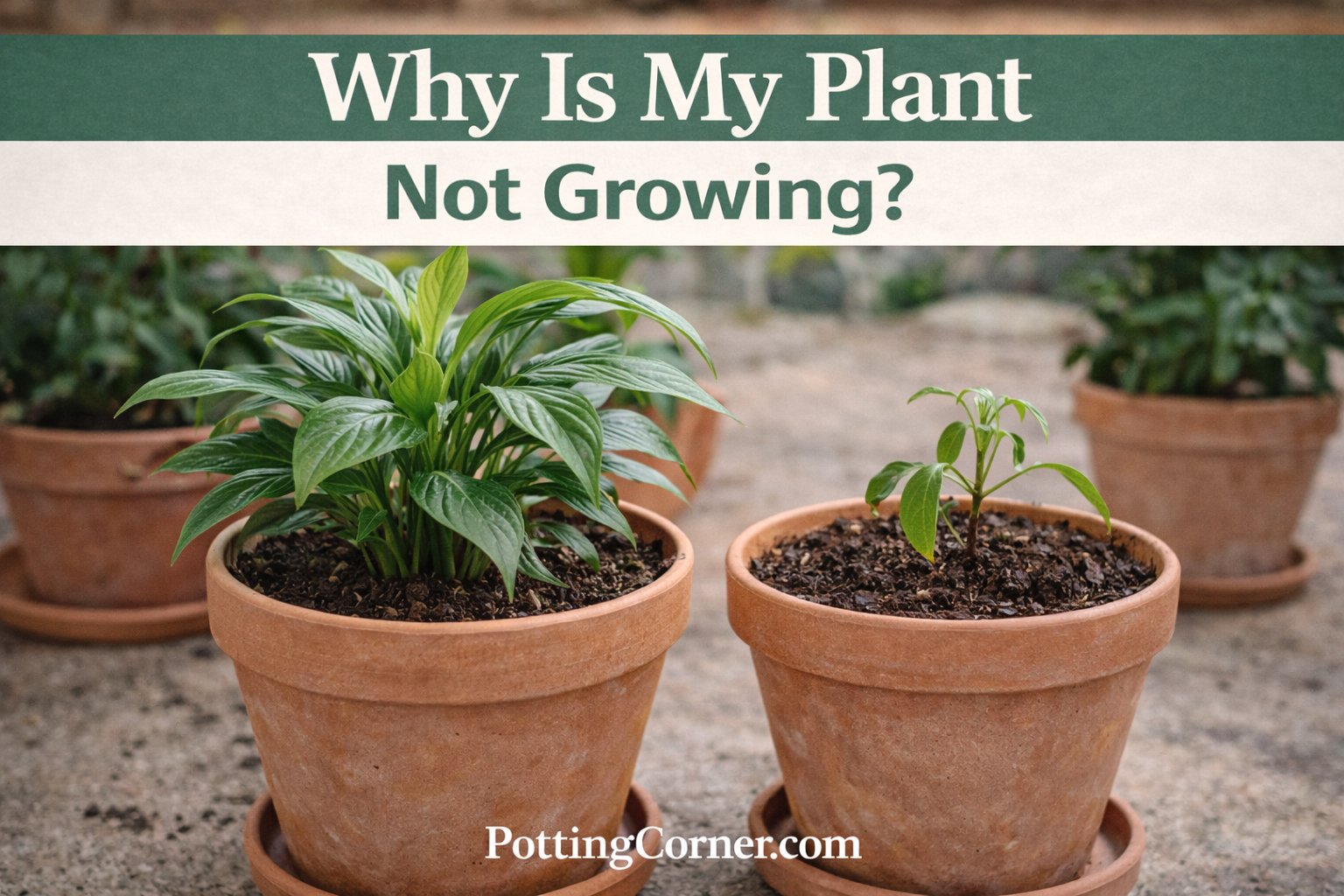
A plant sitting unchanged for months isn't healthy it's stalled. Plants that are thriving produce new leaves, stems, or roots throughout the growing season. When growth stops, something is limiting the plant's ability to photosynthesize, absorb nutrients, or expand its root system. Usually it's light. Sometimes it's roots. Occasionally it's normal dormancy.
For a complete troubleshooting overview, see Houseplant Troubleshooting: Common Problems and Fixes.
The Direct Answer: Common Growth Stalls
| Situation | Likely Cause | Solution |
|---|---|---|
| Winter slowdown | Normal dormancy | Wait for spring |
| Year-round stall | Insufficient light | Move closer to window |
| Plant in same pot for years | Rootbound/depleted soil | Repot with fresh soil |
| Recently repotted | Root recovery | Be patient |
| Otherwise healthy just not growing | Nutrition depletion | Resume fertilizing |
The rule: Light is almost always the limiting factor. Before considering other causes, honestly evaluate whether your plant gets enough light.
Insufficient Light: The #1 Cause
Why Light Matters Most
Plants are solar-powered:
- Photosynthesis requires adequate light
- Low light = less energy = less growth
- Survival mode replaces growth mode
- Even "low-light" plants have minimums
How to Recognize Light Problems
Signs that light is insufficient:
- No new leaves for months (during growing season)
- New growth is small or weak
- Leggy, stretched stems reaching toward light
- Loss of variegation in patterned plants
- Plant looks okay but doesn't progress
Common Light Mistakes
Where people go wrong:
- Placing plants too far from windows
- Overestimating room brightness (human eyes adjust; plants can't)
- Relying on "low-light tolerant" labels (tolerates ≠ thrives)
- Ignoring seasonal light changes
The Fix
More light:
- Move plant closer to windows
- Place in brightest available spot
- Consider grow lights for dark spaces
- Rotate plants for even exposure
- Measure light with phone app or meter
See Indoor Plant Light Guide: Where to Place Houseplants and Grow Lights for Houseplants: A Simple Guide.
Seasonal Dormancy
Why Plants Slow in Winter
Natural response to conditions:
- Shorter days = less light energy
- Lower sun angle = weaker light
- Growth resources are conserved
- Tropicals evolved in consistent conditions but still slow down
- This is normal and healthy
How to Recognize Dormancy
Winter slowdown looks like:
- Reduced or no new growth from November-February
- Plant otherwise looks healthy
- Resumes growth as days lengthen
- No other stress symptoms
What to Do
Adjust care for dormancy:
- Water less frequently (slower growth = less water need)
- Stop fertilizing (no growth to support)
- Maintain light as best you can
- Don't repot or make major changes
- Resume normal care in spring
When to Worry
Dormancy vs. problems:
- Dormancy: Healthy leaves just no new growth
- Problem: Yellowing, dropping leaves, visible decline
- Problem: No growth even in spring/summer
- Problem: Signs of pests or disease
Rootbound Plants
Why Roots Limit Growth
Nowhere to expand:
- Roots fill the entire pot
- No room for new root growth
- Water runs straight through
- Nutrients quickly depleted
- Plant becomes stunted
How to Recognize
Signs you're rootbound:
- Roots circling the soil surface
- Roots growing out of drainage holes
- Plant dries out very quickly after watering
- Slow or no growth despite good conditions
- Plant in same pot for 2+ years
The Fix
Repot with fresh soil:
- Remove plant and examine roots
- Loosen circling roots gently
- Move to pot 1-2 inches larger in diameter
- Use fresh, quality potting mix
- Resume normal care
See How to Repot Houseplants: The Complete Guide.
Nutrient Depletion
Why Soil Runs Out
Limited resource pool:
- Potting mix has finite nutrients
- Watering flushes some out
- Plants use nutrients for growth
- After 6-12 months soil is depleted
- Without replenishment, growth stalls
Signs of Nutrient Deficiency
What to look for:
- Pale green or yellow leaves (especially older ones)
- Slow or no new growth
- Smaller leaves than usual
- Poor color vibrancy
- Plant otherwise healthy-looking
The Fix
Resume feeding:
- Start regular fertilizing routine
- Use balanced liquid fertilizer during growing season
- Follow package directions (don't over-fertilize)
- Consider repotting with fresh soil if very depleted
- Fertilize monthly spring through fall
See Essential Houseplant Tools and Supplies.
Post-Repotting Stall
Why Growth Pauses After Repotting
Root system is recovering:
- Roots were disturbed
- New root growth is priority
- Above-ground growth pauses temporarily
- Energy goes below-ground first
- Normal recovery process
How Long It Lasts
Varies by plant and damage:
- Minor root disturbance: 2-4 weeks
- Significant root pruning: 4-8 weeks
- Root rot recovery: 2-3 months
- Healthy plants recover faster
What to Do
Be patient and supportive:
- Don't overwater during recovery
- Provide good light conditions
- Don't fertilize until growth resumes
- Avoid additional stressors
- Watch for new growth as sign of recovery
Temperature Issues
Cold Limiting Growth
Too cool for tropical plants:
- Most houseplants prefer 65-80°F
- Below 60°F, growth slows
- Near cold windows especially problematic
- Growth may stop completely
Heat Stress
Less common but possible:
- Extreme heat (above 90°F) stresses plants
- May stop growth as defense
- Near heat sources problematic
- Usually combined with dry air
The Fix
Stabilize temperatures:
- Move away from cold windows in winter
- Keep away from heating/AC vents
- Maintain consistent temperatures
- Avoid dramatic fluctuations
See .
Checking Plant Health
Signs of Healthy Stall
Plant is okay just not growing:
- Leaves are normal color
- No yellowing or browning
- Firm stems
- No pests visible
- Roots are white/tan and firm
Signs of Unhealthy Stall
Something is wrong:
- Yellow or dropping leaves
- Brown, mushy stems
- Visible pests
- Foul smell from soil
- Roots are brown and mushy
If unhealthy, address those problems first. Growth won't resume until the plant is healthy again.
Common Mistakes That Stall Growth
Expecting Constant Growth
Unrealistic expectations:
- Even healthy plants slow in winter
- Some plants are naturally slow growers
- Daily changes aren't visible
- Weekly or monthly progress is more realistic
Overpotting
Too much pot = problems:
- Excess soil holds too much water
- Roots may rot
- Plant focuses on root growth (at expense of foliage)
- Use appropriately-sized pots
Overwatering During Dormancy
Winter care mistake:
- Less growth = less water need
- Wet soil in winter = root problems
- Reduce watering frequency in low-light months
- Let soil dry more between waterings
Fertilizing During Stalls
Won't fix the problem:
- Fertilizer supports growth but doesn't cause it
- If conditions prevent growth, fertilizer doesn't help
- Can even harm stressed plants
- Address root causes first
Patience vs. Concern
When to Wait
Give it time if:
- It's winter (dormancy)
- You just repotted
- Plant is otherwise healthy
- You've recently improved conditions
When to Investigate
Look deeper if:
- No growth for 6+ months (including summer)
- Plant shows stress symptoms
- Conditions should support growth
- Other plants are growing fine
Frequently Asked Questions
How long should I wait before worrying about no growth?
During growing season (spring/summer), expect visible progress within 4-6 weeks under good conditions. If nothing after 2+ months in good light, investigate further.
My plant hasn't grown in a year but looks fine. Is that okay?
Probably not. Even slow growers should show some progress annually. Check light levels, roots and soil, something is limiting growth even if the plant isn't visibly struggling.
Will fertilizer make my plant grow faster?
Only if nutrition is the limiting factor. Fertilizer provides building blocks but if light is insufficient or roots are compromised, fertilizer won't help and may harm.
My new plant grew great at the nursery but stopped at home. Why?
Nurseries have optimal growing conditions, greenhouses with perfect light, humidity and temperature. Your home likely provides less light. Adjust expectations and provide the best conditions you can.
Does pot size affect growth?
Yes but bigger isn't better. Overpotted plants may stall as they focus on root development, or rot from excess wet soil. Appropriately-sized pots support healthy growth.