What Pot Size Should You Choose When Repotting?
Go 1-2 inches larger that's the golden rule for pot sizing. But why does size matter so much and when should you break the rule? A practical guide to choosing the right pot.
Potting Corner Team · Jan 16, 2026 · 9 min read
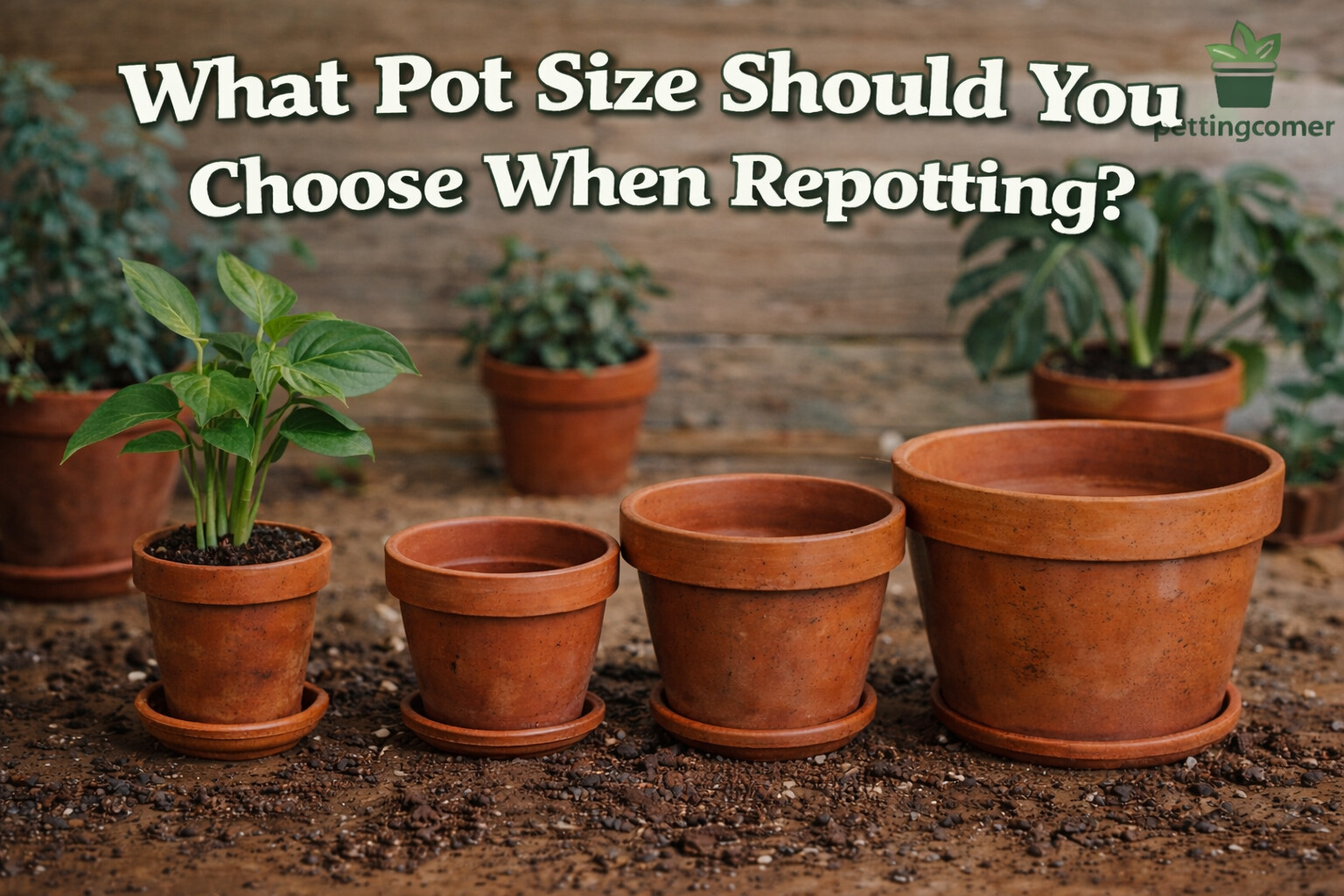
When repotting, choose a pot that is 1-2 inches larger in diameter than the current pot. Going bigger than that creates excess soil that stays wet too long, leading to root rot. Going smaller obviously doesn't help. This simple rule works for most houseplants in most situations.
This guide focuses on pot sizing, why the 1-2 inch rule exists, which plants are exceptions, how to measure correctly and what happens when you choose wrong. For the full repotting process, see How to Repot a Houseplant.
The Direct Answer: The 1-2 Inch Rule
For most houseplants: Select a pot 1-2 inches wider in diameter than the current pot.
| Current Pot Size | Recommended New Size |
|---|---|
| 4 inches | 5-6 inches |
| 6 inches | 7-8 inches |
| 8 inches | 9-10 inches |
| 10 inches | 11-12 inches |
| 12+ inches | 14 inches or refresh soil |
Why this works:
- Roots can grow into fresh soil without being overwhelmed
- Soil dries at an appropriate rate
- The plant maintains a proportional appearance
- Risk of overwatering stays manageable
For very slow growers like snake plants or succulents, stick to the smaller end (1 inch increase). For fast growers like pothos or monstera, 2 inches is fine.
Why Bigger Isn't Better
The instinct to give plants "room to grow" by jumping several sizes often backfires.
Excess Soil Stays Wet
When there's more soil than roots can use, that soil remains saturated after watering. Houseplant roots need both water and oxygen, sitting in perpetually wet soil suffocates them and creates conditions for rot.
What happens:
- You water normally
- Roots absorb water from their immediate area
- Outer soil ring stays wet for days or weeks
- Soggy soil becomes oxygen-depleted
- Roots at the edges rot
- Rot spreads inward
This process can kill a plant that was perfectly healthy before repotting.
Roots Focus on Filling Space
When surrounded by lots of empty soil, plants prioritize root growth over foliage growth. Your plant may look stalled above ground for months while roots work to fill the pot.
This isn't necessarily harmful for the plant long-term, but if you wanted bushier top growth, you'll be waiting.
Watering Becomes Tricky
Oversized pots make watering difficult to judge:
- The top layer dries while bottom stays wet
- Finger tests at the surface don't reflect deeper moisture
- Watering schedules become unreliable
- Rot can develop invisibly
Properly sized pots dry more evenly, making watering intuitive.
How to Measure Pot Size Correctly
Pot size is measured by diameter across the top opening not height or volume.
Measuring Steps
- Measure the current pot's rim diameter (not the base)
- Add 1-2 inches for the new pot size
- Check the new pot's measurements before buying, sizes aren't always accurate
Consider Depth Too
While diameter gets the most attention, depth matters:
- Standard depth: Works for most plants
- Shallow/azalea pots: Good for plants with shallow root systems (African violets, herbs, succulents)
- Deep pots: Suit plants with tap roots or thick rhizomes
A plant in a 6-inch standard pot should go into a 7-8 inch pot of similar depth not a much deeper or shallower one.
Account for Root Ball Size
Sometimes the pot size doesn't match the root ball (nurseries often cram plants into undersized pots). Base your new pot choice on the actual root ball not the old pot:
- If the root ball is 5 inches wide but was in a 6-inch pot, choose a 6-7 inch pot
- If the root ball is 6 inches but was crammed into a 5-inch pot, choose a 7-8 inch pot
When to Break the 1-2 Inch Rule
Going Smaller Than 1 Inch
Very slow growers: Snake plants, ZZ plants, and cacti grow so slowly that even 1 inch may be excessive. Half an inch to 1 inch works.
Plants that prefer being snug: Some plants bloom better when slightly root-bound (African violets, peace lilies, hoyas). Size up minimally.
Succulents and cacti: These rot easily in excess soil. Increase just enough to accommodate current roots.
Going Larger Than 2 Inches
Very fast growers: If your pothos or philodendron fills pots within six months, 2-3 inches may make sense. But only if you adjust watering accordingly.
Large plants that are hard to repot: For a 12-inch plant you can't easily repot every year, jumping to 14-15 inches and refreshing soil in between repottings is practical.
Outdoor conditions: Plants outside dry faster due to wind and sun. Slightly larger pots are more forgiving.
Sizing Down
Sometimes you need a smaller pot:
- Root rot recovery: After removing rotted roots, the remaining root mass may be much smaller
- Division: Dividing a plant creates multiple smaller plants needing smaller pots
- Intentional restriction: Keeping a plant small by limiting pot size (bonsai principle)
When sizing down, choose a pot that comfortably fits the remaining roots without excessive empty space.
How Pot Material Affects Size Choice
Different materials dry at different rates, which influences how forgiving your size choice is.
Terracotta (More Forgiving)
Terracotta is porous and breathes, allowing soil to dry from the sides as well as the top. This makes slightly larger pots less risky because:
- Soil dries faster overall
- Air exchange is better
- Overwatering is somewhat mitigated
If using terracotta: The 2-inch rule is safer; even 3 inches may work for drought-tolerant plants.
Plastic (Less Forgiving)
Plastic holds moisture with nowhere to escape except the top and bottom. Soil stays wet longer.
If using plastic: Stick closer to 1 inch for moisture-loving plants and always ensure drainage holes. Oversizing in plastic is riskier.
Ceramic (Variable)
Glazed ceramic acts like plastic (non-porous). Unglazed ceramic breathes somewhat.
If using ceramic: Treat glazed ceramic like plastic. For unglazed, you have slightly more flexibility.
Pot Size and Watering Relationship
Understanding this relationship prevents most sizing mistakes.
The Core Principle
More soil = more water retention = longer dry time = greater rot risk
Less soil = less water retention = faster dry time = less rot risk (but more frequent watering needed)
Adjusting Watering After Sizing Up
When you move to a larger pot, your old watering schedule may overwater:
- Check soil deeper before watering (2-3 inches not just surface)
- Wait longer between waterings initially
- Observe the plant for overwatering signs (yellowing lower leaves, soft stems)
Many plants die after repotting not because of repot stress but because owners didn't adjust watering.
Signs You Chose Too Large
After repotting, watch for:
- Soil still wet 10+ days after watering
- Yellowing leaves despite careful watering
- Musty smell from soil
- Fungus gnats (they love wet soil)
- Growth stalling while roots focus on filling space
If you see these signs, you can either:
- Water less frequently and wait it out
- Repot into a smaller size (stressful but sometimes necessary)
- Remove some soil from the edges to reduce moisture retention
Special Cases by Plant Type
Succulents and Cacti
Pot size: Current root ball width + 0.5-1 inch maximum
These plants store water and have minimal root systems. Excess soil quickly leads to rot. Many succulents thrive in pots that look almost too small.
Orchids
Orchids need minimal pot room. When repotting, often you're just refreshing media (bark) not sizing up. Only increase pot size when roots are spilling over significantly.
Fast-Growing Tropicals
Monstera, philodendron, pothos, bird of paradise: These grow vigorously and can handle 2-inch increases without issue. They'll fill space quickly.
Slow-Growing Tropicals
Snake plant, ZZ plant, Chinese evergreen: Size up minimally (1 inch or less) and infrequently. These plants dislike disturbance and prefer snug fits.
Flowering Houseplants
African violet, peace lily, Christmas cactus: Many bloom better when slightly root-bound. Size up only when truly necessary and go minimal.
Common Mistakes When Choosing Pot Size
Thinking About the Plant's Future Size
"It'll grow into it" logic ignores the soil moisture problem. Choose for the current root mass not where you hope the plant will be in a year.
Matching Pot to Above-Ground Size
A tall plant doesn't necessarily need a proportionally tall or wide pot. Roots don't always match what's above. Check the actual root ball.
Prioritizing Aesthetics Over Function
A beautiful pot that's too large will kill the plant. Choose function first. Use a cachepot (decorative outer pot) if you need specific aesthetics, keep the plant in an appropriate-sized inner pot.
Forgetting About Drainage
No matter what size you choose, drainage holes are non-negotiable. A perfectly sized pot without drainage is still a death trap.
Frequently Asked Questions
My plant came in a tiny pot. Can I jump straight to a much larger one?
If severely root-bound, you can go slightly larger than the 2-inch rule (maybe 3 inches) because the dense root ball will use water more efficiently. But don't go extreme. Two size-ups over two years is safer than one big jump.
What if I can only find pots in certain sizes?
If exact sizing isn't available, go smaller rather than larger. A slightly snug fit is always safer than excess soil.
Should I use a tall narrow pot or short wide pot?
Generally, match the root system's natural shape. Most houseplants spread horizontally more than vertically, so standard proportions work. Tall narrow pots can dry unevenly (bottom stays wet).
Can I prevent overwatering in an oversized pot?
You can mitigate by: using terracotta, adding extra perlite to soil for drainage, watering less frequently and using well-draining soil mix. But it's easier to just use the right size.