Root Rot: Causes and Treatment
Root rot is the silent killer, by the time you notice symptoms, damage is significant. But if you act fast, you can save many plants. Here's how to recognize, treat and prevent this common problem.
Potting Corner Team · Feb 21, 2026 · Updated Feb 21, 2026 · 8 min read
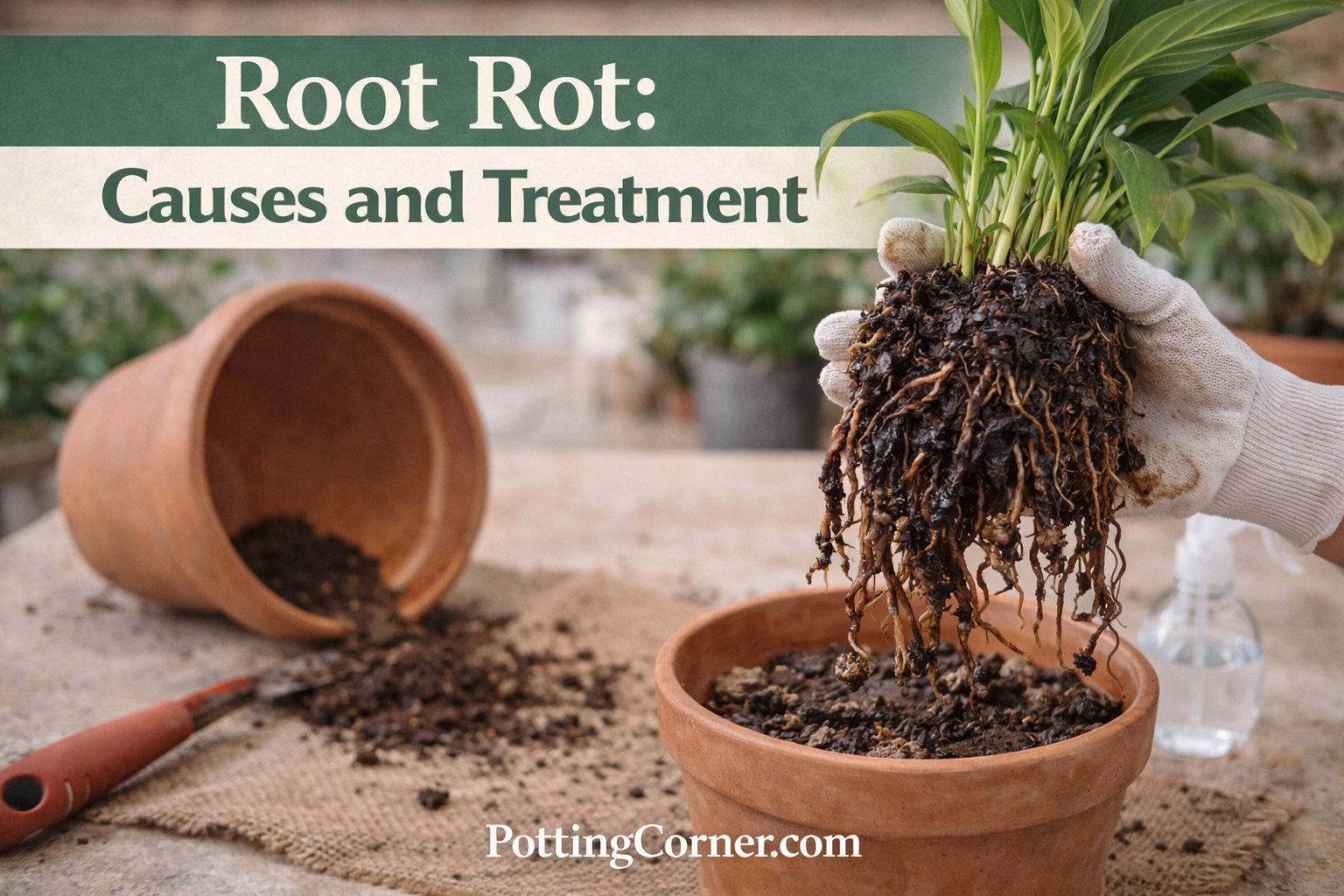
Root rot is what happens when overwatering goes wrong. Waterlogged soil suffocates roots, fungi move in and decay spreads through the root system. Above ground, you see yellowing, wilting and decline but by then, significant damage has occurred underground. Early detection and aggressive treatment give your plant the best chance of survival.
For a complete troubleshooting overview, see Houseplant Troubleshooting: Common Problems and Fixes.
The Direct Answer: Root Rot Basics
| Stage | Above-ground Signs | Root Condition | Prognosis |
|---|---|---|---|
| Early | Some yellowing, slow growth | Some brown, soft roots | Good if treated |
| Moderate | Yellowing wilting despite wet soil | Many roots brown/mushy | Fair with fast action |
| Severe | Major leaf drop, soft stems | Most/all roots dead | Poor, try but may fail |
The rule: Check roots any time a plant declines despite wet soil. Earlier treatment dramatically improves outcomes.
Recognizing Root Rot
Above-Ground Symptoms
What you see first:
- Yellow leaves, often starting at bottom
- Wilting even though soil is wet
- Soft, mushy stem base
- Slow or stopped growth
- Leaves falling off easily
- General decline for "no reason"
The Key Indicator
The giveaway sign:
- Plant acts thirsty (wilts, droops)
- But soil is wet
- Watering doesn't help, makes it worse
- This disconnect signals root problems
Confirming Root Rot
Only way to know for sure:
- Gently remove plant from pot
- Shake or wash off soil
- Examine roots:
- Healthy: White, cream, or tan; firm
- Rotted: Brown, black, gray; mushy, slimy
- Dead: Falls apart when touched
The Smell
Often present:
- Rotted roots have a foul odor
- Musty, sour, or rotten smell
- Coming from soil or roots
- Clear sign of decay
What Causes Root Rot
Overwatering
The primary cause:
- Roots need oxygen between waterings
- Constantly wet soil suffocates roots
- Weakened roots become vulnerable
- Fungi attack and spread
See Overwatered Plant: How to Save It.
Poor Drainage
Sets the stage:
- Pots without drainage holes
- Heavy, compacted soil
- Blocked drainage holes
- Water sits in pot with no escape
Overpotting
Excess soil holds excess water:
- Pot much larger than root ball
- Roots can't use all the moisture
- Center stays wet for too long
- Creates perfect rot conditions
Wrong Soil Type
Holds too much moisture:
- Dense, heavy soil
- Soil without perlite or drainage amendments
- Old, compacted soil
- Garden soil instead of potting mix
See Potting Soil for Houseplants: What to Use.
Cool Temperatures
Compounds the problem:
- Cold slows evaporation
- Soil stays wet longer
- Plants take up less water when cold
- Winter is high-risk for root rot
Treating Root Rot: Step-by-Step
Step 1: Remove from Pot
Handle gently:
- Don't water, work with dry-ish soil
- Turn pot on side, slide plant out
- Support the base of the plant
- If stuck, run knife around edge
Step 2: Remove All Soil
Clean slate needed:
- Shake off loose soil
- Rinse roots under lukewarm water
- Remove all old soil from roots
- You need to see every root clearly
Step 3: Assess the Damage
Critical evaluation:
- Identify healthy roots (firm, white/tan)
- Identify rotted roots (mushy, brown/black)
- Estimate percentage of damage
- More healthy roots = better prognosis
Step 4: Remove Dead Roots
Aggressive trimming:
- Use clean, sharp scissors or pruners
- Sterilize with rubbing alcohol between cuts
- Cut off all mushy, discolored roots
- Cut back to healthy tissue don't leave any rot
- Don't be timid, rot spreads if left
Step 5: Let Roots Dry
Break the cycle:
- Lay plant on paper towels
- Let roots air dry for several hours
- Overnight is fine for severe cases
- Roots should feel dry before repotting
Step 6: Treat Remaining Roots (Optional)
For severe cases:
- Dip roots in fungicide solution
- Hydrogen peroxide (3%) diluted 1:3 with water
- Cinnamon powder as natural antifungal
- Let dry after treatment
Step 7: Repot Properly
Fresh start:
- Use new pot or thoroughly clean old one
- Must have drainage holes
- Use fresh, well-draining potting mix
- Match pot size to remaining root system (may need smaller)
- Don't pack soil tightly
Step 8: Post-Treatment Care
Recovery period:
- Wait several days before watering
- When you do water, water lightly
- Provide good light (not intense sun)
- No fertilizer until new growth appears
- Keep away from temperature extremes
Recovery Timeline
First Two Weeks
Stabilization period:
- Don't expect improvement yet
- May lose more leaves
- Plant is adjusting
- Water very sparingly
Weeks 2-4
Looking for signs:
- No more rapid decline is good news
- New growth indicates recovery
- Remaining leaves staying firm
- Roots starting to regrow
Months 1-3
Gradual recovery:
- New leaves appearing
- Plant regaining vigor
- Can resume normal watering (carefully)
- May resume fertilizing
Full Recovery
Depends on severity:
- Mild cases: 4-6 weeks
- Moderate: 2-3 months
- Severe: 3-6 months (if successful)
When You Can't Save the Plant
Signs It's Too Late
Sometimes not salvageable:
- All roots are dead
- Stem base is completely mushy
- Main stem/crown rotted
- No healthy tissue remains
- Plant collapses entirely
Salvage Attempts
If main plant dies:
- Look for any healthy stem sections
- Take cuttings and root in water or fresh soil
- Propagate what you can
- Learn from the experience
Preventing Root Rot
Proper Watering
The foundation:
- Check soil before watering
- Let soil dry appropriately between waterings
- Don't water on a schedule
- When in doubt, wait
See How to Water Houseplants: The Beginner's Guide.
Good Drainage
Non-negotiable:
- Always use pots with drainage holes
- Well-draining potting mix
- Empty saucers after watering
- Don't let pots sit in water
Right-Sized Pots
Appropriate fit:
- Pot only 1-2 inches larger than root ball when repotting
- Roots should fill most of the pot
- Excess soil stays too wet
Quality Soil
Supports drainage:
- Commercial potting mix (not garden soil)
- Add extra perlite for drainage
- Refresh soil every 1-2 years
- Don't reuse soil from rotted plants
See How to Repot Houseplants: The Complete Guide.
Seasonal Awareness
Adjust for conditions:
- Water less in winter
- More risk when cold
- Less evaporation in low light
- Be extra cautious in off-season
Plants Prone to Root Rot
High Risk
Very susceptible:
- Succulents and cacti
- Snake plants (despite drought tolerance)
- ZZ plants
- Pothos (surprisingly)
- Peace lilies
Moderate Risk
Watch carefully:
- Most tropical houseplants
- Fiddle leaf figs
- Rubber plants
- Philodendrons
Lower Risk
More tolerant (but not immune):
- Ferns (like more moisture)
- Some palms
- Plants that like consistent moisture
Note: All plants can get root rot if overwatered severely enough.
Frequently Asked Questions
Can a plant fully recover from root rot?
Yes, if caught early enough. Plants that lose up to half their roots can recover fully with proper treatment. Severe cases have lower success rates but are still worth trying.
Should I keep the plant in water while roots recover?
No, this continues the problem. The goal is to get roots into fresh, well-draining soil where they can recover with proper wet/dry cycles.
My plant's roots look brown but firm. Is that root rot?
Not necessarily. Some plants have naturally tan or brown roots. Rot is mushy, slimy and often smelly. Firm roots, even if darker, may be healthy.
Can I reuse the pot after root rot?
Yes but sterilize it first. Wash thoroughly with soap and water, then wipe with 10% bleach solution or rubbing alcohol. Rinse well and let dry completely.
How long after treating root rot should I wait to water?
Wait 3-5 days minimum. The roots need time to begin healing. When you do water, water lightly. Full watering can resume when you see signs of recovery.