Signs Your Plant Needs Repotting
Roots escaping drainage holes? Water running straight through? These are clear signs your plant needs a new pot. Here's how to tell when it's time and when it's not.
Potting Corner Team · Jan 14, 2026 · 10 min read
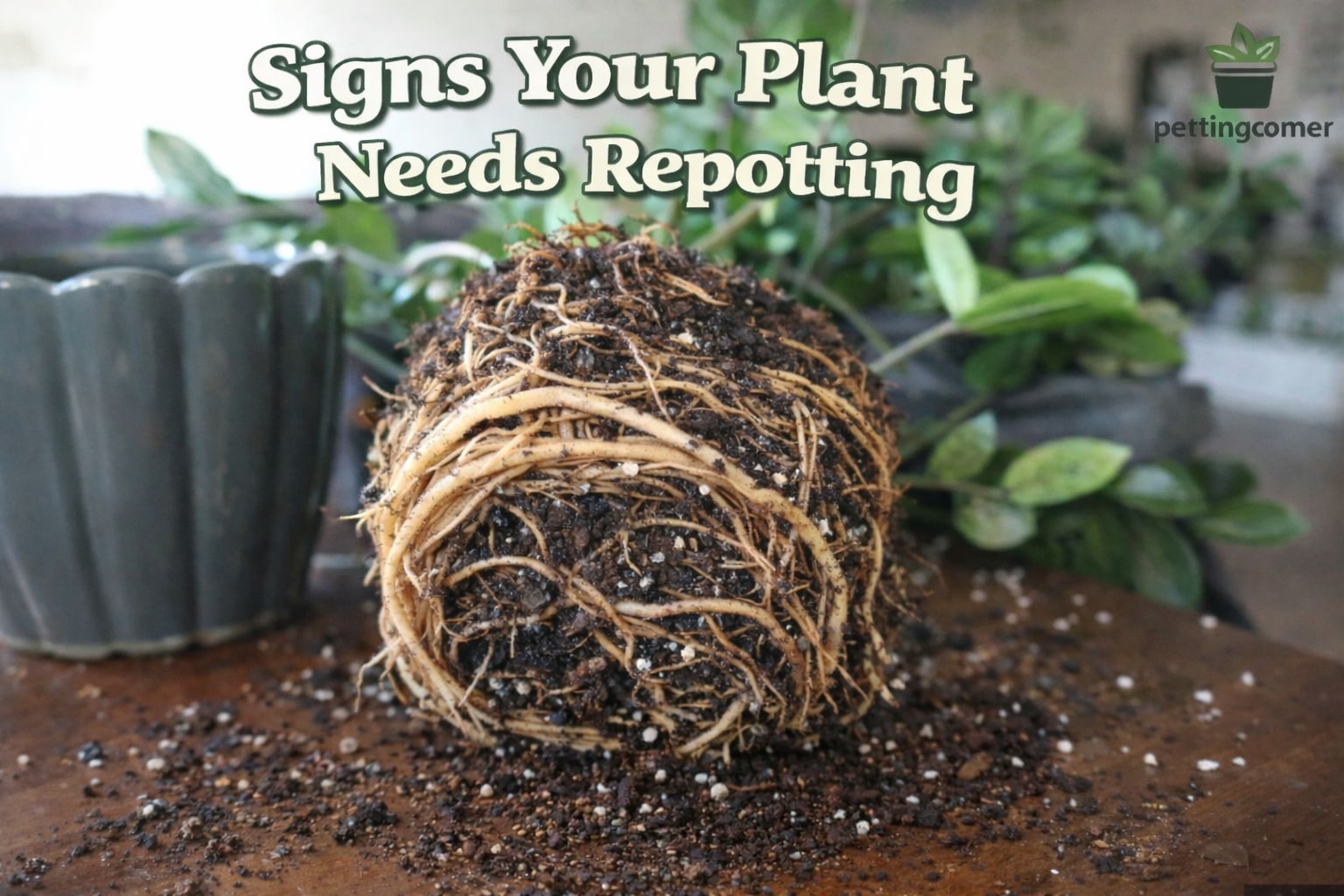
Signs Your Plant Needs Repotting
A plant needs repotting when roots have filled the available space, water can't properly reach the root system, or the soil has degraded beyond usefulness. Plants that show these signs are often described as "root-bound," meaning their roots have outgrown the available space. The most obvious sign is roots growing out of drainage holes, but there are many subtler indicators that your plant is struggling in its current container.
This guide focuses on recognizing the signs, from obvious root problems to easy-to-miss behavioral changes and helps you distinguish repotting needs from other issues. For the full repotting process, see How to Repot a Houseplant.
The Direct Answer: What to Look For
Your plant likely needs repotting if you observe any of these:
Definite signs (repot soon):
- Roots growing from drainage holes
- Roots visible on the soil surface
- Plant slides out showing mostly roots, little soil
- Water runs straight through without absorbing
- Pot is cracked or bulging from root pressure
Probable signs (investigate further):
- Soil dries out much faster than before
- Plant wilts quickly despite recent watering
- Growth has slowed or stopped during growing season
- Leaves are smaller than they used to be
- Plant tips over frequently
If you see any definite sign, repotting should happen within the next few weeks (ideally in spring). Probable signs require checking the root ball to confirm.
Important: Not every symptom means repotting. Many signs (wilting, yellow leaves, slow growth) can also be caused by light, watering, or seasonal dormancy. Always confirm by checking the root ball before repotting.
Root-Related Signs
Roots Growing from Drainage Holes
This is the most recognized sign of a root-bound plant. When roots escape through drainage holes, they've exhausted all space inside the pot and are actively seeking more room.
What it means: The interior root system is dense and circling. The plant has been root-bound for a while roots don't reach drainage holes until the pot is quite full.
How urgent: Moderate. The plant can survive this way for months but performance declines. Repot at your next opportunity, ideally in spring.
What to do: When repotting, gently untangle or trim these escaped roots. If they've grown into a tray below, cut them rather than ripping, ripping damages roots further up.
Roots Circling the Soil Surface
Visible roots on top of the soil indicate the root mass below is so dense that new roots have nowhere to go but up.
What it means: The pot is thoroughly filled with roots. Soil has likely been displaced by root growth.
How urgent: Similar to roots at drainage holes. The plant is uncomfortable but not dying.
What to check: Gently tip the plant out. If the root ball is a solid, circling mass with little visible soil it's definitely time.
Root Ball Lifts Out as a Solid Mass
When you remove a plant for inspection and the roots form a complete pot-shaped block with almost no loose soil, that's root-bound. If you've never seen this before, imagine the pot coming off and the plant holding its shape like a brick — that's classic root binding.
What it means: The roots have completely consumed the original soil volume. Any nutrients in that soil are long gone.
How urgent: High. The plant is surviving on water alone, essentially. Repot soon and loosen or slice the root ball to prevent continued circling.
Roots Cracking or Bulging the Pot
Terra cotta pots can crack from root pressure. Plastic pots may bulge or deform. This is overdue repotting.
What it means: Root pressure has built up over an extended period. The plant needed repotting months ago.
How urgent: High. Repot immediately. The current pot is failing.
Water-Related Signs
Water Runs Straight Through
You water and within seconds it drains out the bottom, before the soil could possibly absorb it. This means water is channeling along the edges between roots and pot wall not penetrating the root ball.
What it means: The root mass is so dense that water can't infiltrate. The center of the root ball stays dry even after watering.
How urgent: High. The plant isn't actually getting watered. This leads to chronic dehydration despite regular watering.
What to do: As a temporary fix, bottom water (sit the pot in water for 20-30 minutes) to force absorption. Then repot at your earliest opportunity.
Soil Dries Unusually Fast
If your plant suddenly needs watering twice as often as before, more roots are consuming water faster.
What it means: Root volume has increased significantly. This isn't necessarily a crisis it's natural growth but indicates the pot is filling up.
How urgent: Low to moderate. The plant is healthy and growing; it just needs more room soon.
What to check: Compare watering frequency now to six months ago. A plant going from weekly to every three days has significantly expanded its root system.
Plant Wilts Despite Moist Soil
You check the soil it's wet, yet the plant is drooping. This can indicate root problems but root-bound plants sometimes show this because the dense root mass can't absorb water efficiently.
What it means: Either roots are damaged (rot) or so compacted they've lost function. Check by unpotting.
How urgent: Investigate immediately. This could be overwatering/root rot or severe root binding, very different problems.
How to tell the difference: Root rot has mushy, dark, foul-smelling roots. Root binding has firm, tangled, healthy-looking but overcrowded roots.
Salt Crust on Soil Surface
White, crusty deposits on soil or pot rims indicate mineral buildup from water and fertilizer. Over time, this accumulates to damaging levels.
What it means: The soil has been in use long enough to build up salts. Root tips can be damaged by high salt concentration.
How urgent: Moderate. You can flush the soil with distilled water as a short-term fix but repotting with fresh soil is the real solution.
Growth-Related Signs
Growth Has Slowed or Stopped
A previously vigorous plant that stops producing new leaves during its active growing season may be root-bound.
What it means: The plant is channeling energy into root survival rather than new growth. Without room to expand it conserves resources.
How urgent: Moderate. The plant isn't dying but it's stalled. Confirm by checking roots.
What to rule out first: Low light, lack of fertilizer, pest damage, or dormancy (winter) can all cause growth slowdown. Check conditions before assuming root-bound.
New Leaves Are Smaller Than Older Ones
When a plant produces progressively smaller leaves it's often struggling for resources. Root-bound conditions limit nutrient and water uptake.
What it means: The plant can't support full-sized growth with its current root situation.
How urgent: Moderate. This indicates gradual decline not emergency but conditions should improve.
Plant Is Top-Heavy and Tips Over
A large plant in a too-small pot becomes unstable. If your plant falls over frequently the pot size is inadequate.
What it means: Above-ground growth has outpaced below-ground capacity.
How urgent: Low (safety issue not plant health). Use a heavier pot or size up.
Soil-Related Signs
Soil Pulls Away from Pot Edges
When soil shrinks and creates a gap between itself and the pot wall it's severely degraded.
What it means: Organic matter has decomposed, structure has collapsed and the soil can no longer hold water properly.
How urgent: Moderate to high. The plant needs fresh soil. Water runs through the gap without reaching roots.
Soil Takes Forever to Dry
Old, compacted soil drains poorly and stays wet for extended periods. This creates rot risk.
What it means: Soil structure has broken down. Roots may be sitting in excess moisture.
How urgent: Moderate. Risk of root rot increases the longer this continues.
Soil Smells Bad
Healthy soil smells earthy. Foul, musty, or sour odors indicate anaerobic conditions and possibly root rot.
What it means: Either overwatering has created conditions for bacteria, or soil has degraded to the point of harboring pathogens.
How urgent: High. Investigate roots immediately and repot in fresh soil if needed.
How to Check If Repotting Is Needed
If you see probable signs but want to confirm:
- Water the plant a day before checking (easier removal)
- Support the plant at its base
- Tip the pot sideways and gently slide the plant out
- Examine the root ball:
- Mostly roots, little soil visible = needs repotting
- Roots circling tightly = needs repotting
- Roots are brown, mushy = needs repotting (root rot issue)
- Mix of roots and soil roots healthy = probably fine
If you can't easily slide the plant out, that itself suggests a densely packed root system.
Signs That Look Like Repotting Needs But Aren't
Yellowing Lower Leaves (Sometimes)
While root-bound plants can show yellowing, this symptom more often indicates overwatering, underwatering, or nitrogen deficiency. Check roots before assuming repotting is the solution.
Drooping After Watering
A plant that perks up after watering but droops again quickly might be root-bound, or might be in soil that drains too fast, or in too much sun. Context matters.
Slow Winter Growth
Most houseplants grow slowly or not at all in winter. This is dormancy not distress. Don't interpret normal winter slowdown as a sign of root problems.
Common Mistakes When Evaluating Repotting Signs
Assuming Every Problem Means Repotting
Repotting is stressful for plants. If the actual problem is light, water, or pests, repotting adds stress without solving anything. Diagnose before acting.
Ignoring Gradual Changes
Signs often develop slowly. A plant that needed repotting six months ago adapted to stress, masking the severity. Regular seasonal inspections catch problems earlier.
Waiting for Multiple Signs
You don't need to check every box. One definite sign (roots from drainage holes, solid root mass) is enough. Waiting for more signs means more stress on the plant.
Confusing Root-Bound with Root Rot
Both can cause wilting and poor growth. Root rot has dark, mushy, smelly roots. Root binding has healthy but overcrowded roots. The treatments are different: rot requires cutting away damage, binding just needs more space.
Frequently Asked Questions
My plant has roots at the drainage hole but looks healthy. Do I need to repot?
Not urgently but plan to repot within the next growing season. Healthy appearance means the plant is coping but performance will decline over time.
How do I check roots without damaging the plant?
Water the day before, support the plant base, tip sideways and slide out gently. Healthy plants tolerate this inspection fine. Return to pot if not ready to repot.
Can a plant recover from being severely root-bound?
Yes. When repotted properly, even very root-bound plants usually recover within a few weeks to months. Loosen or slice circling roots to encourage outward growth.
My plant has been in the same pot for three years with no symptoms. Should I repot anyway?
If there are no signs of distress, you can wait. Consider refreshing the top layer of soil for nutrients. Some plants (snake plants, ZZ plants) prefer being snug and can go 3-5 years happily.