How to Tell If Your Plant Is Getting Too Much Sun
Scorched leaves, bleached spots and crispy edges, these are sunburn symptoms not watering problems. Here's how to recognize and fix sun damage on houseplants.
Potting Corner Team · Feb 25, 2026 · 8 min read
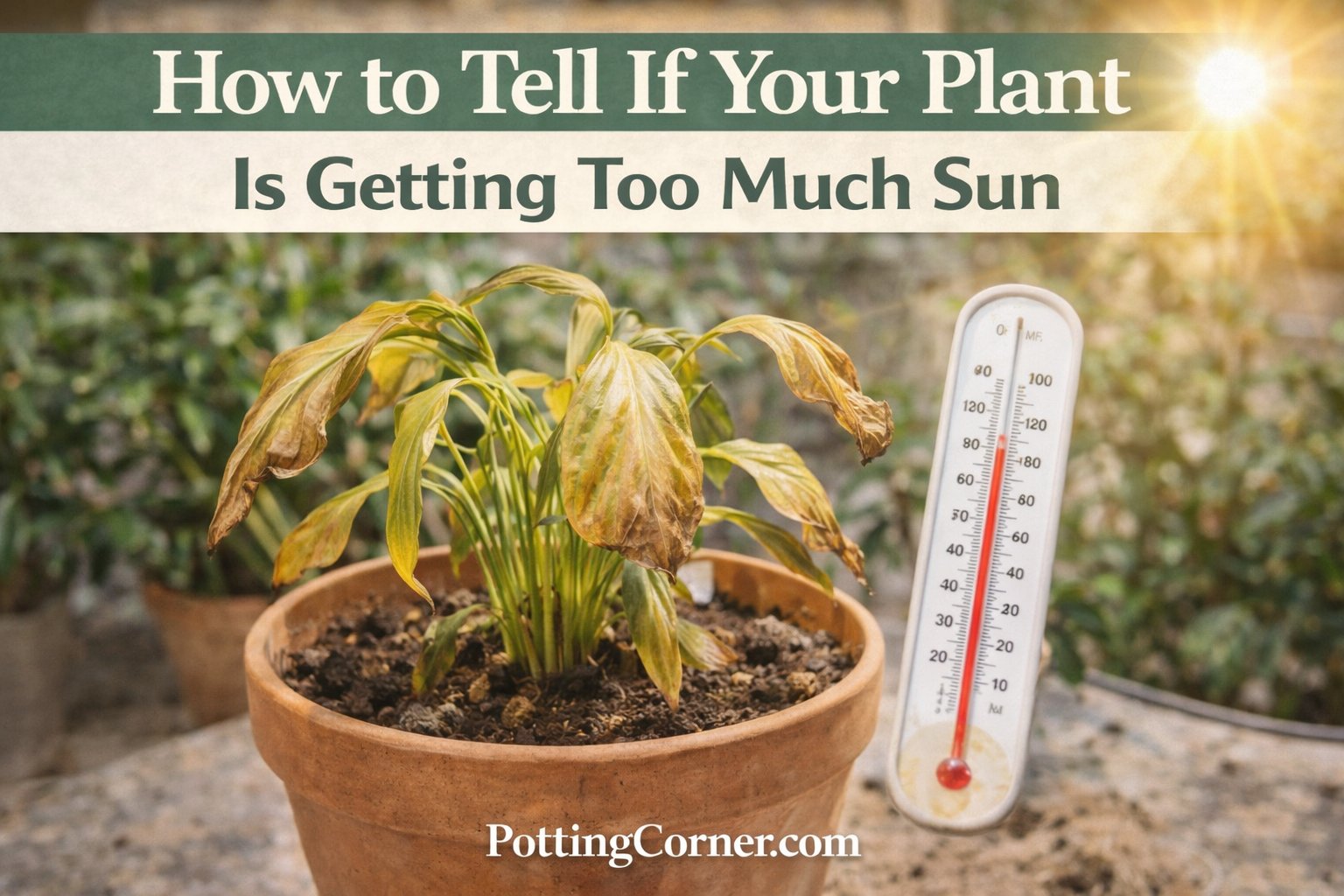
Plants need light but too much direct sun burns them, especially tropical houseplants that evolved under forest canopies. Sunburn on plants looks like bleached patches, brown crispy spots, or washed-out leaves. Unlike some plant problems that take weeks to appear, sun damage can happen within hours on a hot afternoon.
This guide helps you recognize sun damage and protect your plants. For general light guidance, see Indoor Plant Light Guide.
The Direct Answer: Sun Damage Signs
| Symptom | What It Looks Like | Timing |
|---|---|---|
| Leaf bleaching | Washed-out, pale patches | Hours to days |
| Sunburn spots | Brown, crispy patches on sun-facing side | Hours to days |
| Leaf curling | Leaves curl inward away from light | Hours |
| Wilting in sun | Drooping during peak sun, recovering later | Same day |
| Faded colors | Overall pale less vibrant appearance | Days to weeks |
The rule: Damage appears on the side facing the sun and develops quickly. If only sun-facing portions are affected, light is the cause.
Which Plants Are Most Vulnerable
Very Sun-Sensitive
These plants burn easily in direct sun:
- Calatheas and marantas
- Ferns (most varieties)
- Peace lilies
- Philodendrons
- Pothos
- Chinese evergreens
- Dracaenas
- Alocasias
Moderate Sun Tolerance
Can handle some morning sun or dappled light:
- Monstera
- Rubber plants
- Spider plants
- Fiddle leaf figs
- Snake plants
Sun-Loving
These generally handle or require direct sun:
- Cacti and most succulents
- Some herbs (basil, rosemary)
- Bird of paradise
- Croton
- Yucca
Even sun-loving plants can burn if suddenly moved from shade to full sun.
Recognizing Sun Damage
Bleached or Pale Patches
Intense light breaks down chlorophyll:
- Areas turn pale yellow or white
- Often on upper leaves closest to window
- Appears on the side facing the light source
- Won't recover on damaged tissue
Brown Crispy Spots (Sunburn)
Actual tissue death from heat and light:
- Brown, dry, papery patches
- Clear edges between damaged and healthy tissue
- Often starts at leaf tips or centers
- Commonly on newest or most exposed leaves
Distinguishing From Other Problems
Sunburn vs. other causes:
| Problem | Sunburn | Underwatering | Fertilizer Burn |
|---|---|---|---|
| Location | Sun-facing only | Whole plant | Leaf tips/edges |
| Pattern | Patches/spots | Crispy edges | Brown tips |
| Speed | Fast (hours/days) | Gradual | Gradual |
| Soil | Any moisture | Dry | Any moisture |
Red or Purple Stress Colors
Some plants produce protective pigments:
- Succulents may turn red, pink, or purple
- This can be attractive in some plants
- But indicates stress that may become damaging
- Watch for it escalating
Curling or Cupping Leaves
Leaves protecting themselves:
- Curling inward reduces surface area
- Turning away from light source
- A defense mechanism not necessarily damage
- Relocate plant if you see this
When Sun Damage Occurs
South and West Windows in Summer
The most dangerous positions:
- Midday and afternoon sun is intense
- Summer sun is strongest
- Glass can magnify heat
- Distance matters, touching glass is worst
After Moving Plants
Sudden light increases cause problems:
- Moving from dim spot to sunny window
- Bringing plants outdoors for summer
- Removing curtains or shade
- Any rapid light change
Plants need gradual acclimation to increased light.
Seasonal Changes
As seasons shift:
- Spring sun angle changes, reaching plants that were safe
- Deciduous trees lose leaves, exposing previously shaded areas
- Summer intensity increases
- Reflections from snow can add light in winter
Hot Afternoons
Peak risk conditions:
- Hottest part of the day
- Combined heat and light
- West-facing windows especially
- Greenhouses or sunrooms
Preventing Sun Damage
Correct Placement
Position plants appropriately:
- Most tropicals: bright indirect not direct sun
- Set back 2-5 feet from south/west windows
- East windows are often safer (cooler morning sun)
- North windows never give direct sun
Use Sheer Curtains
Filter intense light:
- Reduce intensity by 20-50%
- Protect from midday and afternoon sun
- Still allow adequate light for growth
- Essential for south and west windows with sensitive plants
Acclimate Gradually
When increasing light exposure:
- Start in lower light position
- Move slightly closer over 1-2 weeks
- Watch for stress signs
- Stop before damage occurs
See How to Acclimate a Plant to Brighter Light.
Monitor Seasonally
As sun angles and intensity change:
- Check plants in spring as sun strengthens
- Observe how afternoon light hits plants
- Adjust positions or add filtering as needed
- Move vulnerable plants if hot spots develop
Create Distance
Simple but effective:
- Even 1-2 feet back from a window reduces intensity significantly
- Use plant stands to control height and position
- Rotate plants so no side gets constant exposure
Fixing Sun Damage
Move the Plant Immediately
Stop ongoing damage:
- Relocate to lower light immediately
- Don't wait for more damage
- Even a few feet makes a difference
Assess the Damage
Determine severity:
- Minor bleaching: Plant will recover, leaves may remain marked
- Moderate burns: Damaged leaves won't recover but plant survives
- Severe damage: Multiple leaves destroyed, plant stressed
Remove Severely Damaged Leaves
If tissue is dead:
- Cut off completely brown, crispy leaves
- Trim brown portions from partially damaged leaves
- Use clean scissors
- Don't remove too much at once if plant is already stressed
Don't Overcompensate
Avoid making things worse:
- Don't move to very low light (plant still needs light)
- Don't overwater (common stress response)
- Don't fertilize stressed plants
- Give recovery time
Wait and Observe
Damaged leaves won't heal, but:
- New growth should be healthy
- Plant can produce replacement leaves
- Recovery takes weeks to months
- Monitor for continued stress
Returning Plants to Light
After Recovery
Once new healthy growth appears:
- Increase light gradually
- Watch closely for early stress signs
- Find the sustainable spot before damage
- Use filtering if needed
Learn the Threshold
Each plant has its limits:
- Some tolerate more than expected
- Others burn faster
- Observe and learn your specific conditions
- Adjust for seasons
Common Mistakes
Assuming Damage Is From Watering
Sun damage is often misdiagnosed:
- Crispy leaves blamed on underwatering
- But check positioning first
- Sun-facing damage pattern is the clue
Ignoring Early Signs
Acting late:
- Slight color changes are early warnings
- Address before severe burns develop
- Moving a plant is easy; healing damage is slow
Sudden Light Increases
Moving directly to full sun:
- Plants can't adjust instantly
- Even sun-loving plants need acclimation
- Always transition gradually
Forgetting About Reflected Light
Light from unexpected sources:
- Mirrors and light walls reflect light
- Light-colored buildings outside
- Water features or pools
- Snow in winter
Frequently Asked Questions
Will sunburned leaves recover?
No, damaged tissue stays damaged. But plants produce new leaves that will be healthy if you fix the light situation.
Can I put my plant outside for summer?
Yes, with acclimation. Start in full shade outdoors, gradually introduce more light over 2 weeks. Watch for damage throughout the process.
My plant was fine here last year. Why is it burning now?
Seasonal sun angles change. Trees may have been trimmed. Buildings or structures may have changed. Evaluate current conditions not just history.
Is morning sun okay for most houseplants?
Generally, yes. Morning sun (east-facing) is cooler and gentler. Most tropicals handle morning direct sun without burning. Afternoon sun is the problem.
Should I mist sunburned leaves?
No, misting doesn't help healing. Focus on correcting light conditions and proper watering. Misting can actually worsen burns if water droplets magnify sunlight.