Watering After Repotting: What to Do
Fresh soil, stressed roots and anxious plant parents, repotting creates a perfect storm for watering mistakes. Here's exactly how to water in the critical days after repotting.
Potting Corner Team · Feb 10, 2026 · Updated Feb 10, 2026 · 8 min read
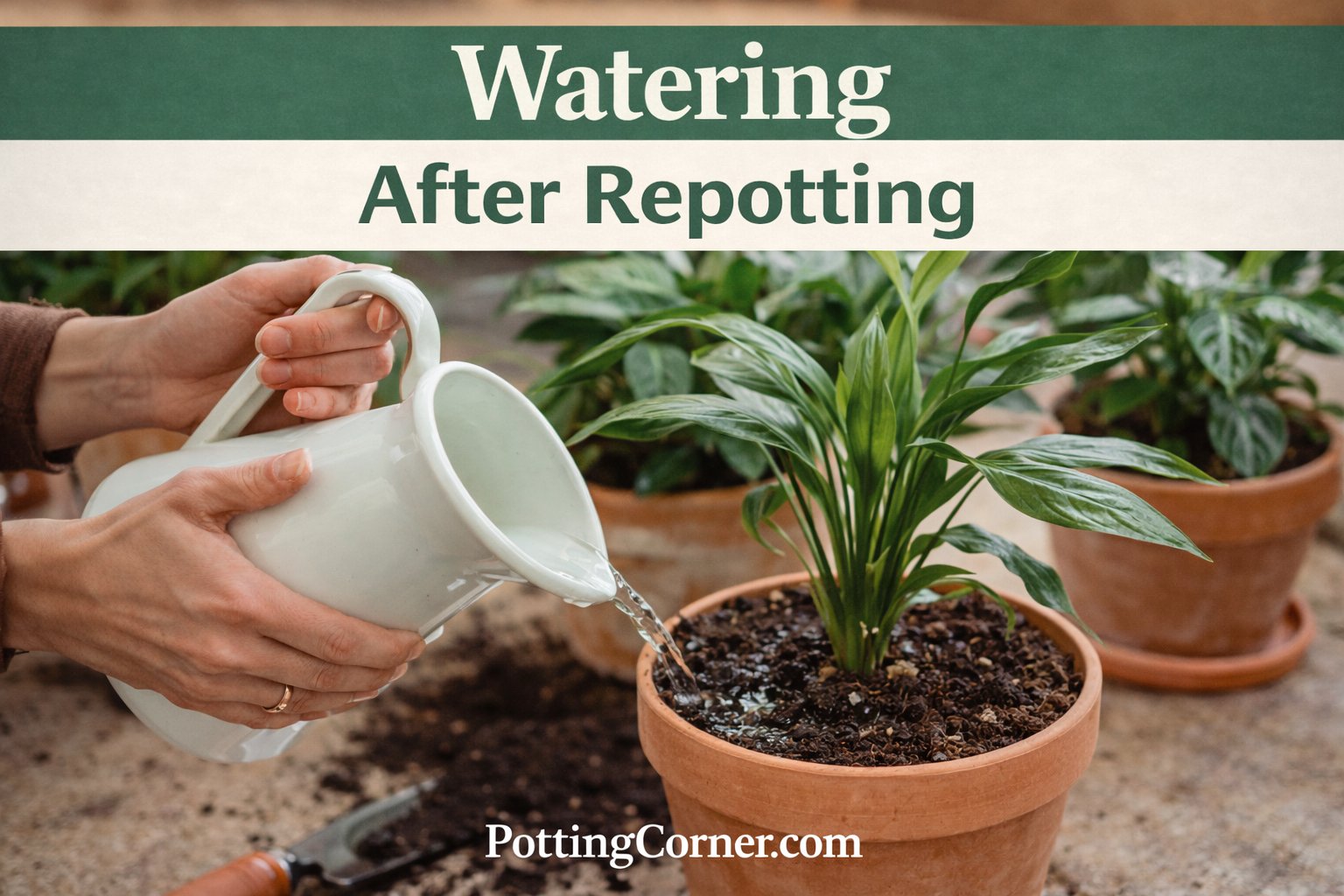
Immediately after repotting, water thoroughly until it runs from the drainage holes, this settles soil around roots and eliminates air pockets. Then, for the next two weeks, water more cautiously than usual. Freshly repotted plants have disrupted root systems that can't absorb water efficiently, so soggy soil becomes dangerous. The goal is consistent moisture not wetness, while roots re-establish.
This guide covers the complete watering timeline after repotting. For general repotting instructions, see How to Repot a Houseplant. For broader aftercare, see What to Do After Repotting.
The Direct Answer: The First Two Weeks
| When | What to Do |
|---|---|
| Immediately after repotting | Water thoroughly until drainage |
| Days 1-7 | Check soil before watering, lean dry |
| Days 7-14 | Begin returning to normal watering |
| After week 2 | Resume standard watering routine |
The rule: One thorough watering at repotting, then careful monitoring. Overwatering is the main risk during recovery.
Why the First Watering Matters
Settles Soil Around Roots
Fresh potting mix is loose and contains air pockets. Without watering:
- Air gaps surround roots
- Roots can't contact soil properly
- Water uptake is compromised
- Pockets dry out quickly while other areas stay wet
A thorough first watering collapses these air spaces, pressing soil against roots.
Eliminates Large Air Voids
During potting, you can't perfectly fill every gap. Water finds its way into spaces you can't see, ensuring complete soil-to-root contact.
Hydrates the New Soil
Fresh potting mix is often somewhat dry from the bag. That initial watering hydrates the entire soil column, giving roots immediate access to moisture.
Signals to Roots
The presence of water tells root hairs to begin exploring the new soil. This starts the establishment process immediately.
How to Water Immediately After Repotting
Step-by-Step
- Place pot in a sink, tub, or on a tray—you'll have runoff
- Water slowly and evenly over the entire soil surface
- Continue until water flows from drainage holes
- Wait a moment—if soil absorbs quickly add more
- Let excess drain for 10-15 minutes
- Check soil level—add more if it settled significantly
- Return to display location
- Empty saucer after 30 minutes if any water collected
Signs You've Watered Enough
- Water runs freely from drainage holes
- Soil surface is evenly moist
- No dry patches visible
- Soil level has settled (may need topping off)
What If Soil Settles a Lot?
Some settling is normal. If soil drops more than half an inch:
- Add more potting mix to restore proper level
- Water again lightly to settle the addition
- Don't bury the stem deeper than it was
The Danger Period: Days 1-14
After that first thorough watering the risk of overwatering increases dramatically.
Why Roots Are Vulnerable
During repotting, fine root hairs the tiny roots that absorb water, are damaged. This means:
- Water uptake capacity is reduced
- Soil stays wet longer than normal
- Roots can't "drink" the excess away
- Saturated conditions invite rot
Until new root hairs grow (1-2 weeks) the plant can't use water as efficiently as before.
The Overwatering Trap
New plant parents often reason: "My plant looks stressed it must need water."
But stress after repotting isn't thirst it's recovery. Adding water to already-moist soil makes things worse not better. Check the soil before watering, every time.
Signs of Overwatering After Repotting
- Continued or worsening wilting despite wet soil
- Yellowing leaves (especially lower ones)
- Mushy stem base
- Foul smell from soil
- Soil that never dries
If you see these signs, stop watering and check roots for rot. See .
Watering During Recovery
Days 1-7: Cautious Monitoring
During the first week:
- Check soil every 2-3 days
- Use the finger test: dry at 1-2 inches means water
- If still moist, wait
- When in doubt, wait another day
Most plants won't need watering during this week if you watered thoroughly at repotting, especially in lower light or cool conditions.
Days 7-14: Gradual Normalization
During the second week:
- Roots are beginning to establish
- Water uptake improves
- Soil may start drying at a more normal rate
- Begin returning to your regular checking routine
After Week 2: Resume Normal Care
By week 2-3:
- Most plants have recovered
- Normal watering patterns resume
- Check soil at your usual intervals
- Water when dry to appropriate depth
For complete aftercare guidance, see What to Do After Repotting.
Special Situations
Freshly Repotted Succulents
Succulents and cacti are different:
- Don't water immediately after repotting
- Wait 3-7 days for root damage to heal
- Then water sparingly
- Resume normal (infrequent) watering after 2 weeks
Succulents store water in their tissues and can easily rot if watered with damaged roots.
Root-Bound Plants
Severely root-bound plants were already struggling to absorb water. After repotting:
- They may actually need water sooner than expected
- Monitor closely, both over and underwatering are risks
- The root mass may take time to spread into new soil
See How to Repot a Root-Bound Plant.
Large Plants
Large plants have more soil, which stays wet longer:
- Be extra cautious with watering
- Large pots may not need water for 2 weeks or more
- Check deeper (2-3 inches) before watering
Plants Repotted During Dormancy
Winter-repotted plants:
- Are already using less water due to dormancy
- Need even more caution with watering
- May not need water for extended periods
See .
Fresh Soil Behaves Differently
It May Retain More Water
Fresh potting mix, especially peat-based, holds moisture well:
- Doesn't drain as fast as old, degraded soil
- May stay moist much longer than you expect
- Adjust watering frequency accordingly
Or It May Drain Faster
Chunky, bark-based mixes drain quickly:
- Water may run through without saturating
- May need multiple slow applications to wet fully
- Check that soil is actually moist not just wet on top
It Takes Time to Calibrate
Your previous watering rhythm was calibrated to old soil. Expect 2-4 weeks to learn how the new soil behaves in your specific conditions.
Common Mistakes
Watering Because the Plant Looks Stressed
Post-repotting stress isn't thirst. Wilting, drooping and general sadness are normal recovery signs. Check soil moisture before adding water.
Skipping the Initial Watering
Not watering after repotting leaves air pockets around roots. That first thorough watering is essential don't skip it.
Maintaining the Old Schedule
"I watered every Sunday before" doesn't mean you water every Sunday now. The soil, pot and root situation have all changed. Check before watering.
Fertilizing Instead of Watering
Fresh soil contains nutrients. Adding fertilizer to stressed roots causes burn. Wait 4-6 weeks before fertilizing.
Panic-Watering After Leaf Drop
Dropping a few leaves after repotting is normal stress response. It doesn't mean the plant needs more water. Often it means the opposite.
Troubleshooting Post-Repotting Watering
Soil Stays Wet Too Long
If soil doesn't dry after 10+ days:
- Light may be too low
- Pot may be too large
- Roots may be damaged
- Reduce watering, move to brighter spot
- Check roots for rot if it continues
Soil Dries Too Fast
If soil dries within 1-2 days:
- Mix may be too chunky/fast-draining
- Pot may be too small
- Plant may be recovering well and drinking
- Water more frequently or reassess soil mix
Plant Keeps Wilting
If wilting continues despite moist soil:
- Roots may be damaged or rotting
- Check roots immediately
- May need to repot again with fresh dry soil
- Trim any rotted roots
Not Sure If Plant Needs Water
When in doubt after repotting: wait. An underwatered plant shows clear signs (crispy leaves, severe wilt) and recovers quickly when watered. An overwatered plant after repotting may not recover at all.
Frequently Asked Questions
How long after repotting should I wait to water?
Don't wait, water immediately after repotting to settle soil. Then wait and check before the next watering.
Should I water from the bottom after repotting?
Top watering is fine and helps settle soil. Bottom watering works too but the initial watering should be thorough either way.
My plant is drooping after repotting. Should I water it again?
Check the soil first. If it's still moist from the initial watering don't add more. Drooping is normal post-repotting stress not necessarily thirst.
How do I know when to resume normal watering?
When the plant looks stable (no new wilting, possibly showing new growth) and soil is drying at a consistent rate, usually after 2-3 weeks.
Should I use room temperature water?
Always. Cold water shocks roots and recently repotted plants are already stressed. Room temperature is gentler.