Choosing the Best Spot for a New Plant
You bought a new plant, now where does it go? The decision involves light, temperature, traffic and your plant's specific needs. Here's a systematic way to find the right spot.
Potting Corner Team · Mar 10, 2026 · 7 min read
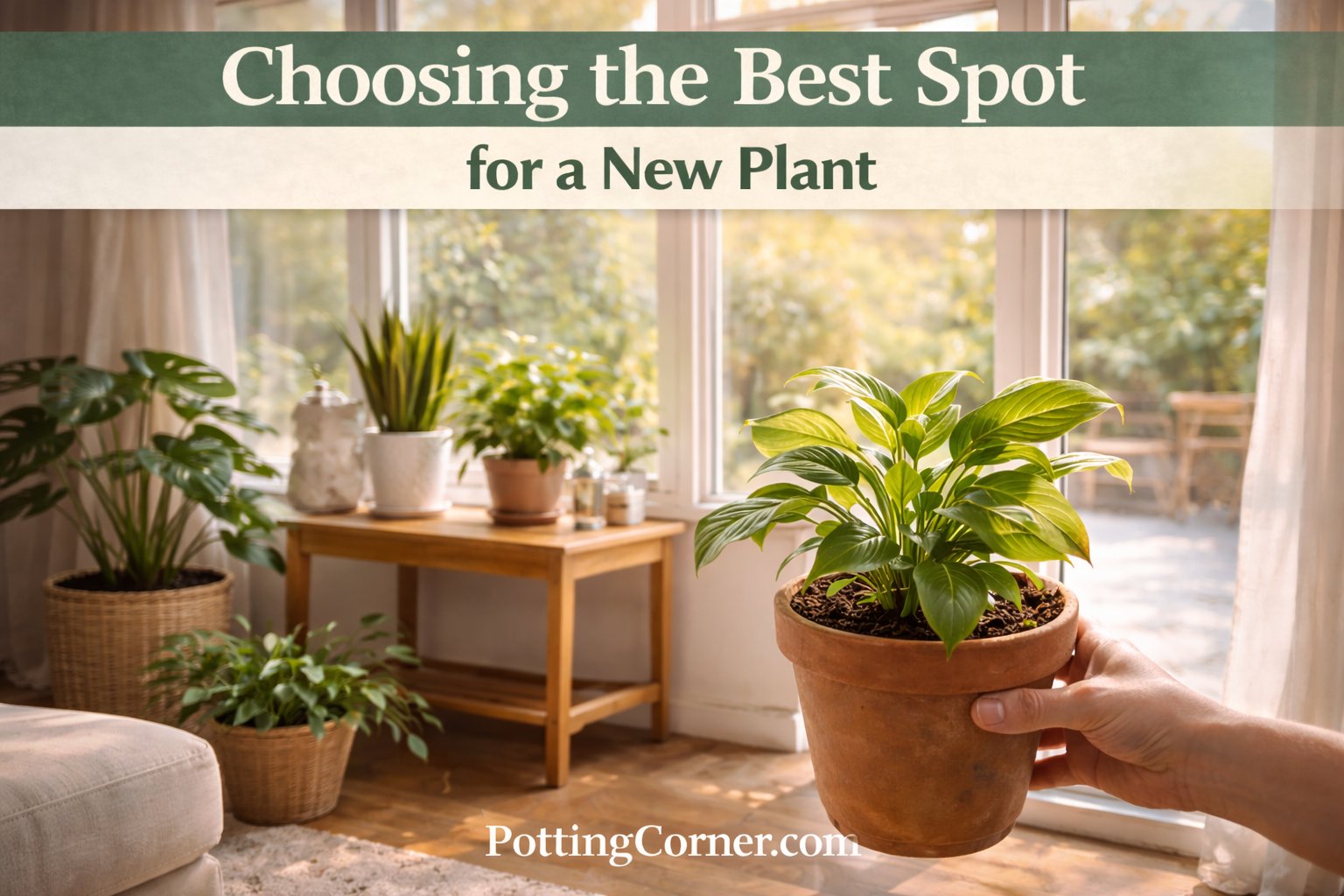
Finding the right spot for a new plant isn't just about aesthetics it's about survival. Light is the primary factor but temperature, humidity, traffic patterns and your plant's specific needs all matter. A few minutes evaluating placement saves weeks of troubleshooting a struggling plant later.
For detailed light guidance, see Indoor Plant Light Guide.
The Direct Answer: Placement Checklist
Before placing any plant, check:
- Light: Does this spot provide what the plant needs?
- Temperature: Any drafts, vents, or temperature extremes?
- Humidity: Is the area particularly dry or humid?
- Traffic: Will people or pets bump into it?
- Access: Can you easily water and care for it here?
The rule: Match the plant to the spot not the other way around. You can't force a cactus to thrive in a dark bathroom.
Step 1: Assess Available Light
Know Your Windows
Walk through your space and note:
- Which direction each window faces (N/S/E/W)
- How much direct sun each gets
- What obstructions affect light (trees, buildings, curtains)
See Window Direction Guide (North/South/East/West).
Match Plant to Light
Before placing:
- Check the plant's light requirements
- Find spots that match those needs
- Don't compromise on light it's the #1 factor
When Light Doesn't Match
If your space doesn't have what a plant needs:
- Choose a different plant that matches your conditions
- Consider grow lights for challenging spots
- Accept that some plants won't work in your home
Step 2: Evaluate Temperature
Check for Problem Areas
Walk through your home noting:
- Proximity to heating/AC vents
- Distance from exterior doors
- Cold spots near windows in winter
- Hot spots near sunny windows in summer
Avoid Temperature Extremes
Most houseplants prefer 65-75°F:
- Direct vent airflow stresses plants
- Door drafts cause repeated temperature shocks
- Cold window glass can damage leaves touching it
See and .
Step 3: Consider Humidity
Know Your Home's Humidity
Typical homes run 30-50% humidity:
- Lower in winter with heating
- Higher in some climates
- Varies room to room
Match Plant to Humidity
Some plants need higher humidity:
- Calatheas, ferns and humidity-lovers need 50-60%+
- Most common houseplants tolerate average humidity
- Succulents and cacti don't mind dry air
Natural Humidity Zones
- Bathrooms: Higher humidity (if light is adequate)
- Kitchens: Moderate humidity from cooking
- Near heating vents: Very dry
- Near windows in winter: Can be dry
See .
Step 4: Evaluate Traffic and Safety
Foot Traffic
Consider daily movements:
- Hallways and pathways
- Near furniture people use frequently
- Entries where people come and go
- Children and pet areas
Stability Concerns
Some plants are vulnerable:
- Tall, top-heavy plants tip over easily
- Trailing plants get caught on traffic
- Low plants get stepped on
- Delicate leaves get bumped
Pet and Child Safety
Some plants are toxic:
- Research toxicity before placing within reach
- Hanging plants or high shelves for toxic plants
- Choose non-toxic plants for accessible areas
- See
Step 5: Think About Access
Watering Access
You need to reach plants regularly:
- Can you get to the plant with a watering can?
- Is there a nearby sink for water?
- Can you catch or clean up drips?
Rotation and Maintenance
Plants need occasional attention:
- Room to rotate for even growth
- Access to check for pests
- Space to remove for repotting
Worst Placement for Access
Avoid spots where plants become neglected:
- Behind furniture
- Very high shelves without ladders
- Crowded corners you never visit
- Out of sight = out of mind
Room-by-Room Considerations
Living Room
Often has best windows:
- Primary plant display area
- Multiple light options usually
- Higher traffic, consider placement
- Aesthetic matters more here
Bedroom
Usually smaller windows:
- Low to medium light often
- Consistent temperature (good)
- Choose calming, easy plants
- Consider air quality benefits
Bathroom
High humidity, often poor light:
- Great for ferns and humidity-lovers IF light is adequate
- Windowless bathrooms don't work for real plants
- Small windows may limit options
See .
Kitchen
Variable conditions:
- Often has decent windows
- Humidity from cooking
- Temperature fluctuations near stove
- Good for herbs if sunny
Home Office
Practical needs:
- Near desk if you want to see it
- Light depends on window position
- May need supplemental light for desk plants
Specific Placement Tips
Near Windows
Most plants want to be here:
- But not touching cold glass in winter
- Set back from intense afternoon sun
- Curtains can filter too-strong light
On Furniture
Stability and surface concerns:
- Check if surface tolerates water
- Use saucers or drip trays
- Ensure furniture is stable
Hanging Plants
Great for trailing species:
- Needs ceiling hook rated for weight
- Consider watering access
- Good for keeping away from pets/kids
Plant Stands
Elevate plants toward light:
- Brings plants to window level
- Creates visual interest
- Keep stable to prevent tipping
Floor Plants
Large plants need floor space:
- Heavy pots are stable
- Watch for foot traffic
- Use plant caddies for easy moving
Common Placement Mistakes
Prioritizing Aesthetics Over Needs
That dark corner looks perfect for a plant stand but if it's too dark, plants die there. Find a spot that serves both purposes, or choose a plant that actually tolerates the conditions.
Assuming All Spots Are Equal
Rooms vary dramatically in light, temperature and humidity. A plant thriving by the south window will die in the north-facing corner.
Forgetting About Maintenance
A plant in an awkward spot gets neglected. If you can't easily water it, you won't consistently water it.
Ignoring Seasonal Changes
The perfect summer spot may be a cold draft zone in winter. Reassess placement seasonally.
Overcrowding
Too many plants in one spot:
- Compete for light
- Restrict air circulation
- Make maintenance harder
- May spread pests
Frequently Asked Questions
Can I put plants anywhere if I use grow lights?
Grow lights expand your options but don't solve everything. Temperature and humidity still matter and grow lights have limits.
How do I know if I chose the wrong spot?
Watch for stress signs: yellowing, leggy growth, wilting, or decline. If the plant struggles despite good care the spot may be wrong.
Should I move a plant that's doing well?
Generally, no. If it's thriving, leave it alone. "If it ain't broke don't fix it" applies to plant placement.
My plant came with "bright indirect light" instructions but my brightest spot gets direct sun. What do I do?
Set the plant back from the window so direct sunbeams don't hit leaves, or use sheer curtains to filter. Direct sun is different from bright indirect.
How long should I wait before moving a struggling plant?
Give it 2-3 weeks to adjust to a new home. If it continues declining, reassess placement, watering and care. Move sooner if you see rapid decline.