ZZ Plant Care Guide
ZZ plants (Zamioculcas zamiifolia) store water in underground rhizomes and survive months of neglect. Perfect for dim offices, forgetful waterers and anyone who wants a plant that basically cares for itself.
Potting Corner Team · Mar 23, 2026 · 7 min read
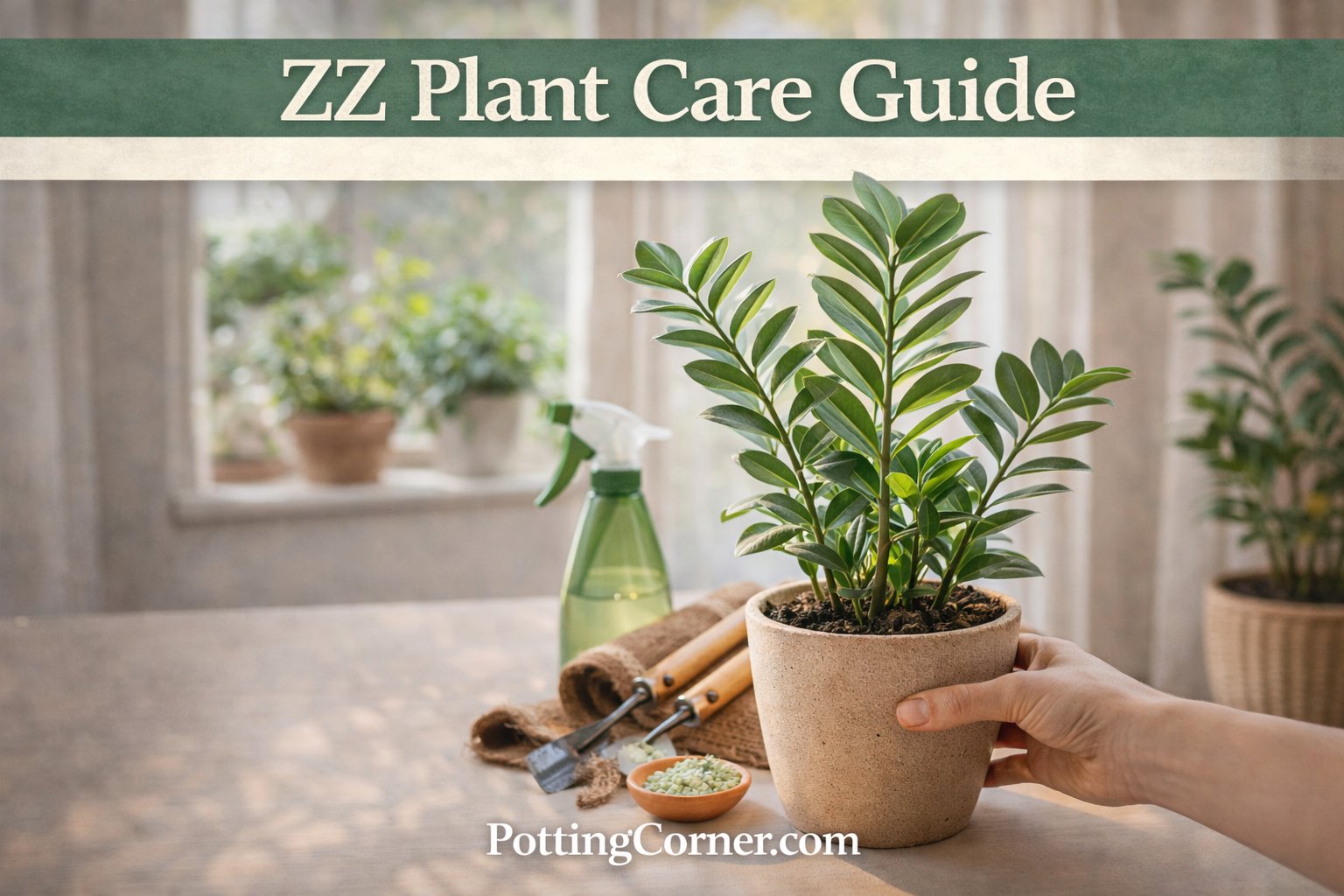
The ZZ plant might be the closest thing to an unkillable houseplant. Native to Eastern Africa it evolved to survive drought by storing water in thick underground rhizomes. This means it handles neglect, low light and inconsistent care better than almost any other houseplant. If you've killed every plant you've owned, ZZ might be your redemption.
For a complete beginner overview, see Indoor Plants for Beginners: Easy Plants and Care Basics.
The Direct Answer: Quick Care
| Factor | Requirement |
|---|---|
| Light | Low to bright indirect (very adaptable) |
| Water | Every 2-4 weeks, let dry completely |
| Humidity | Not important |
| Temperature | 65-85°F (18-29°C) |
| Soil | Well-draining potting mix |
| Fertilizer | Rarely needed, monthly in summer if desired |
The rule: Water less than you think. The rhizomes store water for weeks. When in doubt, wait another week before watering.
Why ZZ Plants Are So Easy
Built-In Water Storage
Underground survival system:
- Thick rhizomes (potato-like structures) store water
- Can survive months without watering
- Glossy leaves retain moisture
- Evolved for East African dry seasons
Light Adaptability
Thrives almost anywhere:
- Low light (survives, slow growth)
- Medium light (grows steadily)
- Bright indirect (grows fastest)
- Tolerates fluorescent office lighting
Minimal Pest Problems
Naturally resistant:
- Waxy leaves deter most pests
- Rarely attracts insects
- Thick leaves resist damage
- One less thing to worry about
Light Requirements
What ZZ Tolerates
Almost anything:
- Windowless office with fluorescent lights
- North-facing windows
- Interior rooms with some light
- Bright indirect near windows
What ZZ Prefers
Better conditions for growth:
- Medium to bright indirect light
- East-facing windows
- A few feet from south/west windows
- Consistent light exposure
Low Light Reality
What to expect in dim conditions:
- Slower growth (sometimes very slow)
- Fewer new stems
- Plant survives but doesn't expand quickly
- Perfectly fine for years
See Indoor Plant Light Guide: Where to Place Houseplants.
Watering
The Golden Rule
Less is always more:
- Let soil dry completely between waterings
- Every 2-4 weeks in bright light
- Every 3-6 weeks in low light
- Monthly or less in winter
How to Check
Before watering:
- Stick finger deep into soil (not just surface)
- Soil should be dry several inches down
- Lift pot, light pot means dry
- When truly unsure, wait another week
Signs of Overwatering
The only real danger:
- Yellowing leaves
- Soft, mushy stems at base
- Rhizome rot
- Soil that never dries
See Overwatered Plant: How to Save It.
Signs of Underwatering
Rare but possible:
- Leaves wrinkling or shriveling
- Stems drooping
- Dry, crispy leaf tips
- Easily fixed with thorough watering
See How to Water Houseplants: The Beginner's Guide.
Popular Varieties
Zamioculcas zamiifolia (Classic)
The standard:
- Dark green glossy leaves
- Stems arch gracefully
- Most commonly available
- Extremely hardy
Raven ZZ
Dramatic dark foliage:
- Leaves emerge green, turn dark purple-black
- Same easy care as classic
- Striking appearance
- Slightly slower growing
Zenzi ZZ
Compact version:
- Dwarf variety with smaller leaves
- Tighter, more compact growth
- Perfect for small spaces
- Same tough nature
Zamicro
Smallest variety:
- Very compact growth
- Tiny leaves on short stems
- Great for desks
- Less common but available
Propagation
Division (Easiest Method)
Separating rhizomes:
- Remove plant from pot
- Gently separate rhizomes (each section needs stems)
- Let cut ends dry for a few hours
- Plant divisions in separate pots
- Water sparingly until established
Leaf Cuttings
Slower but works:
- Cut a healthy leaf with part of stem
- Let cut end dry overnight
- Plant in moist, well-draining soil
- Wait patiently (takes months)
- Rhizomes form first, then new growth
Water Propagation
Alternative method:
- Place leaf cutting in water
- Change water weekly
- Roots develop in 3-4 months
- Transfer to soil when roots establish
- Very slow but satisfying to watch
Troubleshooting
Yellow Leaves
Most common issue:
- Usually overwatering
- Check soil moisture (should be dry)
- Reduce watering frequency
- May indicate rhizome rot if severe
See Yellow Leaves on Houseplants: What's Wrong.
Leaning Stems
Several causes:
- Reaching for light (rotate plant)
- Heavy stems (normal, can stake)
- Root problems (check for rot)
- Normal with very long stems
Brown Leaf Tips
Minor concern:
- Inconsistent watering
- Low humidity (rarely an issue)
- Fluoride sensitivity
- Usually cosmetic only
No New Growth
Patience required:
- ZZ plants grow slowly
- Even slower in low light
- May pause in winter
- New stems emerge from soil base
Soil and Repotting
Best Soil Mix
Drainage is essential:
- Cactus/succulent mix works well
- Add perlite to standard potting mix
- Avoid moisture-retaining soils
- Good drainage prevents rot
When to Repot
Infrequent need:
- Every 2-3 years typically
- When rhizomes are pushing out of pot
- When roots circle the container
- Spring is best timing
Pot Selection
Match the plant's nature:
- Must have drainage holes
- Terracotta helps with drying
- Don't overpot (too much soil stays wet)
- Slightly rootbound is fine
See How to Choose the Right Pot Size for Houseplants.
Common Mistakes
Overwatering
The biggest killer:
- Most people water too often
- Rhizomes rot in wet soil
- Less water is always safer
- Set reminders to wait not to water
Too Large a Pot
Creates problems:
- Excess soil holds too much water
- Roots can't use all the moisture
- Leads to root rot
- Go up only 1-2 inches when repotting
Expecting Fast Growth
Setting wrong expectations:
- ZZ plants are naturally slow growers
- New stems take weeks to unfurl
- Low light means even slower
- Patience is essential
Direct Hot Sun
One thing they don't tolerate:
- Scorches leaves
- Causes pale or bleached patches
- Keep away from hot south windows
- Bright indirect is the limit
Frequently Asked Questions
How often should I water my ZZ plant?
Every 2-4 weeks in bright light less often in low light or winter. Always let soil dry completely between waterings. When in doubt, wait another week, underwatering is far safer than overwatering.
Can ZZ plants grow in a windowless room?
They can survive for a while under artificial lighting (fluorescent or LED) but no plant truly thrives without any light. Even ZZ plants need some light source for photosynthesis.
Are ZZ plants toxic?
Yes, all parts contain calcium oxalates that cause irritation if ingested. Keep away from children and pets that chew plants. Wash hands after handling if you have sensitive skin.
Why does my ZZ plant have yellow leaves?
Almost always overwatering. Check soil moisture it should be dry well below the surface. Yellow leaves at the base can also be natural aging but multiple yellowing leaves indicate watering problems.
How big do ZZ plants get?
Indoors, typically 2-4 feet tall over many years. They grow slowly, adding only a few stems per year. They can be kept smaller by limiting pot size or dividing when they get too large.