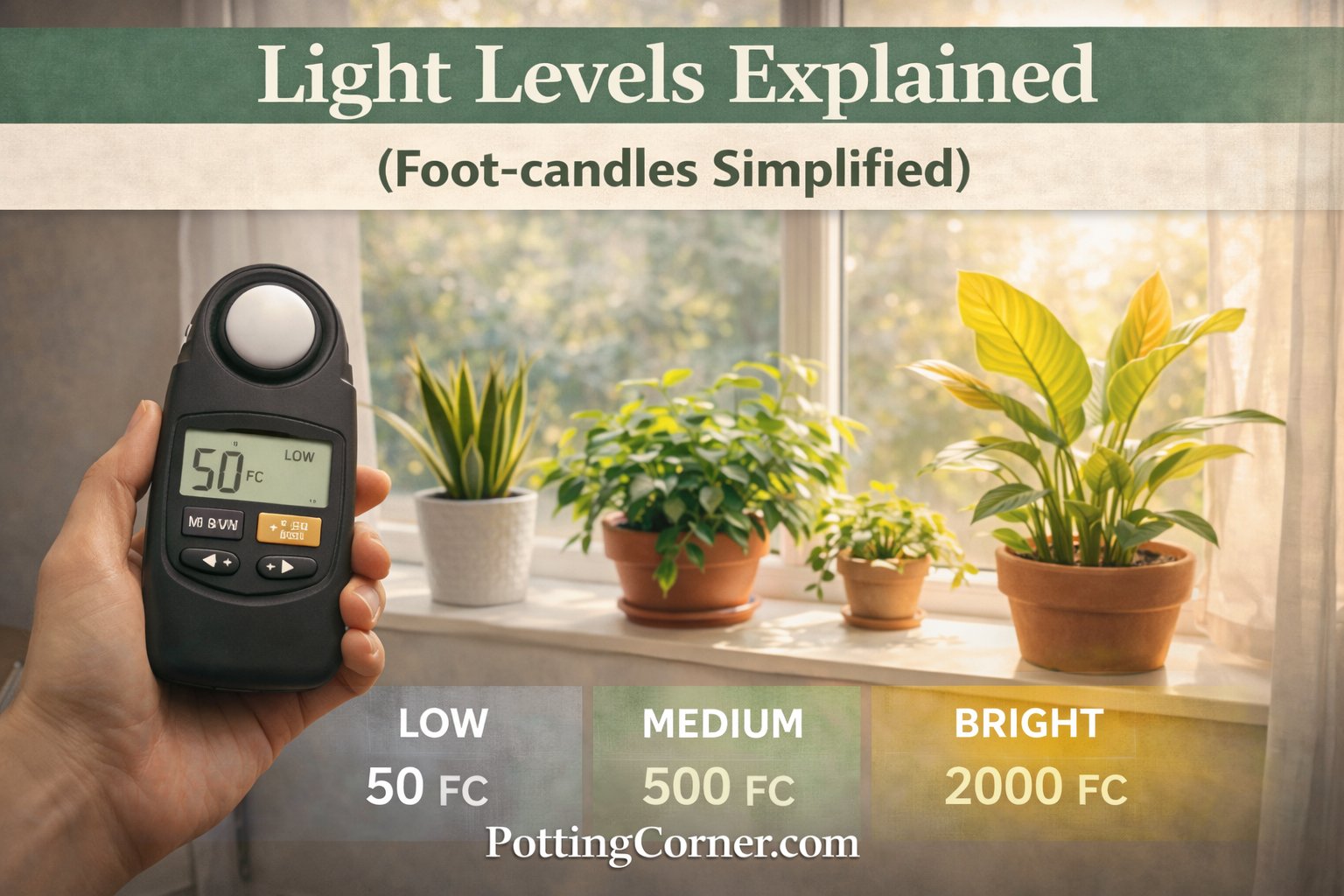
Light Levels Explained (Foot-candles Simplified)
What do 'low,' 'medium,' and 'bright' light actually mean? Foot-candles and lux give you real numbers instead of guesswork. Here's how to measure light and match it to plant needs.
Guides on light types, placement tips, and how temperature and humidity affect houseplants
Light and environment determine how well a plant grows indoors. This section covers light types, placement tips, and how temperature and humidity affect houseplants.
New to this topic? Begin with our complete guide: Indoor Plant Light Guide: Where to Place Houseplants

What do 'low,' 'medium,' and 'bright' light actually mean? Foot-candles and lux give you real numbers instead of guesswork. Here's how to measure light and match it to plant needs.

You bought a new plant, now where does it go? The decision involves light, temperature, traffic and your plant's specific needs. Here's a systematic way to find the right spot.

Which window is best for your plant? South windows blast light; north windows are dim. East gives gentle morning sun; west gives intense afternoon heat. Here's how to match plants to windows.

Not enough natural light? Grow lights can fill the gap, without complicated setups or expensive equipment. Here's a beginner-friendly guide to supplementing light for houseplants.

Scorched leaves, bleached spots and crispy edges, these are sunburn symptoms not watering problems. Here's how to recognize and fix sun damage on houseplants.
"Low light" doesn't mean "no light." It means tolerant of dim conditions not thriving in them. Here's what low light actually looks like and which plants genuinely survive it.
Moving a plant from dim corner to sunny window, or from indoors to outside, causes sunburn without gradual adjustment. Here's how to safely transition plants to brighter conditions.
"Bright indirect light" is the most common and most confusing, plant care instruction. This guide translates light terms into actual window positions and room placements.