What Is a Cachepot? How to Use One Without Rotting Your Plant
A cachepot is a decorative outer pot with no drainage hole that holds your plant's plastic nursery pot. Here's how the setup works, what size to buy, and how to water so roots never sit in water.
Potting Corner Team · Apr 6, 2026 · Updated Sep 15, 2026 · 8 min read
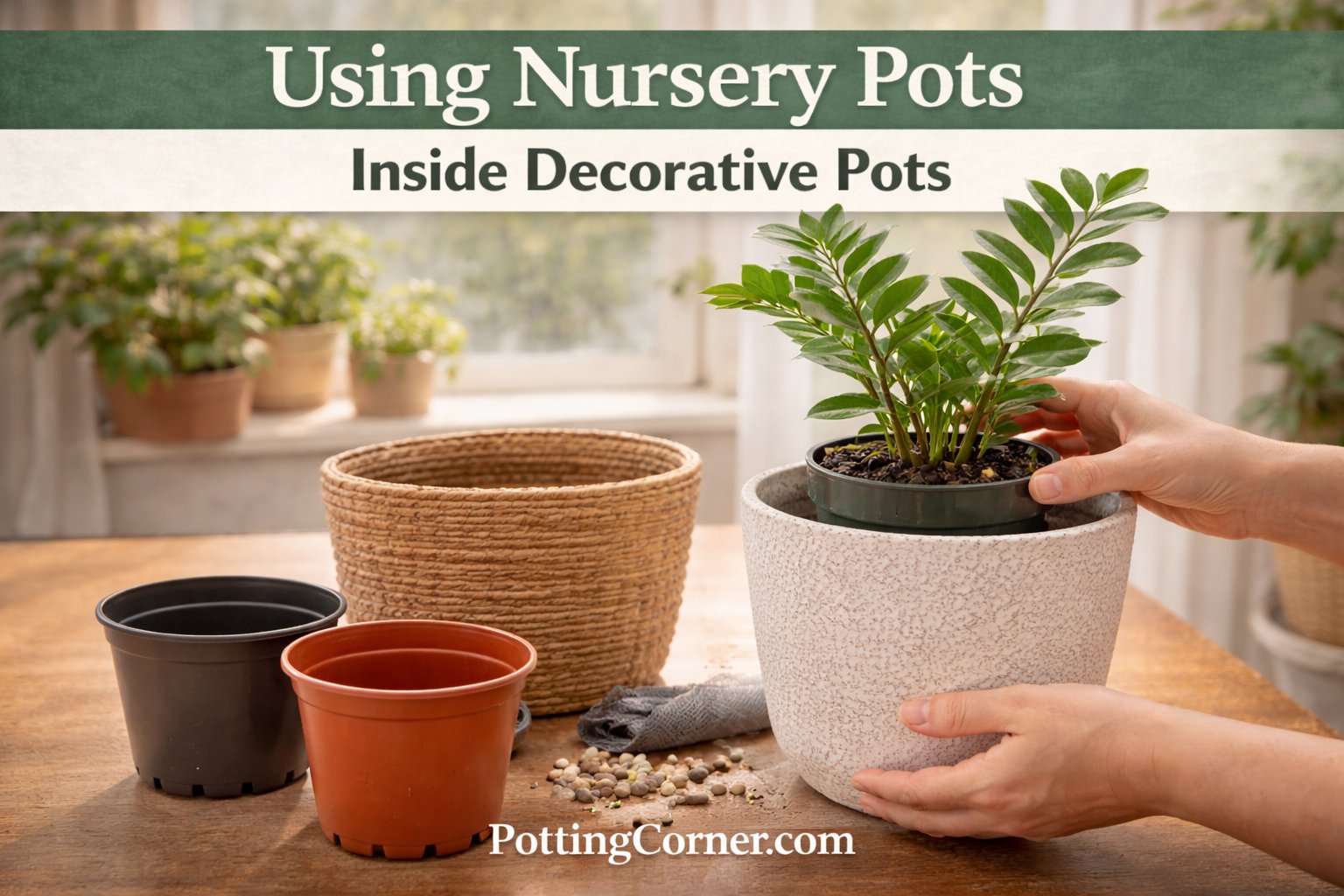
Short answer: a cachepot (pronounced "cash-po", from the French for "hide the pot") is a decorative container with no drainage hole. You don't plant in it. You keep the plant in its plain plastic nursery pot, which has holes, and slip that pot inside the cachepot. The plant drains properly, the room gets the pretty pot, and the only rule is that the nursery pot must never sit in collected water.
Do you need one? No. But if you have ever fallen for a ceramic pot with no hole in the bottom, a cachepot is the way to use it without killing what goes in it. This guide covers how the setup works, how to size it, and the one watering habit that makes it safe. For pot basics, see Choosing Pots for Houseplants.
The Direct Answer: Cachepot Basics
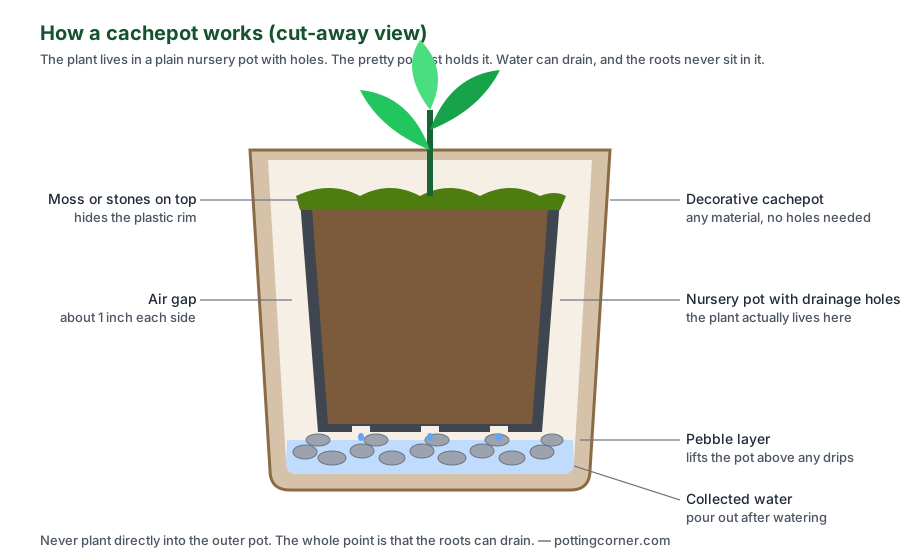
| Element | What to use |
|---|---|
| Inner pot | The plastic nursery pot the plant came in, with drainage holes |
| Outer pot (cachepot) | Any decorative container: ceramic, basket, metal, wood |
| Gap between them | About 1 inch on each side so it lifts out easily |
| Bottom of cachepot | A layer of pebbles so the inner pot sits above any drips |
| Top | Moss, stones or bark to hide the plastic rim |
The rule: never plant directly into a pot without drainage. The cachepot holds the pot; it doesn't hold the soil.
What Is a Cachepot, Exactly?
Garden centers and home stores sell two kinds of pots that look alike:
- Planters have a drainage hole (and usually a saucer). You plant directly in them.
- Cachepots have no hole. They are meant to hold another pot.
Most decorative ceramic pots sold for indoor use are cachepots, whether or not the label says so. If there is no hole in the bottom, treat it as a cachepot.
How the System Works
The setup
- Leave the plant in its nursery pot (or move it to a plain plastic pot with holes if it has outgrown the original)
- Put a 1-inch layer of pebbles or gravel in the bottom of the cachepot
- Set the nursery pot on the pebbles
- If the rim shows, top-dress with moss or small stones
Watering, the safe way
- Lift the nursery pot out
- Water it in the sink until water runs from the holes
- Let it drain for 15-30 minutes
- Put it back
Watering in place (when lifting isn't practical)
- Water slowly and less than you think you need
- Wait 20 minutes
- Lift the nursery pot and check the bottom of the cachepot
- Pour out anything that collected
The pebble layer buys you a margin for small drips, not for a cup of water. Roots sitting in a puddle inside a cachepot rot exactly as fast as roots in a pot with no hole. See How to Water Houseplants.
Why Use a Cachepot?
Any pot becomes usable
That glazed ceramic with no hole, the vintage tin, the woven basket, the wooden box: all of them work as cachepots. You stop being limited to pots that happen to have holes.
Swapping plants is easy
Lift one nursery pot out, drop another in. Seasonal changes, moving plants between rooms, or replacing a plant that didn't make it all take ten seconds and no repotting.
Repotting is simpler
When the plant needs a bigger pot, you only replace the cheap inner pot. The cachepot stays as long as it still fits. See How to Repot a Houseplant.
It forces good drainage habits
Because you lift the pot to water, you see how much drains out and whether anything pools. That feedback is exactly what most beginners are missing.
What Size Cachepot Do You Need?
Measure the nursery pot across the top (outer rim) and its height.
| Nursery pot diameter | Cachepot inside diameter | Cachepot inside height |
|---|---|---|
| 4 inches | 5-6 inches | 4.5-6 inches |
| 6 inches | 7-8 inches | 6-8 inches |
| 8 inches | 9-10 inches | 8-10 inches |
| 10 inches | 11-12 inches | 10-12 inches |
| 12 inches | 13-14 inches | 12-14 inches |
Guidelines:
- Diameter: 1-2 inches larger than the nursery pot. Too tight and it won't lift out; too loose and it looks like a pot in a bucket.
- Height: the nursery pot rim should sit level with or just below the cachepot rim. If the cachepot is much deeper, raise the inner pot with more pebbles, an upturned saucer or a block of foam.
- Shape: tapered nursery pots fit tapered cachepots. A straight-sided cachepot with a tapered nursery pot leaves a big gap at the top; fill it with moss.
Hiding the Nursery Pot
- Top dressing: sheet moss, preserved moss, pebbles, bark chips or decorative glass. Covers the plastic rim and the soil surface.
- Elevating: if the pot sinks too low, add pebbles, a small upturned pot, or a cut-to-size piece of foam under it.
- Big gaps: tuck moss or a smaller trailing plant into the space between the pots.
Lift the top dressing once in a while and check the soil underneath; it's easy to forget a plant you can't see the soil of. The finger test still works, just move the moss aside. See How to Know When a Plant Needs Water.
Special Cases
Baskets
Not waterproof. Line with a plastic bag or a plastic saucer, or always lift the pot out to water. A basket that gets wet repeatedly will stain the floor and grow mold.
Metal containers
Can rust or leave marks. Line them, keep the inside dry, or use a plastic saucer inside as a second barrier.
Vintage and valuable containers
Use a plastic liner and lift to water every time. Don't let water touch the inside.
Large floor plants
A 12-inch nursery pot in a heavy ceramic cachepot is hard to lift. Put a wheeled plant caddy under the cachepot, water carefully in place, and check for pooled water with a paper towel pushed down the side.
Common Cachepot Mistakes
Leaving water in the bottom
This is the whole risk. Pooled water reaches the nursery pot's holes, the soil wicks it up, and you have a pot with no drainage again. Check after every watering. See Overwatered Plant: How to Save It.
Planting straight into the cachepot
If the outer pot has no hole and you fill it with soil, you have made a bucket. It might work for a snake plant you rarely water; it will rot almost anything else within a season. See Drainage Holes: Why They Matter.
Choosing a pot that's too tight
If you have to wiggle and pull to get the nursery pot out, you won't lift it to water, and you're back to watering blind.
Forgetting the plant exists
A beautiful pot with moss on top can hide a bone-dry or waterlogged plant for weeks. Lift it every week or two.
Frequently Asked Questions
What does cachepot mean?
It comes from the French cache-pot, literally "hide the pot." It's a decorative container used to conceal a plain functional pot.
Can I leave the plant in the cachepot all the time?
Yes. Just lift the inner pot to water, or check the bottom for pooled water after watering in place. Never let the nursery pot stand in water.
Do I need pebbles in the bottom of a cachepot?
They help. A 1-inch layer keeps the nursery pot above small amounts of drip water. They do not replace emptying the cachepot after watering.
Should I drill a drainage hole in the decorative pot instead?
You can, with a masonry or diamond bit, but ceramic cracks easily and you'll still need a saucer. The cachepot method gives you the same result with no risk to the pot.
Can I use a cachepot for a plant that likes to stay moist?
Yes, and it works well: ferns and calatheas in a plastic nursery pot inside a ceramic cachepot dry out slower than in terracotta. Just keep checking for standing water.
Is a cachepot the same as a planter?
No. A planter has a drainage hole and is meant to be planted in. A cachepot has no hole and is meant to hold a planted pot.