How Long Should Soil Stay Wet After Watering? (Drying Times by Plant)
For most houseplants, soil should be moist for 5-7 days and ready for water again by day 7-10. Here's the healthy drying time for monstera, pothos, snake plants and 9 other common plants, plus what to do when soil stays wet too long.
Potting Corner Team · Feb 4, 2026 · Updated Sep 15, 2026 · 13 min read
Short answer: after a thorough watering, the surface of the soil should look dry within 2-3 days, the top 1-2 inches should be dry by day 4-6, and most tropical houseplants (pothos, monstera, philodendron, peace lily) are ready for water again around day 7-10. If the top inch is still wet after 10 days, the pot is staying wet too long and roots are at risk of rot. If everything is bone dry by day 2, the pot is drying too fast.
Those numbers assume a 4-6 inch pot in bright indirect light at normal room temperature. Bigger pots, plastic pots, low light and winter all stretch the timeline; small terracotta pots and sunny windows shorten it. This guide gives you drying times for 12 common plants, explains what changes the timing, and walks through fixes when soil stays wet too long or dries too fast. For the watering technique itself, see How to Water Houseplants.
How Long Should Soil Stay Wet After Watering?
Think of it in three stages rather than one number:
| Stage | Healthy timing | What you see |
|---|---|---|
| Surface dries | 2-3 days | Top of soil turns lighter in color, feels dry to the touch |
| Top 1-2 inches dry | 4-6 days | Finger test comes out clean; pot feels noticeably lighter |
| Ready to water again | 7-10 days (most tropicals) | Top 1-2 inches dry, pot light, leaves still firm |
Warning signs:
- Top inch still wet after 10 days → staying wet too long, see fixes below
- Completely dry by day 1-2 → drying too fast, usually a pot or root issue
- Wet soil but wilting leaves → roots are probably rotting, not thirsty
The key idea: roots need both water and air. Right after watering, water fills every pore in the soil. Over the following days water drains, evaporates and gets used by the plant, and air moves back into those pores. If the soil never reaches that "air comes back" stage, roots suffocate. That is what root rot actually is.
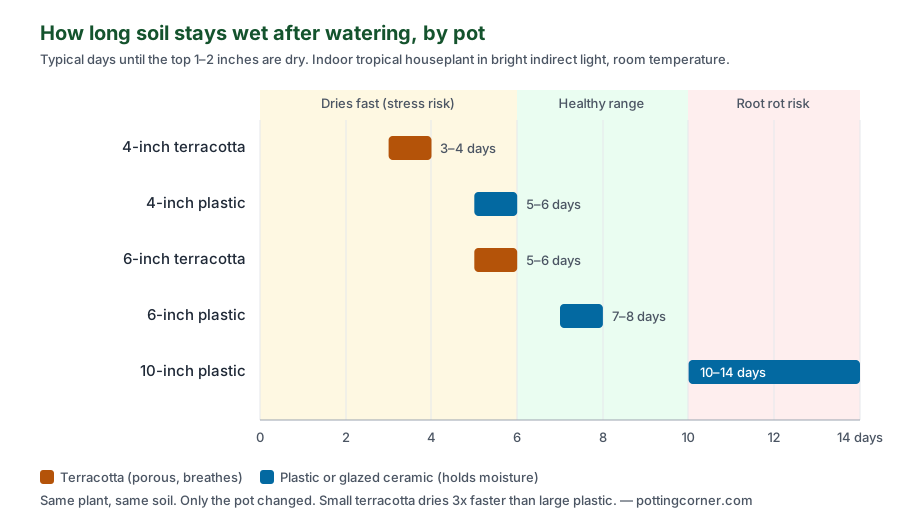
Same plant, same soil, only the pot changed. A small terracotta pot can dry three times faster than a large plastic one, which is why "water once a week" advice fails so often.
Drying Times by Plant
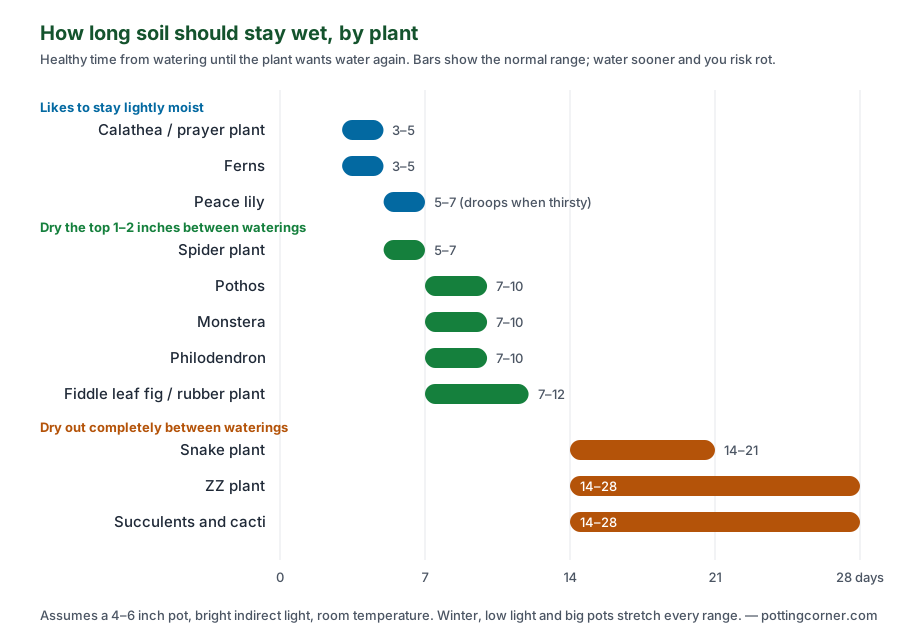
Different plants want different drying rhythms. The table below shows the healthy number of days between waterings for common houseplants in a 4-6 inch pot with bright indirect light. Treat it as a range to compare against, not a schedule to follow blindly.
| Plant | Healthy time between waterings | Water when |
|---|---|---|
| Calathea, prayer plant | 3-5 days | Top half inch is dry; never fully dry |
| Ferns (Boston, maidenhair) | 3-5 days | Surface is dry; keep lightly moist |
| Peace lily | 5-7 days | Top inch dry, or leaves start to droop slightly |
| Spider plant | 5-7 days | Top inch dry |
| Pothos | 7-10 days | Top 1-2 inches dry |
| Monstera | 7-10 days | Top 2 inches dry |
| Philodendron | 7-10 days | Top 1-2 inches dry |
| Fiddle leaf fig | 7-10 days | Top 2 inches dry |
| Rubber plant | 7-12 days | Top 2 inches dry |
| Snake plant | 14-21 days | Soil dry all the way through |
| ZZ plant | 14-28 days | Soil dry all the way through |
| Succulents and cacti | 14-28 days | Soil dry all the way through |
How long should monstera soil stay wet?
Monstera soil should be moist for about 5-7 days after watering, with the top 2 inches dry by around day 7-10. Monsteras have thick roots that rot quickly in constantly wet soil, so a monstera sitting in soil that is still wet after 10-12 days is a warning sign. In winter, expect the same plant to take 12-16 days between waterings. If your monstera is in a chunky aroid mix (bark, perlite, potting soil), it will dry faster than in plain potting mix, which is exactly what it prefers.
How long should pothos soil stay wet?
Pothos is forgiving. Soil should stay moist for 4-6 days and be ready for water again at 7-10 days. Pothos tells you clearly when it is thirsty: leaves go slightly limp and lose their shine. If soil is still wet after 10 days and the plant looks droopy anyway, check the roots rather than adding water.
How long should snake plant soil stay wet?
As briefly as possible. Snake plant soil should be fully dry within about a week and stay dry for another one or two weeks before the next watering. Snake plants store water in their leaves, and soil that stays wet for more than 7-10 days is the most common reason they rot. Use a fast-draining mix and a pot with drainage holes.
What Changes the Drying Time
Pot size
Large pots hold more soil and more water. A 12-inch pot can stay moist for two weeks while a 4-inch pot dries in 3-4 days.
Problem scenario: a small plant in a large pot. The roots can't use all the water, so the excess sits in unused soil and stays wet far too long.
Solution: match pot size to plant size. When repotting, go up only 1-2 inches. See What Pot Size Should You Choose When Repotting?.
Pot material
- Terracotta: porous, breathes through the walls, dries fastest
- Plastic: non-porous, holds moisture longest
- Glazed ceramic: behaves like plastic
- Concrete: slightly porous, in between
For plants prone to overwatering, terracotta helps by speeding evaporation. For thirsty plants like ferns, plastic or glazed pots keep soil moist longer.
Soil type
Dense, peat-heavy soil holds water. Chunky, bark-based soil drains and dries fast.
- Old, compacted soil: slow drying, poor drainage
- Fresh peat or coir mix: moderate drying
- Chunky aroid mix: fast drying
- Succulent or cactus mix: very fast drying
If soil stays wet too long, mixing in perlite or bark improves drainage. See Best Soil for Indoor Plants.
Light
More light means more photosynthesis, more water uptake and faster drying. The same plant in a dim corner may take twice as long to dry as it does near an east window. If you move a plant to lower light, expect the soil to stay wet longer and water less often.
Temperature and humidity
Warm air speeds evaporation; cool air slows it. Dry air pulls moisture out of soil; a humid bathroom keeps it in. Near a heating vent, soil dries fast. In a cool room with the heat off, it can take twice as long.
Season
Winter drying times are often 1.5-2x longer than summer: shorter days, less light, slower growth. The most common winter mistake is keeping a summer watering rhythm. Expect most plants to need water about half as often from November through February.
Root health
Healthy roots actively pull water out of soil. Damaged or rotting roots don't. If soil suddenly starts staying wet much longer than usual and nothing else changed, the roots are the first thing to check.
Soil Staying Wet Too Long? 7 Causes and Fixes
If the top inch of soil is still wet 10 days after watering, work through these in order. The first three cover most cases.
1. The pot is too big for the plant
The most common cause. There should be 1-2 inches of soil between the root ball and the pot wall, not 4-5 inches. Downsize the pot, or accept much longer gaps between waterings until the roots grow into the space.
2. Not enough light
A plant in low light barely uses water. Either move it somewhere brighter or water it far less often. Do not try to "fix" wet soil in a dark corner by improving drainage alone; the plant simply isn't drinking.
3. Dense or old soil
Compacted, peat-heavy or degraded soil holds water like a sponge. Repot into fresh mix with 20-30% perlite or bark added. See How to Improve Drainage in Pots.
4. No drainage, or blocked drainage
Check that the pot has holes, that they aren't packed with roots or soil, and that the pot isn't sitting in a saucer or cachepot full of water. See Drainage Holes: Why They Matter.
5. Plastic or glazed pot in a cool room
Non-porous pots plus cool temperatures is a slow-drying combination. Switching to terracotta can cut drying time by a third.
6. Watering on a schedule instead of checking
"Every Sunday" ignores the weeks when soil dries in 5 days and the weeks it takes 12. Check the soil with your finger or by lifting the pot before every watering. See How to Know When a Plant Needs Water.
7. Root rot has already started
If soil stays wet and the plant is wilting or yellowing at the same time, take it out of the pot. Healthy roots are white or tan and firm with an earthy smell. Rotting roots are brown or black, mushy and smell bad. See Root Rot: Causes and Treatment and Overwatered Plant: How to Save It.
Soil Drying Too Fast?
If soil is bone dry within 1-2 days, the plant is spending most of its time thirsty.
The plant is root-bound
A pot packed with roots has almost no soil left to hold water. The plant drinks everything in a day. Repot into a container 1-2 inches larger. See How to Repot a Root-Bound Plant.
The pot is too small
Even without being root-bound, a tiny pot in bright light can genuinely need water daily. Move up a size.
The spot is too hot or too dry
A south window above a radiator is an extreme evaporation zone. Move the plant back from the glass, away from vents, or add humidity.
Terracotta plus a thirsty plant
Ferns, calatheas and peace lilies in terracotta often dry too fast. Switch to plastic or glazed ceramic, or add coir to the mix to hold more water.
How to Check Instead of Guessing
The finger test
Push a finger 1-2 inches into the soil. Dry at that depth means most tropicals are ready. Damp means wait. Wet and cold means definitely wait.
The lift test
Lift the pot right after watering and again a few days later. The weight difference is dramatic once you know what to feel for. A pot that feels heavy on day 10 is a pot that is staying wet too long.
A moisture meter
A cheap probe meter gives you a number instead of a feeling. Push it 2-3 inches down; for most tropicals, water when it reads in the dry-to-low band. It is most useful in big pots where your finger can't reach the root zone. See Moisture Meter for Houseplants: How to Read It.
A simple log
Write down the date you water and the day the soil is dry again. After three or four cycles you know that plant's rhythm in that spot, and you'll spot changes (a sudden jump from 7 days to 14) that point to a root or light problem.
Common Mistakes
- Following a fixed schedule. Drying time varies week to week. Check the soil, not the calendar.
- Jumping pot sizes. Going up 4 inches at repotting creates soil that stays wet for weeks.
- Keeping summer watering in winter. The single biggest cause of winter plant loss.
- Reading wilting as thirst. Wilting in wet soil means rot, and adding water makes it worse.
- Putting rocks in the bottom of the pot. This creates a perched water table that keeps the soil above it wetter, not drier. Amend the whole mix instead.
Frequently Asked Questions
Is it bad if soil stays wet for a week?
No. A week of moist soil is normal for most tropical houseplants. The problem starts when the top 1-2 inches are still wet at 10 days or more. Succulents, snake plants and ZZ plants are the exception: for them, a full week of wet soil is already too long.
My soil stays wet for 2 weeks. Is that okay for any plant?
Very few houseplants tolerate two weeks of wet soil. Even moisture-lovers like ferns want the surface to dry a little between waterings. Two weeks of wet soil is a root rot risk for nearly everything and usually means the pot is too large or the light is too low.
How can I dry out soil faster?
Move the plant somewhere brighter and warmer, take it out of any cachepot or saucer holding water, and make sure the drainage holes are clear. Don't put it in direct sun to "bake" it dry; that stresses the plant. If it happens every time, repot into a smaller pot or a chunkier mix.
My soil dries in one day. Do I really need to water daily?
First check whether the plant is root-bound or the pot is tiny. If either is true, repot. Daily watering almost always points to a setup problem rather than a genuinely thirsty plant.
Should I water if the top is dry but the bottom is still wet?
For most plants, wait. The root zone is what matters. Surface drying alone doesn't mean the roots need water; use the finger test at 1-2 inches or lift the pot.
Does adding rocks to the bottom help soil dry faster?
No. It creates a saturated layer just above the rocks and makes the soil wetter, not drier. Improve drainage by mixing perlite or bark through the whole pot.