How to Repot a Houseplant: Step-by-Step Guide for Beginners
Learn when and how to repot your houseplants with our complete guide. Covers signs your plant needs repotting, choosing pots, best soil and step-by-step instructions.
Potting Corner Team · Jan 4, 2026 · Updated Jan 11, 2026 · 10 min read
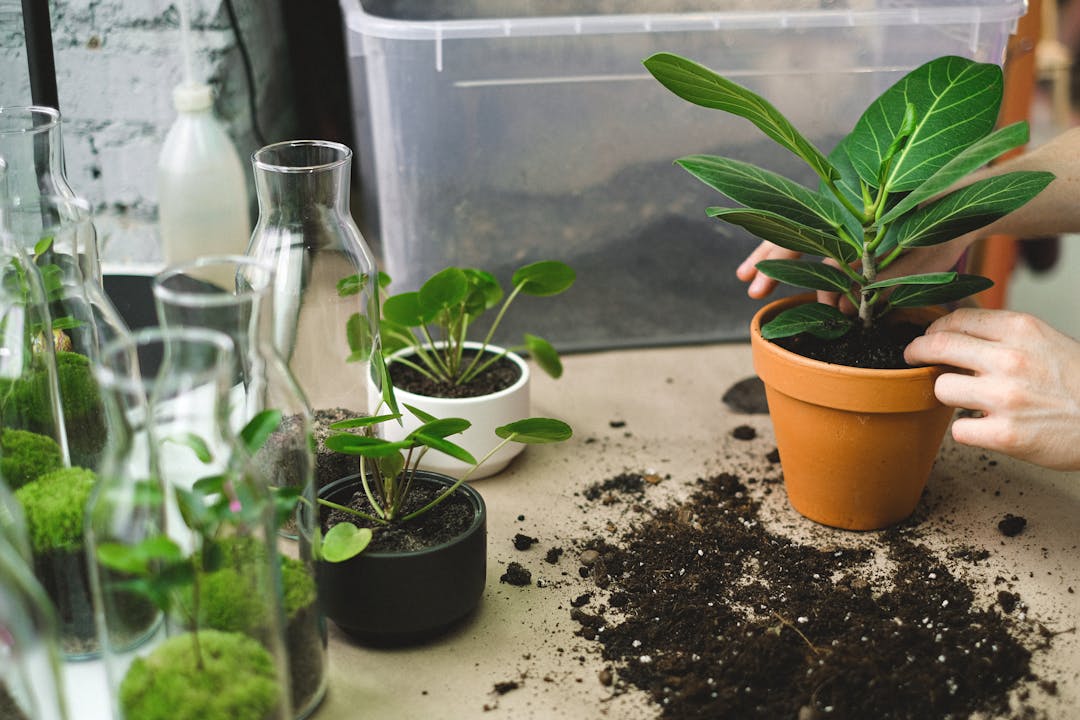
Repotting is one of the most important skills for any plant parent. Done right it gives your plant room to grow and fresh nutrients. Done wrong, or at the wrong time it can stress your plant unnecessarily. This guide covers everything you need to know to repot like a pro.
When to Repot Your Houseplant
Signs Your Plant Needs Repotting
Look for these indicators that it's time for a bigger home. If you're unsure, see our full guide on recognizing when plants need repotting.
Root-related signs:
- Roots growing out of drainage holes
- Roots circling the surface of the soil
- Plant lifts out of pot with roots filling the entire space
- Roots visible pushing against pot sides
Growth-related signs:
- Water runs straight through without absorbing
- Soil dries out much faster than before
- Plant stops growing despite good care
- Plant is top-heavy and tips over
- Plant has been in the same pot for 2+ years
Health-related signs:
- Leaves yellowing despite proper care
- Salt/mineral buildup on soil surface
- Soil has broken down and compacted
When NOT to Repot
Avoid repotting in these situations:
- During dormancy: Most plants rest in winter.
- When stressed: Let sick plants recover first
- While flowering: Wait until blooms finish
- Right after purchase: Give plants 2-4 weeks to acclimate
- Without clear need: Don't repot just for fun
Best Time of Year to Repot
Ideal: Early spring just before active growth begins
Acceptable: Spring through early summer
Avoid: Late fall and winter (plants are dormant)
Spring repotting gives plants the entire growing season to establish in their new pot before winter dormancy.
What You'll Need
Essential Supplies
- New pot (1-2 inches larger in diameter)
- Fresh potting mix appropriate for your plant
- Trowel or large spoon
- Watering can
- Newspaper or drop cloth (for mess)
- Scissors or pruning shears (for root trimming)
Optional but Helpful
- Gloves
- Pot drainage screen or coffee filter
- Chopstick (for settling soil)
- Bucket for mixing soil
Choosing the Right Pot
Size Matters
The golden rule: Go only 1-2 inches larger in diameter than the current pot. For a deeper explanation, see our guide on choosing the right pot size.
Why not bigger?
- Excess soil stays wet too long
- Leads to root rot
- Plant focuses on root growth not foliage
- Looks disproportionate
Pot Material Options
| Material | Pros | Cons | Best For |
|---|---|---|---|
| Terra cotta | Breathable, dries evenly, affordable | Heavy, breaks easily, dries fast | Succulents, cacti, overwatered-prone plants |
| Plastic | Lightweight, retains moisture, affordable | Not breathable, can look cheap | Humidity-loving plants, hanging plants |
| Ceramic | Decorative, heavy (stable), retains moisture | Expensive, can crack | Showpiece plants |
| Fiberglass | Lightweight, durable, looks like ceramic | Expensive | Large plants, outdoor use |
Drainage Is Non-Negotiable
Every pot must have drainage holes. No exceptions. If you love a decorative pot without holes:
- Use it as a cachepot (decorative cover)
- Keep plant in a plastic nursery pot inside
- Remove to water, let drain, return to decorative pot
Choosing the Right Soil
Different plants need different soil mixes. We break this down in detail in our guide to indoor plant soil.
Standard Houseplants
Most tropical houseplants do well with:
- Quality indoor potting mix
- Add perlite for extra drainage (20% mix)
Succulents and Cacti
Need fast-draining mix:
- Commercial cactus/succulent mix
- Or: 50% potting soil + 25% perlite + 25% coarse sand
Orchids
Need chunky, airy mix:
- Orchid bark
- Never use regular potting soil
African Violets
Need light, airy mix:
- African violet mix
- Or: potting soil + perlite + vermiculite
Avoid
- Garden soil (too heavy, may contain pests)
- Old, reused soil (nutrient-depleted)
- Soil from outdoor areas
Step-by-Step Repotting Guide
Step 1: Prepare Your Workspace
- Lay down newspaper or a drop cloth
- Gather all supplies
- Have water ready (room temperature)
Step 2: Water the Plant (Day Before)
Water your plant 1-2 days before repotting. Moist soil:
- Holds together better
- Releases from pot more easily
- Reduces root stress
- Makes the process cleaner
Step 3: Prepare the New Pot
- If using terra cotta, soak in water for 10 minutes (prevents it from pulling moisture from soil)
- Place drainage screen over holes (optional, prevents soil loss)
- Add a layer of fresh soil to the bottom (1-2 inches depending on pot depth)
Step 4: Remove the Plant
- Tip the pot sideways
- Gently squeeze plastic pots to loosen
- Support the plant at the base of the stem
- Slide the plant out (tap pot bottom if stuck)
- Never pull by the stem, you'll damage it
If the plant is stuck:
- Run a knife around the inside edge
- Lay pot on its side and roll, pressing gently
- For extreme cases, cut or break the pot
Step 5: Examine and Prepare the Roots
- Gently shake off old soil (remove 1/3 to 1/2)
- Examine roots for problems. Healthy roots are white, tan, or light brown and feel firm. Rotted roots are black, mushy and smell bad, trim these off. Circling roots should be gently loosened or given vertical cuts.
- Trim any dead, damaged, or excessively long roots
- If root-bound, gently tease roots apart. For severely root-bound plants, follow our guide on repotting root-bound plants safely.
Step 6: Position the Plant
- Place plant in center of new pot
- Check height soil line should be same as before (about 1 inch below rim)
- Add or remove base soil to achieve correct height
Step 7: Fill with Soil
- Hold plant in place
- Add soil around the sides
- Use fingers or chopstick to gently work soil between roots
- Don't pack too tightly roots need air
- Fill to about 1 inch below pot rim
- Gently tap pot on surface to settle soil
Step 8: Water Thoroughly
- Water until it runs from drainage holes
- This settles soil and eliminates air pockets
- Add more soil if level drops significantly
- Empty the saucer after draining
For proper watering technique after repotting, see How to Water Houseplants: The Beginner's Guide.
Step 9: Aftercare
- Place in appropriate light (same as before)—see our indoor plant light guide for optimal placement
- Avoid direct sunlight for first week (reduces stress)
- Don't fertilize for 4-6 weeks (fresh soil has nutrients)
- Monitor watering, new soil may hold moisture differently. Use our after repotting care checklist to avoid common mistakes.
What to Expect After Repotting
Normal Reactions
- Slight wilting for 1-2 days
- Slower growth initially (roots establishing)
- Some leaf drop (especially if roots were trimmed)
Signs of Problems
- Severe wilting that doesn't recover
- Rapid yellowing of many leaves
- Mushy stems (may indicate overwatering of stressed roots)
Recovery Timeline
- Week 1: Plant adjusts, may look sad
- Weeks 2-4: Normal growth resumes
- Months 1-2: Plant fully established, new growth visible
Common Repotting Mistakes
1. Choosing a Pot Too Big
Excess soil stays wet too long, which leads to root rot. Learn how to spot it in our guide to overwatering signs. Stick to pots only 1-2 inches larger than the current one.
2. Using Wrong Soil
Different plants need different drainage. Succulents rot in moisture-retaining soil, while tropicals dry out too fast in sandy mixes. Research your plant's soil needs before repotting.
3. Repotting at Wrong Time
Repotting a stressed or dormant plant makes things worse. Wait until spring when plants are actively growing and can recover quickly.
4. Damaging Roots
Rough handling tears or breaks roots, slowing recovery. Be gentle, support the root ball and never yank the plant out by its stem.
5. Burying Too Deep
Planting the stem below the soil line invites rot. Keep the soil level consistent with the previous pot.
6. Not Watering After
Skipping the post-repotting water leaves air pockets around roots. Always water thoroughly to settle the soil and hydrate the roots.
7. Fertilizing Too Soon
Fresh potting soil already contains nutrients. Adding fertilizer on top can burn the roots. Wait 4-6 weeks before feeding.
Special Situations
Repotting Root-Bound Plants
If roots form a solid mass:
- Soak in water for 30 minutes to loosen
- Gently massage the root ball
- Make 3-4 vertical cuts with a clean knife
- Spread roots outward when planting
Repotting Large Plants
For big, heavy plants:
- Get help, large plants are heavy
- Lay the pot on its side
- Slide plant out rather than lifting
- Consider refreshing soil instead of full repotting
Refreshing Soil Without Repotting
Sometimes you don't need a new pot just fresh soil:
- Remove top 2 inches of old soil
- Replace with fresh potting mix
- Water thoroughly
- Do this annually between full repotting
Frequently Asked Questions
Do I need to repot a plant I just bought?
Wait 2-4 weeks for the plant to acclimate to your home first, unless it's severely root-bound or in poor soil.
Can I reuse old potting soil?
It's not ideal. Old soil is nutrient-depleted and may harbor pests or disease. Mix old soil with compost for outdoor use instead.
Should I water before or after repotting?
Both! Water the day before (makes removal easier) and immediately after (settles soil and hydrates roots).
How do I know if I chose a pot that's too big?
If the soil takes more than 10 days to dry out, or if your plant seems to have stopped growing (focusing on root growth instead) the pot may be too large.
My plant looks worse after repotting, is this normal?
Mild stress is normal. Give it 1-2 weeks. If problems persist or worsen, check for overwatering or root damage.
Can I repot a flowering plant?
It's best to wait until flowering finishes. Repotting during bloom diverts energy from flowers.
Video Guide
Watch this beginner-friendly repotting tutorial:
Next Steps
Now that you know how to repot, you're ready to give your plants the space they need to thrive. Start by examining your plants for signs they're ready, gather your supplies and pick a spring day to get started.