Best Soil for Indoor Plants: What to Buy and How to Mix It
The best soil for most indoor plants is a bagged indoor potting mix with 20% extra perlite. Succulents, aroids, ferns and orchids each need a different recipe. Here are the exact ratios, what to look for in the bag, and why garden soil kills houseplants.
Potting Corner Team · Feb 3, 2026 · Updated Sep 15, 2026 · 9 min read
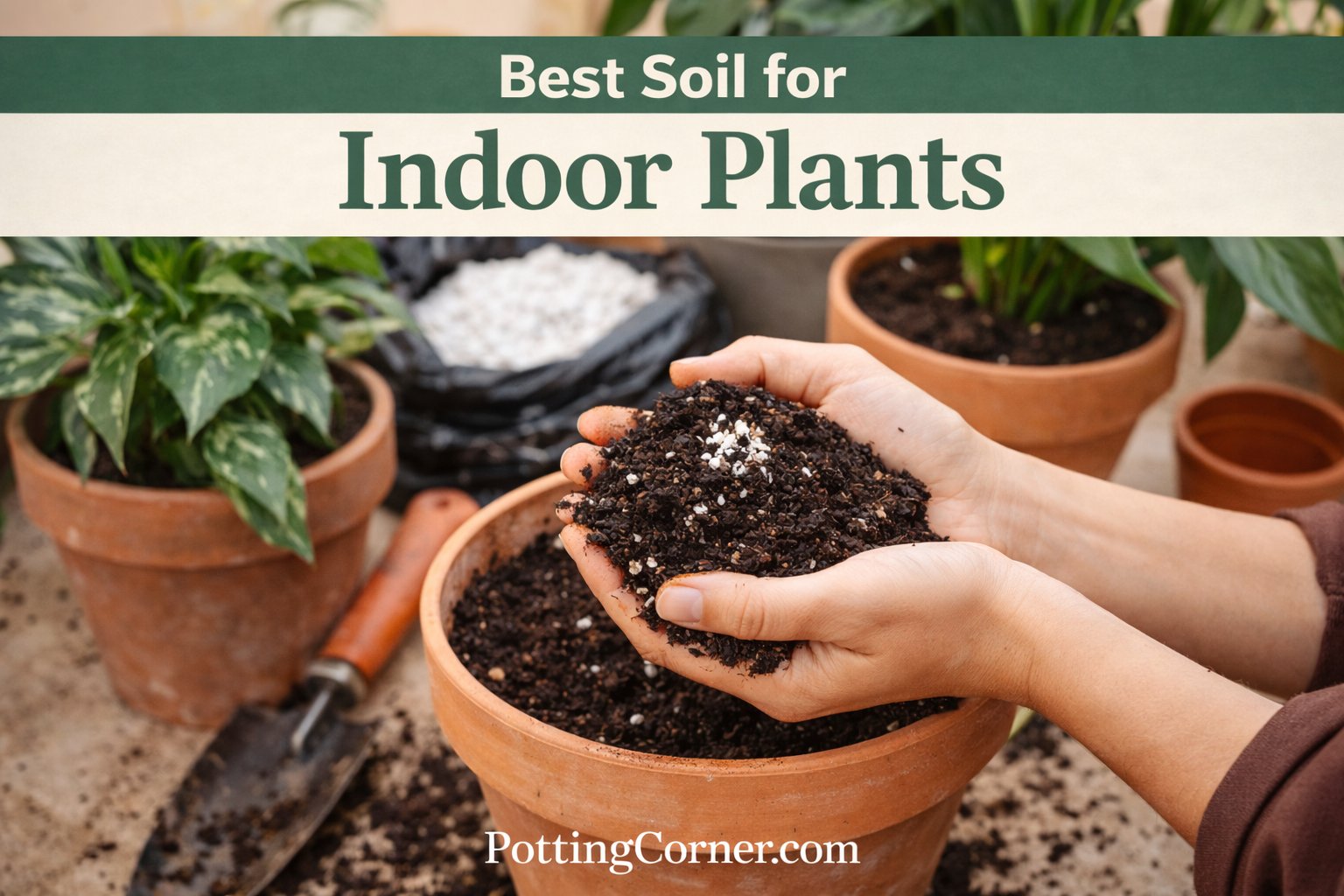
Short answer: for most indoor plants, the best soil is a quality bagged indoor potting mix (peat or coir, perlite, bark) with an extra handful of perlite mixed in, about 20% by volume. Not garden soil, not topsoil, not compost. Succulents need a mix that is half grit, aroids like monstera want chunky bark, ferns want extra coir, and orchids want bark with no soil at all.
The bag matters less than the recipe. This guide gives you the ratios for each plant type, a quick way to judge a bag in the store, and the signs that the soil you already have is wrong. For the repotting process itself, see How to Repot a Houseplant.
The Direct Answer: Soil by Plant Type
| Plant type | Best mix | Ratio (by volume) | Why |
|---|---|---|---|
| Standard tropicals (pothos, peace lily, dracaena, spider plant) | Indoor potting mix + perlite | 80% mix, 20% perlite | Holds moisture 5-7 days, still drains |
| Aroids (monstera, philodendron, anthurium) | Chunky aroid mix | 40% mix, 30% orchid bark, 20% perlite, 10% charcoal | Thick roots need air; rot in dense soil |
| Succulents and cacti | Gritty mix | 1 part mix, 1 part perlite or pumice, 1 part coarse sand | Must dry in 2-3 days |
| Ferns and calathea | Moisture-retentive mix | 70% mix, 20% coco coir, 10% perlite | Stay lightly moist without going soggy |
| Snake plant and ZZ | Fast-draining mix | 50% mix, 50% perlite | Store water in leaves; rot easily |
| Orchids | Bark mix, no soil | 80% orchid bark, 10% perlite, 10% charcoal | Epiphyte roots need air and fast drying |
| African violets | Light, fluffy mix | 1 part mix, 1 part perlite, 1 part peat | Fine roots, hate compaction |
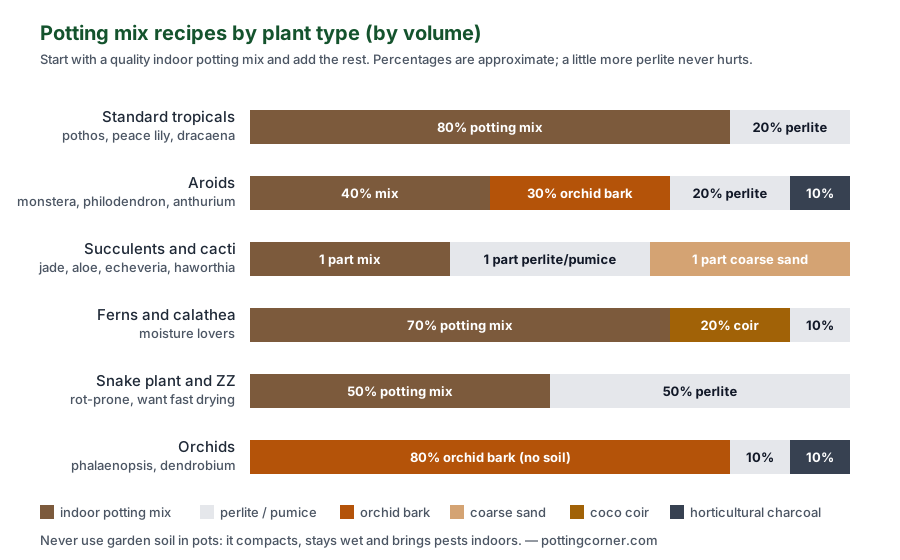
If you only buy one bag, buy a general indoor potting mix and a bag of perlite. Together they cover every plant in the table except orchids.
What to Look for in a Bag of Potting Mix
Most bags are fine. A few are not. Five checks in the store:
- Label says indoor, houseplant, container or potting mix. Not "garden soil," "topsoil," "raised bed" or "lawn."
- You can see white specks (perlite) and bark pieces. Uniform dark powder means it will compact.
- It feels light for its size. Heavy bags are usually wet or full of sand and fine particles.
- No sour or rotten smell. A wet, sealed bag can go anaerobic; it should smell earthy.
- "Moisture control" or "water retaining" versions are for outdoor pots. Indoors they stay wet too long for most plants.
| Bag type | Good for | Skip for |
|---|---|---|
| Indoor / houseplant potting mix | Most tropicals; base for every recipe above | Succulents without added grit |
| All-purpose potting mix | Same as above, may need 20-30% perlite | Orchids |
| Cactus / succulent mix | Succulents, snake plant, ZZ | Ferns, calathea, peace lily |
| Orchid bark mix | Orchids; bark ingredient for aroid mix | Anything that needs to hold water |
| Seed-starting mix | Cuttings, seedlings | Mature plants (too fine, few nutrients) |
| Moisture-control mix | Outdoor containers in summer | Indoor plants (stays wet too long) |
| Garden soil / topsoil | Outdoor beds only | Every indoor pot, no exceptions |
Why You Can't Use Garden Soil Indoors
Plants grow in garden soil outside, so it seems like it should work. In a pot, it fails for three reasons.
It compacts
Garden soil is full of fine particles that pack together. Outdoors, worms, roots, freezing and thawing keep it open. In a pot, none of that happens. Within weeks the soil turns dense, air pockets disappear, and water pools on the surface before it soaks in.
It stays wet
Outdoor soil dries across a huge surface and wicks water sideways into the surrounding ground. In a pot, water can only leave through the top surface and the drainage hole. The bottom half stays wet for weeks, and roots rot. See How Long Should Soil Stay Wet After Watering?.
It brings problems indoors
Weed seeds, fungus gnat larvae, fungal spores and soil bacteria are manageable in a garden and a disaster in a living room.
Potting Mix Ingredients and What Each One Does
| Ingredient | Job | Add more when |
|---|---|---|
| Peat moss | Holds water, slightly acidic | Soil dries too fast; ferns, calathea |
| Coco coir | Holds water, neutral pH, rewets easily | Same as peat, more sustainable |
| Perlite | Air pockets, drainage | Soil stays wet, you overwater, plastic pots |
| Pumice | Like perlite but heavier, doesn't float | Tall plants, succulents |
| Orchid bark | Big air gaps, slow to break down | Aroids, orchids, any thick-rooted plant |
| Coarse sand | Fast drainage, weight | Succulents, cacti |
| Vermiculite | Holds water and nutrients | Seed starting, cuttings |
| Horticultural charcoal | Absorbs impurities, keeps mix "sweet" | Terrariums, aroid and orchid mixes |
The one to remember is perlite. Almost every problem with bagged mix indoors is "holds too much water," and perlite is the cheap fix.
Soil Recommendations by Plant Type
Standard tropical houseplants
Pothos, philodendron, peace lily, dracaena, spider plant, Chinese evergreen, schefflera.
Use indoor potting mix straight from the bag or with 10-20% perlite. If your home is humid, you use plastic pots, or you tend to overwater, go to 20-30%.
Aroids: monstera, philodendron, anthurium, pothos
These have thick roots that rot in dense soil. The chunky mix in the table (40% potting mix, 30% orchid bark, 20% perlite, 10% charcoal) mimics the loose material they grow in on tree trunks. Water runs through fast, and the roots stay aired. If that sounds like too much shopping, potting mix plus 30% orchid bark gets you most of the way.
Succulents and cacti
Jade, aloe, echeveria, haworthia, all cacti. Soil must dry in 2-3 days. Use a cactus mix, or one part potting mix, one part perlite or pumice, one part coarse sand. See How to Water Succulents Indoors.
Snake plants and ZZ plants
They store water in their leaves and rhizomes and rot easily. Half potting mix, half perlite, or a cactus mix.
Ferns and calathea
They want to stay lightly moist but not soggy. Potting mix with 20% coco coir or peat added, and a little perlite so it never goes sour.
Orchids
Phalaenopsis, dendrobium, cattleya. No soil at all: bark, perlite and charcoal. Orchid roots need air and rot in anything that holds water.
African violets
Fine roots that hate compaction. Equal parts potting mix, perlite and peat, or a bagged violet mix.
How to Tell If Your Soil Is Wrong
Too dense (holds too much water)
- Soil stays wet for more than 10 days
- Water pools on the surface before soaking in
- Fungus gnats
- Musty smell
- Plant shows overwatering symptoms even though you water carefully
Fix: repot into a lighter mix, or mix 20-50% perlite into the existing soil. See How to Improve Drainage in Pots.
Too fast-draining
- Soil is bone dry within 1-2 days
- Water runs straight through without wetting the middle
- Plant wilts between waterings
Fix: add coco coir or peat, or move up a pot size.
Old and compacted
- Hard crust on the surface
- Soil has shrunk away from the pot walls
- Water runs down the gap between soil and pot
- Growth stalled
Fix: potting mix breaks down over 2-3 years. Repot with fresh mix. See How to Refresh Soil Without Repotting if a full repot isn't practical.
Common Mistakes
- Using garden soil or topsoil. Compacts, stays wet, brings pests.
- Skipping drainage holes. The best soil can't help water that has nowhere to go. See Drainage Holes: Why They Matter.
- Reusing old soil. Depleted, compacted and possibly carrying pests. Compost it outside.
- One mix for everything. The pothos mix rots a succulent; the succulent mix starves a fern.
- Over-amending. A quality bag needs one addition, usually perlite. Five additions turn into guesswork.
- Rocks in the bottom for drainage. Makes the soil above wetter, not drier. Fix the mix instead.
Frequently Asked Questions
What is the best soil for indoor plants in pots?
A bagged indoor potting mix with about 20% perlite added. That single recipe suits most tropical houseplants. Adjust from there: more grit for succulents, bark for aroids, coir for ferns.
Can I use garden soil for indoor plants?
No. It compacts in a pot, stays wet, and brings pests and pathogens indoors. Always use a mix labeled for containers.
Is regular potting mix okay for indoor plants?
Usually yes. All-purpose potting mix and indoor potting mix are close cousins; the indoor version tends to be lighter and less likely to include moisture-control additives. Either works with a little added perlite.
What's the difference between potting mix and potting soil?
Potting mix is usually soilless (peat or coir, perlite, bark). Potting soil may contain actual soil. For indoor plants, soilless potting mix is the better choice.
How long does potting mix last?
Unopened, 1-2 years. Opened, use within a year and keep the bag closed and dry. In the pot, 2-3 years before it compacts and needs replacing.
Should I sterilize potting mix?
Bagged commercial mix is already clean. Only sterilize homemade mixes or reused material: spread on a tray and bake at 180°F (82°C) for 30 minutes.
Do I need fertilizer if the mix says it includes it?
Starter fertilizer in the bag lasts 1-3 months. After that, feed lightly during spring and summer.