Underwatered Plant: Signs and Recovery
Drooping leaves, dry soil, crispy edges, your plant is parched. Unlike overwatering, underwatering is usually reversible with quick action. Most plants bounce back within hours of a good drink.
Potting Corner Team · Feb 19, 2026 · 8 min read
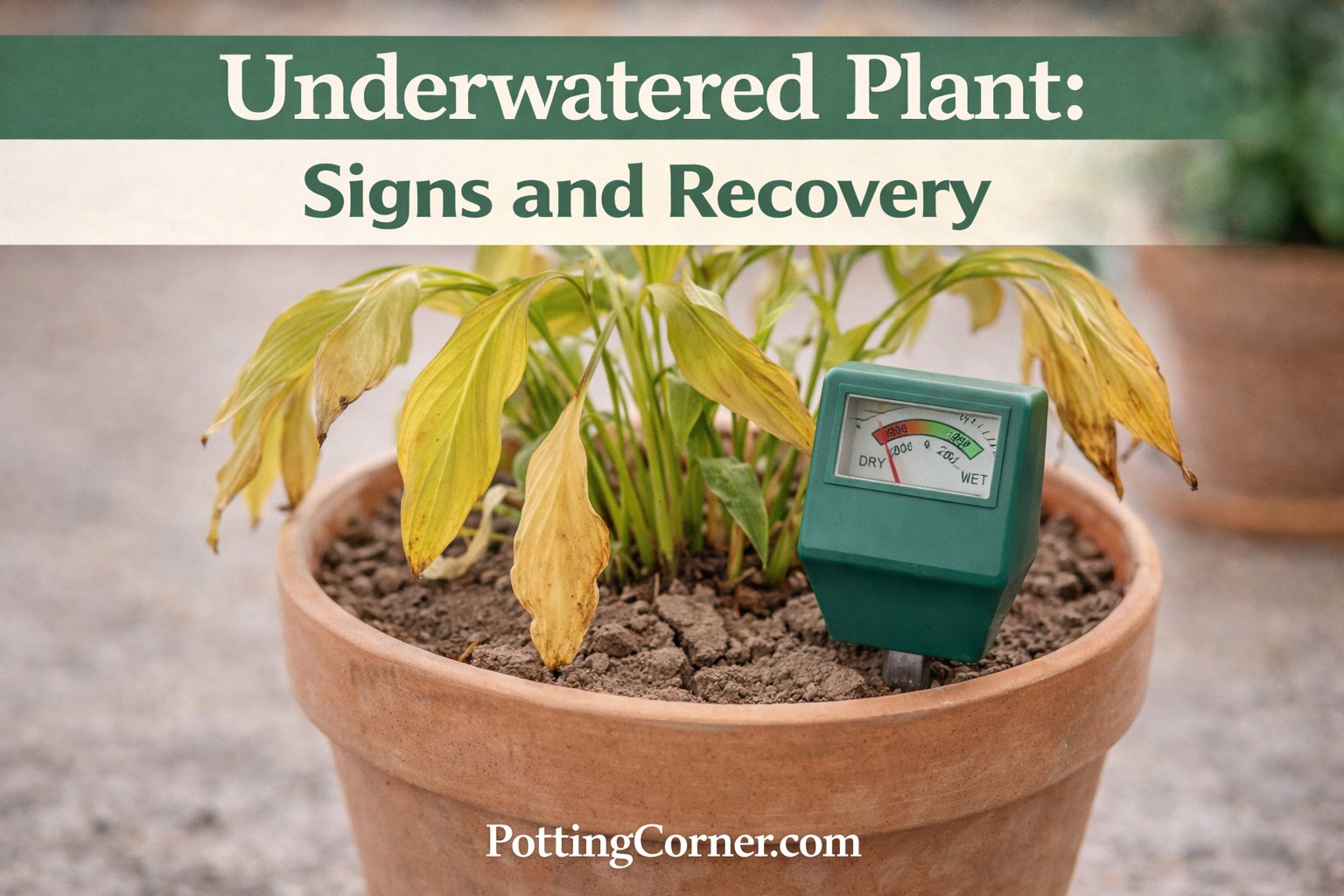
Here's the good news: underwatering is much more forgiving than overwatering. A plant that looks completely wilted from drought can often recover fully within hours of being watered. The key is recognizing the signs, providing proper rehydration and preventing future dehydration cycles.
For a complete troubleshooting overview, see Houseplant Troubleshooting: Common Problems and Fixes.
The Direct Answer: Underwatering Signs
| Symptom | What You'll See | Recovery |
|---|---|---|
| Wilting | Droopy, limp leaves and stems | Hours after watering |
| Dry soil | Soil pulls away from pot edges | Immediate |
| Crispy edges | Brown, dry leaf margins | Damaged tissue won't heal |
| Leaf curl | Leaves curl to reduce water loss | Hours after watering |
| Leaf drop | Lower leaves yellow then drop | New growth replaces |
The rule: Wilting from underwatering recovers quickly. Crispy tissue doesn't regenerate but the plant survives.
Recognizing Underwatering
The Telltale Signs
Consistent pattern of dehydration:
- Soil is bone dry, pulling away from pot edges
- Pot feels very light when lifted
- Leaves are limp, droopy, or wilted
- Leaves may curl inward or droop downward
- Soil may repel water initially (hydrophobic)
Distinguishing from Overwatering
Both cause wilting here's the difference:
| Underwatering | Overwatering |
|---|---|
| Soil is dry | Soil is wet |
| Pot is light | Pot is heavy |
| Leaves feel papery/dry | Leaves feel soft/mushy |
| Fast recovery with water | Slow or no recovery |
| Crispy brown tips | Yellow, soft leaves |
Always check soil moisture before watering a wilting plant.
Mild vs. Severe Underwatering
Severity matters:
Mild:
- Slightly droopy leaves
- Soil dry but not bone-dry
- Recovers fully and quickly
Moderate:
- Significant wilting
- Completely dry soil
- Some crispy leaf edges
- Recovers mostly but may lose some leaves
Severe:
- Extreme wilting
- Soil completely dry and hydrophobic
- Extensive crispy damage
- May lose significant foliage
- Plant stressed but usually survives
How to Rehydrate a Dry Plant
Standard Method
For most situations:
- Take plant to sink or tub
- Water thoroughly until it drains from bottom
- Wait a few minutes
- Water again to ensure saturation
- Let excess drain completely
- Return to normal position
Most plants perk up within hours.
Bottom Watering for Very Dry Soil
When soil repels water:
- Fill a basin or tub with several inches of water
- Place pot in water (water should reach 1/3 up the pot)
- Let sit for 15-30 minutes
- Soil absorbs water from below
- Remove when top feels moist
- Let excess drain before returning to position
This ensures even saturation of hydrophobic soil.
See Bottom Watering: A Deep Watering Method.
For Severely Wilted Plants
Extra care needed:
- Move to cooler, shaded location first
- Water gradually not all at once
- Let plant recover from stress before returning to bright light
- Humid conditions help recovery
- Be patient, severe stress takes time
What to Expect After Watering
First Few Hours
Immediate response:
- Stems begin to straighten
- Leaves start lifting
- Turgor (firmness) returns
- Plant looks noticeably better
- Most dramatic improvement quickly
First Day
Continued recovery:
- Full turgor restored
- Droopy leaves upright
- Plant looks normal again
- Crispy parts remain crispy (won't heal)
Following Week
Longer-term assessment:
- Some damaged leaves may yellow and drop
- New growth should appear normal
- Overall plant health stabilizes
- Prevent repeated stress going forward
Damage That Doesn't Recover
Crispy Leaves and Tips
Dead tissue stays dead:
- Brown, crispy portions won't turn green
- Damaged leaf edges are permanent
- Can trim brown edges for appearance
- Focus on preventing future damage
Dropped Leaves
Lost but not critical:
- Severely stressed plants drop leaves
- Lower/older leaves sacrificed first
- New leaves will grow to replace them
- Plant will recover over time
Scarred Growth
Some lasting effects:
- New leaves during stress may be smaller
- Some leaf distortion possible
- Future growth returns to normal
- Not permanent once conditions improve
Why Plants Get Underwatered
Watering Too Infrequently
Most common cause:
- Busy schedule leads to forgotten plants
- Watering "when you remember"
- No regular checking routine
- Intervals too long for plant's needs
Pot Drying Too Fast
Environmental factors:
- Small pots dry quickly
- Terra cotta absorbs moisture
- Rootbound plants dry fast
- High heat or dry air accelerates evaporation
- Direct sun dries soil rapidly
Insufficient Watering Volume
Not enough water per session:
- Just wetting the surface
- Water doesn't reach all roots
- Core of root ball stays dry
- Bottom roots chronically dehydrated
Hydrophobic Soil
Water runs through without absorbing:
- Peat-based soil when very dry repels water
- Water channels around dry soil mass
- Appears watered but core is still dry
- Needs bottom watering or repeated soaking
See How Long Should Soil Stay Wet After Watering?.
Preventing Future Underwatering
Develop a Checking Routine
Consistency helps:
- Pick a regular day to check plants
- Check soil moisture not just the surface
- Water when needed not on schedule
- Make it a habit
Know Your Plants' Needs
Different needs matter:
- High-water plants need more attention
- Succulents and cacti need less
- Small pots dry faster than large
- Some plants wilt dramatically at first dryness
Adjust for Conditions
Environment changes needs:
- Summer = more water (heat, growth)
- Winter = less water (cool, dormancy)
- Near heating vents = dries faster
- Low light = dries slower
Consider Self-Watering Options
Reduce stress:
- Self-watering pots provide consistent moisture
- Water globes for vacation
- Wick watering systems
- Drip irrigation for many plants
See .
Plants Prone to Underwatering Damage
Quick to Wilt
Sensitive species:
- Peace lilies (dramatic wilters)
- Ferns
- Calatheas
- Impatiens
- Coleus
- Fittonias (nerve plants)
These need consistent moisture don't let them dry completely.
More Drought-Tolerant
Forgiving of missed waterings:
- Snake plants
- ZZ plants
- Pothos
- Succulents
- Cacti
- Dracaenas
Still need water but handle occasional neglect.
Common Underwatering Mistakes
Panicking and Overwatering
Overcorrection:
- Plant wilts from dryness
- You water heavily
- Then water again soon because you're worried
- Now you're overwatering
- Roots can't handle sudden flood after drought
Fix: Water thoroughly once, then return to normal routine.
Not Checking Soil First
Assuming wilting = needs water:
- Overwatered plants wilt too
- Adding water to already-wet soil worsens problems
- Always check soil moisture first
- Soggy soil + wilting = don't water
Giving Up Too Quickly
Plants are resilient:
- Even very wilted plants often recover
- Give it 24-48 hours after watering
- Don't throw away until you're sure it's dead
- Many plants surprise you
Only Surface Watering
Doesn't reach roots:
- Quick splash on top doesn't hydrate
- Water must reach entire root zone
- Water slowly and thoroughly
- Let it drain from the bottom
Frequently Asked Questions
How quickly should an underwatered plant recover?
Wilted plants usually show improvement within 1-6 hours. Full recovery within 24 hours. If no improvement after thorough watering, check for root problems the issue may not be simple underwatering.
Will brown crispy leaves turn green again?
No. Dead leaf tissue is dead. You can trim the brown parts for aesthetics but that portion won't regenerate. The plant will grow new healthy leaves once properly watered.
My plant wilts even though I water it regularly. Why?
Either roots are damaged (can't absorb water) or the plant is rootbound and drying out faster than you realize. Check root health by gently removing from pot. Or water needs may exceed your current schedule.
Is it better to underwater or overwater?
Underwatering is more forgiving. Underwatered plants usually recover completely once watered. Overwatered plants can develop root rot, which is much harder to fix and often fatal.
Should I mist a wilted plant?
Misting doesn't help underwatering roots need water not leaves. Water the soil. Misting is for humidity not hydration.