Best Tools for Beginner Plant Care
You don't need much to grow healthy houseplants but the right tools make care easier and more effective. From pots and soil to watering cans and pruning shears here's what's actually worth buying.
Potting Corner Team · Apr 12, 2026 · 11 min read
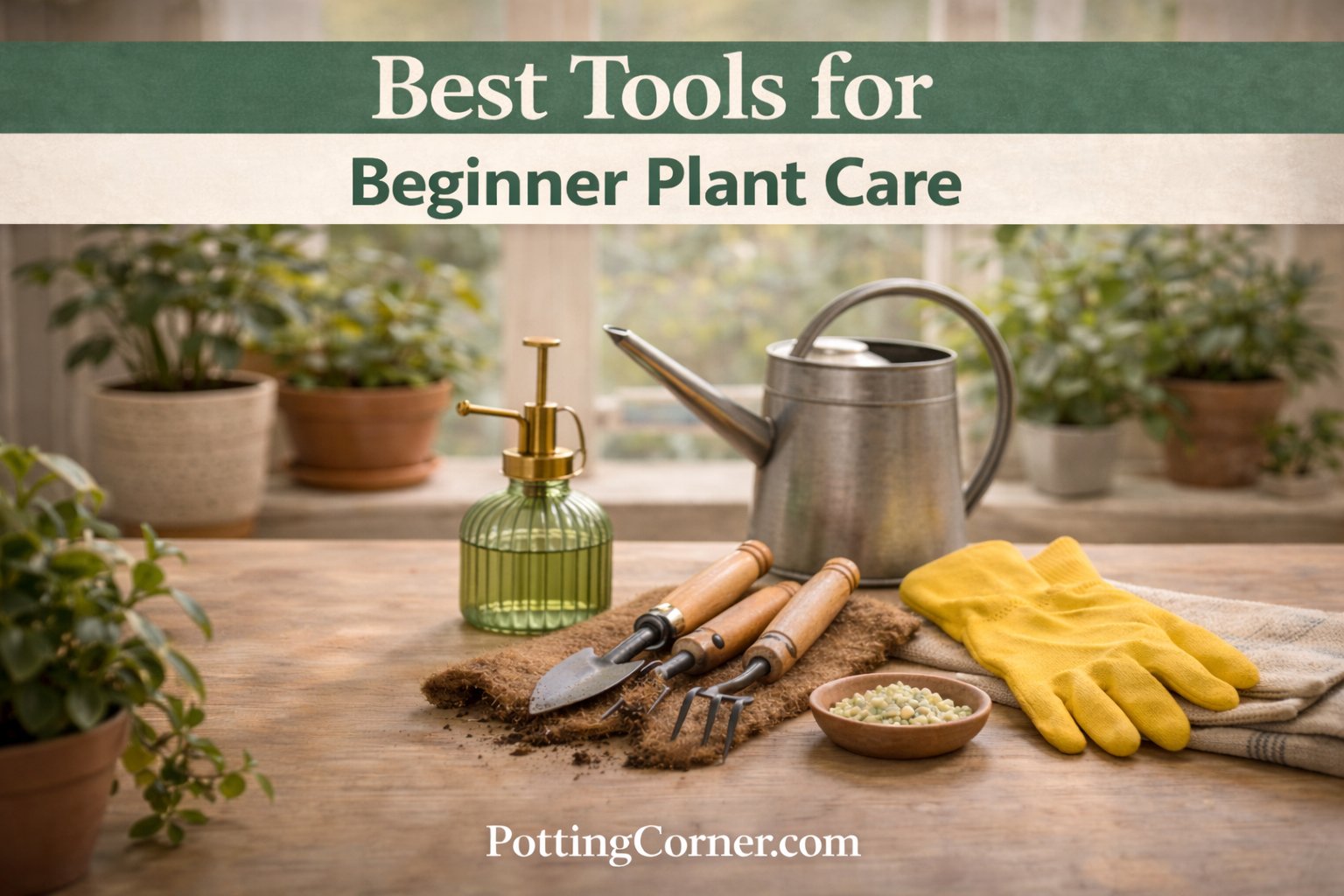
Caring for houseplants doesn't require an arsenal of specialized equipment. Most of what you need is simple and inexpensive. But having the right basic tools makes plant care easier, faster and more successful. This guide covers what you actually need, what's nice to have and what you can skip entirely.
The Core Essentials
These are the non-negotiables the tools you'll use for every plant, every time.
Pots with Drainage
The most important "tool":
- Every pot needs drainage holes (or use nursery pots inside decorative ones)
- Various sizes for different plants
- Material matters less than drainage
- Start with a few basic sizes
You'll need pots in various sizes. Most houseplants do well in 4-inch, 6-inch and 8-inch pots. Larger floor plants may need 10-inch or bigger. Always prioritize drainage over aesthetics.
See Choosing Pots for Houseplants and Drainage Holes: Why They Matter.
Quality Potting Mix
Not garden soil:
- Indoor potting mix designed for containers
- Well-draining formulation
- Can customize with amendments
- Store sealed to keep fresh
Different plants have different soil needs. General indoor potting mix works for most tropicals. Succulents and cacti need grittier, faster-draining mix. Orchids need special bark-based media.
See Best Indoor Potting Soil Mix.
Watering Can
Makes watering easier and neater:
- Long spout for reaching under foliage
- Comfortable capacity (not too heavy when full)
- Indoor-sized (1-2 quarts is plenty for most people)
- Narrow spout helps direct water to soil
A dedicated watering can beats using cups or pitchers. The long spout lets you water the soil without wetting leaves and you can see how much you're adding.
See How to Water Houseplants: The Beginner's Guide.
Pruning Shears or Scissors
For maintenance and shaping:
- Clean cuts heal better than tears
- Bypass pruners for stems
- Sharp scissors work for most tasks
- Keep them clean and sharp
You'll use these for removing dead leaves, pruning leggy growth and taking cuttings. Sharp cuts promote healthy healing; jagged tears invite disease.
See .
See .
Saucers or Drip Trays
Protect your surfaces:
- Catch water that drains through
- Prevent water damage to furniture
- Essential for any pot on a surface
- Match to pot size
Every pot needs a saucer underneath unless you water plants in the sink and wait for draining. Protect your floors and furniture from water damage.
See Drainage Holes: Why They Matter.
Highly Recommended
Not strictly essential but these make plant care significantly easier.
Moisture Meter
Removes guessing from watering:
- Shows soil moisture level
- Prevents over and underwatering
- Especially useful for beginners
- Inexpensive (under $15)
Sticking your finger in soil works but a moisture meter is more precise and cleaner. Particularly helpful for large pots where surface dryness doesn't reflect what's happening deeper down.
See .
Spray Bottle or Mister
For humidity and cleaning:
- Misting increases humidity temporarily
- Cleans dust from leaves
- Useful for pest treatments
- Fine mist is better than coarse spray
Misting isn't a substitute for ambient humidity but it helps. More usefully, spray bottles are essential for applying treatments and cleaning leaves.
Soil Amendments
Customize your mix:
- Perlite: Improves drainage and aeration
- Orchid bark: Adds chunkiness, airflow
- Horticultural charcoal: Helps with odor and soil health
- Worm castings: Gentle, natural fertilizer
Having these on hand lets you adjust potting mix for different plant needs. Most common is perlite, adding extra to standard potting mix improves drainage for many plants.
Fertilizer
Plants need nutrients:
- Balanced liquid fertilizer for general use
- Dilute to avoid burning
- Apply during growing season
- Many options available
Plants in containers eventually exhaust soil nutrients. Regular fertilizing during spring and summer keeps them healthy and growing.
Trowel or Scoop
For potting and repotting:
- Easier than using hands or spoons
- Moves soil without mess
- Helpful for larger pots
- Dedicated tool stays clean
A small trowel or scoop makes potting tasks much easier than improvising with kitchen utensils.
See How to Repot Houseplants: Step-by-Step.
Nice to Have
These aren't necessary but they make plant care more convenient or help with specific situations.
Humidity Tray or Pebble Tray
For humidity-loving plants:
- Tray filled with pebbles and water
- Pot sits above water not in it
- Increases local humidity
- Low-tech and effective
A simple solution for plants that want more humidity than your home provides. Not as effective as a humidifier but helps.
See .
Humidifier
For serious humidity needs:
- Raises ambient humidity
- Essential for some tropical plants
- Especially useful in winter
- Various types and sizes available
If you have multiple humidity-loving plants, a humidifier makes life easier than individual solutions for each plant.
Grow Lights
When natural light isn't enough:
- Supplement dim spaces
- Enable plants in dark corners
- Various types and price points
- Can be subtle or prominent
Many homes don't have enough natural light for some plants. Grow lights solve this problem and expand your options significantly.
See Grow Lights for Beginners.
Plant Supports
For climbing and trailing plants:
- Moss poles: For climbing aroids (monstera, pothos)
- Stakes: For top-heavy plants
- Trellises: For vining plants
- Variety of styles and materials
Plants like monstera produce larger leaves when they can climb. Supports also help keep tall plants from toppling.
Hygrometer
Measures humidity levels:
- Shows room humidity percentage
- Helps you understand conditions
- Inexpensive and useful
- Often combined with thermometer
Knowing your actual humidity helps you understand what your plants experience and whether you need to take action.
Gloves
For messy work:
- Keep hands clean during potting
- Protection when handling irritating plants
- Disposable or reusable
- Personal preference
Some people prefer gloveless plant work; others hate dirty hands. Gloves are also smart for handling plants with irritating sap (like euphorbias).
Plant Labels
Keep track of your collection:
- Name tags for identification
- Care reminders
- Purchase dates
- Especially useful as collection grows
When you have multiple plants, especially similar-looking ones, labels help you remember what's what and what each one needs.
What You Can Skip
These are often marketed to plant owners but aren't necessary for most situations.
Leaf Shine Products
More harm than good often:
- Can clog leaf pores
- Creates artificial appearance
- Simple water cleaning works fine
- May attract dust
A damp cloth cleans leaves perfectly well. Leaf shine products are cosmetic and can actually harm plants by blocking gas exchange.
See .
Specialized Plant Food for Every Type
Not usually necessary:
- General balanced fertilizer works for most plants
- Specialty formulas are marketing-driven
- Exception: orchids and some specific plants
- Simplify where you can
You don't need separate fertilizers for philodendrons, pothos and monsteras. A good all-purpose houseplant fertilizer covers most needs.
Root Hormone (for beginners)
Often unnecessary:
- Many plants root easily in water
- Root hormone helps with difficult species
- Not needed for common houseplants
- Can purchase later if needed
Pothos, philodendrons and many common plants root readily without rooting hormone. It's useful for some species but not a beginner essential.
Expensive Decorative Pots
Function over form:
- Cheap nursery pots work perfectly
- Use decorative cachepots over functional pots
- Focus spending on quality plants and soil
- Aesthetics can come later
You can always upgrade containers later. Start with functional pots and focus your budget on healthy plants and good soil.
Choosing Pot Materials
Different materials have different characteristics.
Terra Cotta
The classic choice:
- Porous, allows air and moisture exchange
- Dries out faster (good for overwatering tendency)
- Heavy, stable
- Inexpensive
- Can break if dropped
Great for succulents, cacti and plants that like to dry out. Not ideal for moisture-loving plants in dry climates.
Plastic
Practical and lightweight:
- Lightweight, won't break
- Retains moisture longer
- Inexpensive
- Many sizes readily available
- Not as breathable as terra cotta
Good all-purpose option. Especially useful for plants that like consistent moisture and for hanging baskets (lighter weight).
Ceramic
Decorative option:
- Often glazed (not porous)
- Heavier, more decorative
- Variable in drainage quality
- More expensive
- Wide design variety
Good for display but ensure drainage holes. Glazed ceramic behaves more like plastic than terra cotta regarding moisture.
See Terracotta vs Plastic Pots and Do You Need a Cachepot?.
Setting Up Your Plant Care Station
Having supplies organized makes care easier.
Dedicated Space
If possible:
- Shelf or cabinet for supplies
- Near where you'll work on plants
- Easy access to tools
- Keeps everything together
You're more likely to maintain good care habits when supplies are accessible and organized.
What to Keep Handy
Quick-access items:
- Watering can (filled and ready)
- Spray bottle
- Scissors or pruners
- Paper towels or cloth
- Moisture meter
Having these within reach means you're more likely to use them when needed.
Bulk Storage
Larger supplies:
- Potting mix bags
- Perlite and amendments
- Extra pots
- Fertilizer
These can be stored in a garage, closet, or out-of-the-way spot. Just keep potting mix sealed against pests.
Budget Considerations
You don't need to spend a lot to get started.
Where to Invest
Worth spending more:
- Quality potting mix (affects plant health)
- Good pruning shears (lasts longer, cleaner cuts)
- A reliable watering can (you'll use it constantly)
Where to Save
Fine to economize:
- Basic plastic pots (functional and cheap)
- Saucers (any waterproof dish works)
- Spray bottles (dollar store is fine)
- Trowels (basic models work perfectly)
Starting Budget
For a beginner setup:
- $20-40 covers basic essentials
- $50-75 gets you well-equipped
- Add specialty items as needed
- Build collection over time
Frequently Asked Questions
What's the one thing I absolutely must have?
Pots with drainage holes. Everything else you can improvise but proper drainage is non-negotiable for plant health. Without it, you'll struggle with overwatering no matter how careful you are.
Do I need different pots for different plants?
Size matters more than type. Most plants do fine in standard plastic or terra cotta pots. Match pot size to root system. Material choice is about aesthetics and watering habits more than plant requirements.
Can I use regular scissors instead of plant shears?
Yes, sharp scissors work fine for most pruning tasks. Just keep them clean and dedicate them to plants. Bypass pruners are better for thick woody stems but scissors handle most houseplant needs.
Is a moisture meter really worth it?
For beginners, absolutely. It removes guesswork from watering, which is the #1 cause of plant problems. Worth the $10-15 investment for the confidence and accuracy it provides. See Houseplant Troubleshooting: Common Problems and Fixes for more on diagnosing issues.
What's the best all-around fertilizer?
A balanced liquid fertilizer (like 10-10-10 or 20-20-20) diluted to half strength works for most houseplants. Apply during the growing season. You can get more specific later but balanced fertilizer covers the basics.