Moisture Meter for Houseplants: How to Read It (and When to Trust It)
A soil moisture meter reads 1-10: 1-3 is dry, 4-7 moist, 8-10 wet. Most tropicals want water at 3-4, succulents at 1-2, ferns at 4-5. Here's how to use one correctly, why it lies in some soils, and when your finger is better.
Potting Corner Team · Sep 15, 2026 · 8 min read
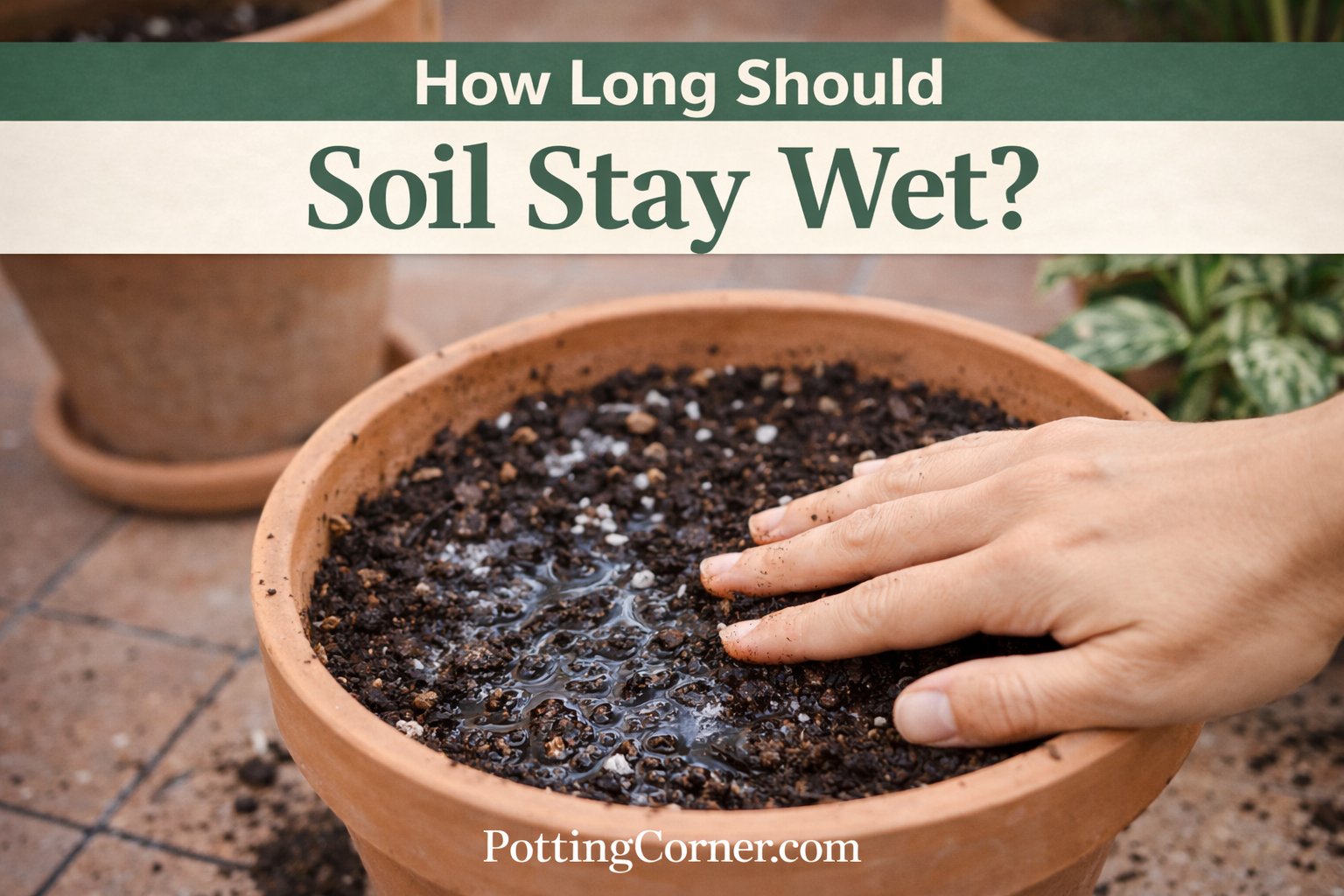
Short answer: push the probe 2-3 inches into the soil, halfway between the stem and the pot wall, wait 30 seconds, and read the scale. On the common 1-10 meters, 1-3 means dry, 4-7 means moist, 8-10 means wet. Water most tropical houseplants when the needle drops to 3-4, succulents and snake plants at 1-2, and ferns or calatheas at 4-5. Take the probe out after reading; leaving it in corrodes it and ruins the readings.
A $10 moisture meter is the most useful tool a beginner can buy, and also the most misread. It doesn't measure water directly; it measures how well the soil conducts electricity, which tracks moisture in normal potting mix and goes wrong in a few specific situations. This guide covers how to read it, which number means "water now" for each plant, and the cases where you should trust your finger instead. For what healthy drying looks like, see How Long Should Soil Stay Wet After Watering?.
How to Read a Soil Moisture Meter
Almost all cheap meters use a 1-10 scale, sometimes colored red (dry), green (moist) and blue (wet).
| Reading | Zone | What it means | Action |
|---|---|---|---|
| 1-2 | Dry | Soil is dry through the root zone | Water succulents, cacti, snake plant, ZZ |
| 3-4 | Dry to slightly moist | Top few inches dry, some moisture below | Water most tropicals (pothos, monstera, philodendron) |
| 5-6 | Moist | Comfortable for most plants | Wait |
| 7 | Moist to wet | Recently watered | Wait |
| 8-10 | Wet | Saturated, no air in the soil | Wait; if it stays here for 10+ days, see below |
The zones are the point. Don't chase a specific digit; the meters aren't that precise.
When to Water, by Plant
| Plant | Water at | Don't water above |
|---|---|---|
| Succulents, cacti | 1-2 | 3 |
| Snake plant, ZZ plant | 1-2 | 3 |
| Pothos, philodendron | 3-4 | 5 |
| Monstera | 3 | 4 |
| Fiddle leaf fig, rubber plant | 3 | 4 |
| Peace lily | 4 | 5 |
| Spider plant | 3-4 | 5 |
| Ferns | 4-5 | 6 |
| Calathea, prayer plant | 4-5 | 6 |
| African violet | 4 | 5 |
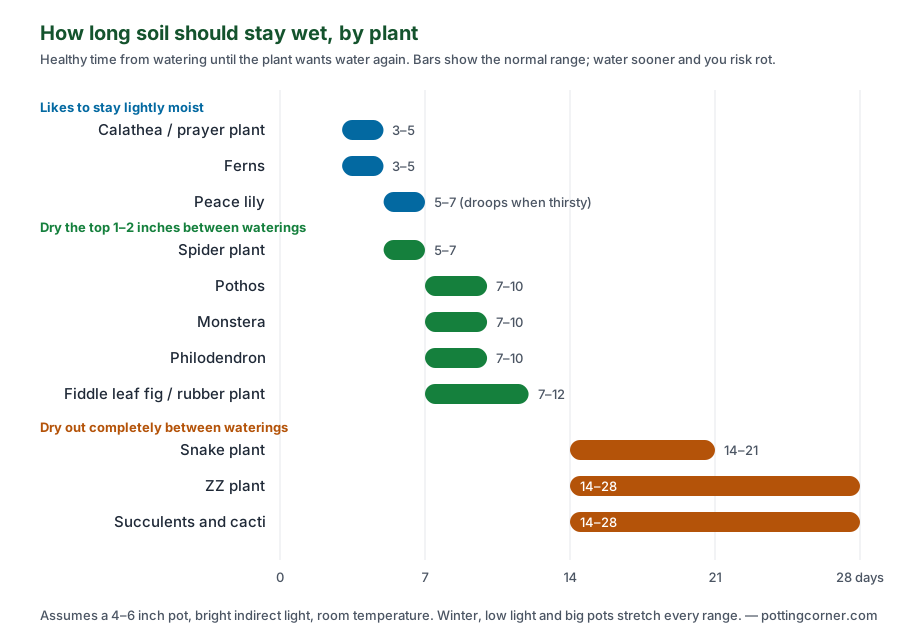
Cross-check with time: if a pothos reads 4 six days after watering, that's normal. If it reads 8 twelve days after watering, the pot is staying wet too long regardless of what the plant "wants." See How Long Should Soil Stay Wet After Watering?.
How to Use It Correctly
- Probe depth: 2-3 inches for a 4-6 inch pot, or about two-thirds of the pot's depth for bigger pots. The top inch dries first and always reads dry; the root zone is what matters.
- Probe position: halfway between the stem and the edge of the pot. Right against the stem you hit the root ball; right at the edge you hit the gap where water runs down the side.
- Wait 30-60 seconds. The needle drifts for a moment.
- Take two readings in different spots if the pot is larger than 8 inches. Big pots dry unevenly.
- Pull it out and wipe it. Leaving the probe in the pot corrodes the tips within weeks, and a corroded probe reads dry forever.
- Read before watering, not after. Right after watering everything reads 10; that tells you nothing.
Why Moisture Meters Lie (and How to Tell)
Cheap meters measure electrical conductivity between two metal strips on the probe. Wet soil conducts; dry soil doesn't. That works in ordinary potting mix and fails when something else changes conductivity.
Salty soil reads wet
Fertilizer salts, hard tap water and old soil build up salts that conduct electricity. The meter says 8 while the soil is dry to the touch. If the meter always reads high and the plant looks thirsty, this is probably why. Flush the pot with plenty of water and let it drain, or repot.
Very chunky mixes read dry
Orchid bark, aroid mixes and gritty succulent mixes have big air gaps. The probe may not touch enough material to conduct, so it reads 1-2 even when the bark is damp. Use the finger test or lift the pot for these.
Peat that has dried out hard reads dry even after watering
Bone-dry peat repels water; a quick watering runs down the sides and out the hole, and the meter correctly reads dry in the middle. Bottom-water for 20-30 minutes to rewet it. See Bottom Watering: When It Works Best.
A corroded probe reads dry
Green or black crust on the metal tips means the meter is done. They cost $10; replace it.
Distilled or very soft water reads low
Pure water conducts poorly. If you water with distilled or reverse-osmosis water, expect readings 1-2 points lower than the soil's real moisture.
Rule of thumb: if the meter and your finger disagree, believe your finger and figure out which of the above is happening.
Moisture Meter vs. Finger Test vs. Lifting the Pot
| Method | Best for | Weakness |
|---|---|---|
| Finger test (1-2 inches) | Pots up to 8 inches, everyday checks | Can't reach the root zone in big pots |
| Lifting the pot | Small and medium pots, learning a plant's rhythm | Useless for heavy floor plants |
| Moisture meter | Big pots, deep root zones, people who overwater | Misreads in salty, chunky or bone-dry soil |
| Wooden skewer (push in, pull out) | Any pot; damp soil clings to the wood | Slow; need a skewer per pot to avoid spreading pests |
Most people end up using the finger for small pots and the meter for anything they can't get a finger into. See How to Know When a Plant Needs Water.
What About Meters With Light and pH?
The 3-in-1 meters add a light reading and a pH reading. The moisture function is the same as a basic meter. The light function is crude (a few bars, not foot-candles) and the pH function on cheap meters is not reliable. Buy the 3-in-1 if it's the same price, but measure light with a phone app instead. See How to Measure Light for Plants With Your Phone.
Common Mistakes
- Watering because the top reads dry. The top always reads dry. Probe deeper.
- Watering to keep the needle in the green. "Moist" is where you wait, not where you water. Most tropicals want to drop to 3-4 first.
- Leaving the probe in the pot. Corroded within a month.
- Trusting it in bark or gritty mix. Use your finger.
- Ignoring the calendar entirely. A reading of 8 on day 12 is a drainage problem, not a plant that's fine.
- Probing the same hole every time. You end up measuring the channel you made. Move around.
Frequently Asked Questions
What number should the moisture meter be at for indoor plants?
Water most tropical houseplants when it reads 3-4. Water succulents, cacti, snake plants and ZZ plants at 1-2. Water ferns and calatheas at 4-5. Above 7, wait.
What does 1-10 mean on a moisture meter?
1-3 is dry, 4-7 is moist, 8-10 is wet. The numbers aren't precise units; treat them as zones.
How deep should I put the moisture meter?
2-3 inches in a standard 4-6 inch pot, or about two-thirds of the way down in larger pots. The goal is the root zone, not the surface.
Can I leave a moisture meter in the soil?
No. The metal tips corrode within weeks and the meter starts reading dry regardless of the soil. Insert, read, remove, wipe.
Why does my moisture meter always say wet?
Usually salt build-up from fertilizer or hard water, which conducts electricity like moisture does. Flush the pot with several times its volume of water and let it drain. If it still reads wet and the soil is dry to the touch, the meter is faulty.
Why does my moisture meter always say dry?
Either the probe is corroded, the mix is very chunky (bark, grit) so the probe isn't touching enough material, or the peat has dried out hard and water is running past it. Check with your finger.
Are moisture meters accurate?
For normal potting mix, they're accurate enough to tell dry from moist from wet, which is all you need. They are not lab instruments, and they misread in salty, chunky or bone-dry soil.
Do I need a moisture meter?
No. The finger test works for most pots. A meter earns its place with large pots, deep root zones, people who chronically overwater, and plants in cachepots where you can't see the soil.