How to Measure Light for Plants With Your Phone (Free Light Meter Method)
You don't need a $50 meter. A free light meter app reads foot-candles or lux within about 20%, which is enough to tell whether a spot is low, medium or bright light. Here's the exact method, the settings that matter, and what to do with the number.
Potting Corner Team · Sep 15, 2026 · 8 min read
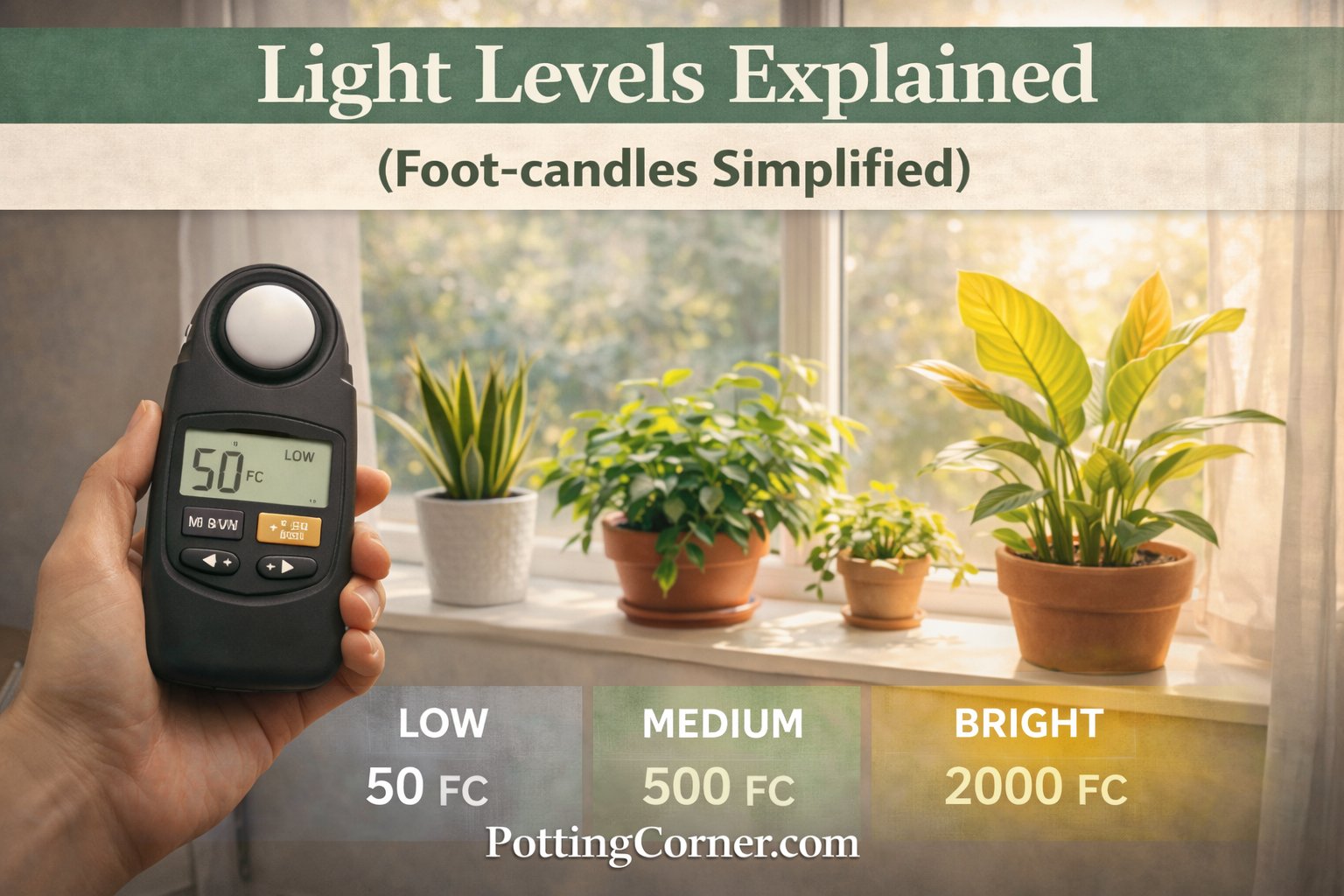
Short answer: install a free "light meter" or "lux meter" app, hold your phone where the leaves are with the screen facing the window, and read the number. Under 50 foot-candles (500 lux) is too dark for any houseplant, 50-150 fc is low light, 150-500 fc is medium, 500-1,000 fc is bright indirect, and over 1,000 fc means direct sun. Take three readings across the day and use the average.
Measuring takes two minutes and replaces the single most common guess in houseplant care: "this corner is bright enough." It usually isn't. Most people who measure for the first time find their "bright" spot is 80-150 fc and move their plants closer to the window the same afternoon. For what the numbers mean for each plant, see Foot-Candles for Plants: Light Levels Explained.
What You Need
- A smartphone (any recent iPhone or Android)
- A free light meter app (search "light meter" or "lux meter")
- Two minutes on a normal day, ideally around late morning or midday
That's it. A dedicated meter ($15-50) is more accurate in direct sun, but for deciding where a plant goes, a phone is enough.
Step by Step
1. Install an app
Search your app store for "light meter" or "lux meter." Free versions are fine. Two kinds exist:
- Sensor-based apps use the phone's ambient light sensor, the one that auto-dims your screen. More accurate, but the sensor sits next to the front camera, so you have to point that side toward the light.
- Camera-based apps estimate light from the camera image. They work on phones that don't expose the sensor, but they read a bit lower and are more sensitive to what's in the frame.
Either works. If the app offers both, choose the sensor.
2. Set the unit
Choose foot-candles (fc) or lux. Most plant guides, including ours, use foot-candles. If your app only shows lux, divide by 10.76 to get fc, or just remember these anchors:
| Foot-candles | Lux |
|---|---|
| 50 | 540 |
| 150 | 1,600 |
| 500 | 5,400 |
| 1,000 | 10,800 |
| 5,000 | 54,000 |
3. Position the phone where the leaves are
This is the step people skip. Don't measure at the window; measure at the plant.
- Hold the phone at the height of the top leaves
- Face the screen (the sensor side) toward the main light source, usually the window
- Keep your body out of the way so you're not casting a shadow on the sensor
- Wait 2-3 seconds for the reading to settle
4. Read and write it down
Note the number and the time. If the reading jumps around, take the middle value.
5. Repeat at two more times of day
Light changes hour by hour. A spot that reads 900 fc at 10 a.m. in an east window may read 200 fc at 3 p.m. Take a reading mid-morning, midday and mid-afternoon, then average them. That average is the number to compare against plant requirements.
6. Note sun vs. cloud
An overcast day can cut readings by 60-80%. Measure on a typical day for your climate, and if you measure on a cloudy day, expect sunny-day values to be much higher.
What the Number Means
| Your average reading | Category | What lives here |
|---|---|---|
| Under 50 fc | Too dark | Nothing. Move the plant or add a grow light. |
| 50-150 fc | Low light | Snake plant, ZZ plant, cast iron plant, pothos (slowly) |
| 150-500 fc | Medium light | Philodendron, pothos, peace lily, ferns, calathea, spider plant |
| 500-1,000 fc | Bright indirect | Monstera, fiddle leaf fig, rubber plant, bird of paradise |
| 1,000+ fc | Direct sun | Cacti, succulents, citrus, herbs, croton |
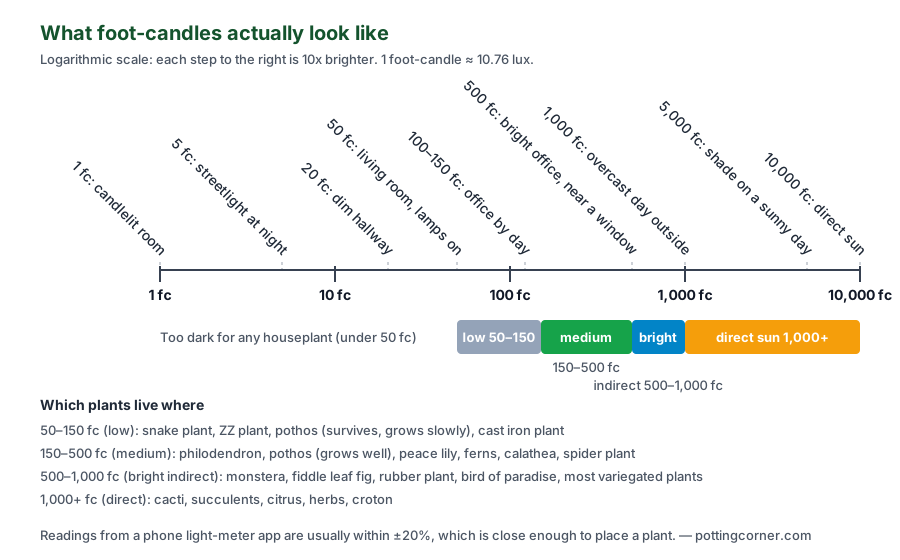
Two things surprise almost everyone the first time:
- The middle of the room is dark. 6-8 feet from a window, most rooms read 30-100 fc by day. That's why the plant on the bookshelf hasn't grown in a year.
- Two feet matters. The same window can read 1,000 fc at the glass and 300 fc a few feet back. Moving a plant 24 inches can move it into a different light category.
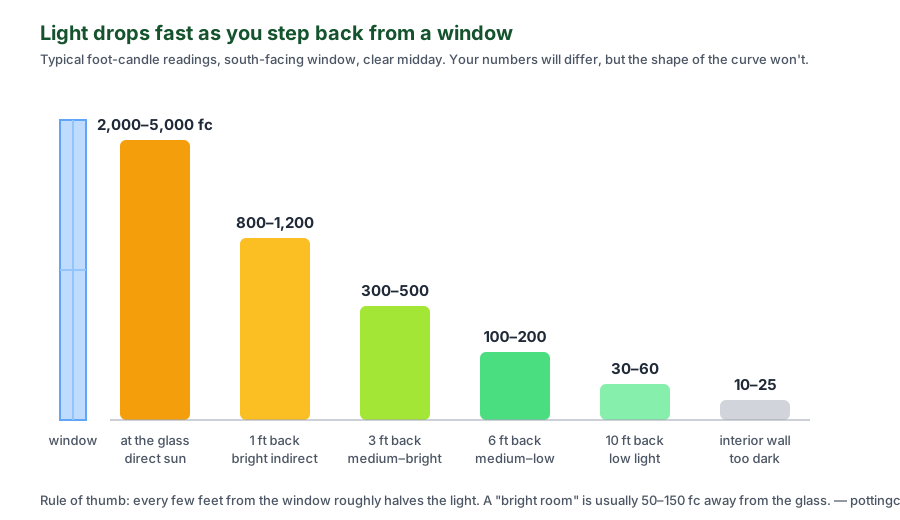
How Accurate Is a Phone Light Meter?
Good enough for this job. Tests against dedicated meters typically show phone apps within 15-25% at indoor light levels, and worse in direct sun where the sensor saturates (many phones max out around 2,000-3,000 fc). Since you are deciding between "low," "medium" and "bright," a 20% error doesn't change the answer.
Where phones fall down:
- Direct sun: the sensor tops out. If the app reads 2,000+ fc, just call it "direct sun."
- Very low light: below about 10 fc, readings get noisy. Anything that low is too dark anyway.
- Camera-based apps: a dark wall in the frame lowers the reading. Point at the light source, not the room.
If you get serious about grow lights or run a lot of plants, a $20-30 meter with a separate sensor on a cord is worth it. For placing houseplants, the phone is fine.
Measuring a Grow Light
Same method, with two differences:
- Measure with the grow light on and, if possible, at night or with curtains closed so you're only reading the lamp
- Measure at the distance the plant will actually sit, at leaf height
Grow lights are sold by watts and lumens, which tell you almost nothing about what reaches a leaf. A lamp advertised as "1,000 foot-candles" delivers that at the tested distance, often 6-12 inches. At 24 inches it may deliver 250 fc. Measure, then move the lamp or the plant until you're in the right band. See Grow Lights for Houseplants: A Simple Guide.
Readings add: 150 fc of daylight plus a lamp adding 300 fc gives 450 fc at that spot.
Common Measuring Mistakes
- Measuring at the window instead of at the plant. The window is the maximum, not what the plant gets.
- Pointing the sensor at the floor or ceiling. Face the light source.
- Standing between the window and the phone. Your shadow can halve the reading.
- Measuring once. One midday reading in an east window overestimates the whole day.
- Trusting a cloudy-day reading in either direction. Note the weather.
- Ignoring seasons. A south window in June and December are different windows. Re-measure in winter.
What to Do After You Measure
- Reading lower than the plant needs: move it closer to the glass, switch it to a brighter window, or add a grow light. See Which Window Is Best for Houseplants?.
- Reading higher than the plant needs: move it back a foot or two, add a sheer curtain, or move it to an east window. See How to Tell If Your Plant Is Getting Too Much Sun.
- Reading in the right band but the plant still struggles: the problem is probably water or roots, not light. See Why Is My Plant Not Growing?.
Frequently Asked Questions
Is there a free app to measure light for plants?
Yes. Search "light meter" or "lux meter" in the App Store or Google Play. Free versions read foot-candles or lux using the phone's light sensor or camera and are accurate within about 20% at indoor levels.
Can I use my phone as a light meter for plants?
Yes. Phone light sensors are accurate enough to tell low light from medium from bright, which is the decision that matters for placing a plant.
What is a good light reading for indoor plants?
Most houseplants do best between 200 and 1,000 foot-candles (roughly 2,000-10,000 lux). Below 50 fc, nothing thrives.
Should I measure in foot-candles or lux?
Either. Foot-candles are common in plant guides and grow-light specs in the US; lux is the metric standard. 1 fc is about 10.76 lux.
How often should I measure?
Once when you place a plant, again if it stops growing, and once in winter, when the same window delivers far less light.
Does a light meter measure the light plants actually use?
Not exactly. Meters measure light as human eyes see it; plants use a slightly different spectrum (PAR). For daylight and full-spectrum grow lights the difference is small enough to ignore. For colored (blue and red) grow lights, a lux meter under-reads; use the manufacturer's PPFD chart instead.